Diamond Hill (DHIL): Adviser roster, short-term commitments, and what suppliers tell investors
Diamond Hill Investment Group operates as an asset manager that earns fees by managing mutual funds, separate accounts and advisory mandates, collecting management and performance fees tied to assets under management and investment performance. The company monetizes scale and investment outperformance while keeping a concentrated ownership and high institutional investor base, and recent filings show a set of external advisors retained for a strategic transaction that directly affects corporate governance and communications. For investors evaluating supplier exposure and counterparty risk, the advisor roster and disclosed credit posture are the most actionable signals. Learn more at https://nullexposure.com/.
Why the supplier list matters for an asset manager like Diamond Hill
An investment manager’s external relationships are not merely vendor line items; they disclose where management is spending strategic capital — legal counsel for deals, bankers for strategic options, and communications firms for reputational work. When a company hires top‑tier legal and financial advisors, it signals a transaction of material importance and cost, which can compress short‑term free cash flow while potentially unlocking value longer term.
- Concentration: Diamond Hill’s adviser roster for the disclosed transaction is compact and comprised of high-profile firms, suggesting a focused, high-impact engagement rather than routine vendor churn.
- Contracting posture: The company has disclosed short-term credit facilities, indicating a readiness to bridge near-term funding needs rather than long-term leverage expansion.
- Spend scale: Evidence excerpts point to a mid‑range spend profile for financing and advisory services (the company’s disclosures place advisory-related cash exposure in the $10M–$100M band).
If you track supplier risk and event-driven costs for portfolio companies, the advisor list and the credit disclosure are primary inputs. For deeper supplier relationship analytics, visit https://nullexposure.com/.
What the filings show: advisors retained for a material transaction
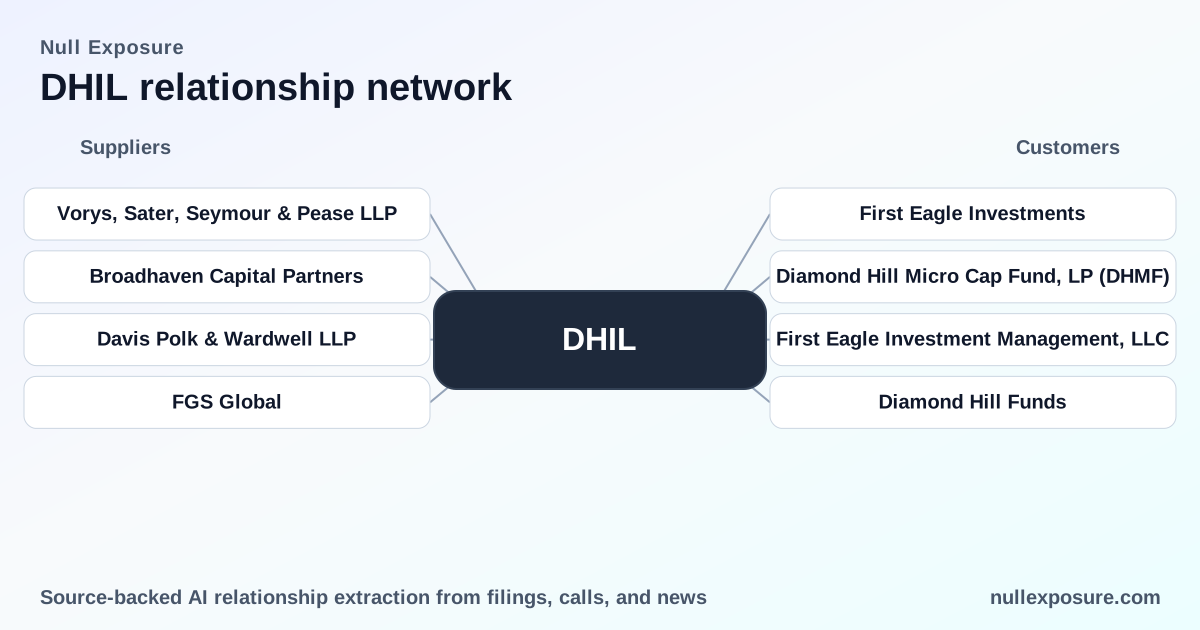
Diamond Hill disclosed the retention of a small group of advisors in an 8‑K filing published on March 9, 2026. The engagement includes a financial advisor, two legal firms, and a strategic communications advisor — a classic configuration for a sale, financing or significant corporate strategy shift. The filing is available via public SEC channels and reposted on StockTitan on March 9, 2026.
Broadhaven Capital Partners
Broadhaven Capital Partners is serving as Diamond Hill’s financial advisor in connection with the disclosed transaction; that role places Broadhaven at the center of valuation, deal structure and sale process execution. Source: 8‑K disclosure posted March 9, 2026 on StockTitan (DHIL 8‑K).
Davis Polk & Wardwell LLP
Davis Polk is engaged as legal counsel for the transaction, providing high‑end transactional and securities law support consistent with complex M&A or strategic review work. Source: 8‑K disclosure posted March 9, 2026 on StockTitan (DHIL 8‑K).
Vorys, Sater, Seymour & Pease LLP
Vorys is retained alongside Davis Polk as a legal advisor, supplying regional or specialized legal capacity to complement national counsel on the matter. Source: 8‑K disclosure posted March 9, 2026 on StockTitan (DHIL 8‑K).
FGS Global
FGS Global is acting as Diamond Hill’s strategic communications advisor, which signals a need to manage investor, client and public messaging through a high‑visibility corporate event. Source: 8‑K disclosure posted March 9, 2026 on StockTitan (DHIL 8‑K).
Operational constraints and what they imply for supplier risk
Diamond Hill’s disclosures include a committed Line of Credit that matures December 11, 2025, permitting borrowing up to $25.0 million. That credit detail underpins three operational signals:
- Short-term contract posture: The line maturity and the documented credit structure indicate reliance on short-term liquidity solutions rather than long-dated leverage instruments; this is a company-level signal rather than an indicator tied to any single advisor.
- Service provider relationships: The company categorizes external advisors as service providers in the normal course, which is consistent with the 8‑K advisor appointments but not tied to a long-term outsourcing commitment.
- Mid-range spend exposure: The disclosed financing language supports an estimated advisory and transactional spend band in the $10M–$100M range, which is material to cash flow but not balance-sheet transformative.
These constraints imply Diamond Hill retains flexibility to fund advisory costs but also faces near-term maturity pressure that could influence deal timing or payment sequencing for suppliers.
How investors should read the supplier roster and constraints
- Catalyst indicator: The combination of a boutique investment bank, top‑tier legal counsel and a global communications firm signals a substantive corporate action — likely strategic review, sale process or significant recapitalization.
- Cost and cash flow: Expect elevated professional fees in the near term and load those into free‑cash‑flow models; the line of credit provides a buffer but not indefinite funding.
- Execution risk: High‑quality advisors reduce execution risk on complex transactions, but they increase headline risk and scrutiny; communications management via FGS Global reduces the chance of rapid reputational volatility.
For decision makers weighing supplier continuity and counterparty risk, these are the primary takeaway points to model into event-driven scenarios. If you want a structured supplier risk brief, start here: https://nullexposure.com/.
Bottom line and next steps for investors
Diamond Hill’s advisor slate and short-term credit profile together signal a material corporate action with manageable but material advisory cost exposure. The quality of advisors reduces execution risk while the short maturity of disclosed credit elevates near-term liquidity management as an item to monitor.
Actionable next steps:
- Reassess short-term liquidity and free-cash-flow assumptions to reflect advisory fees in the coming quarters.
- Monitor SEC filings for transaction updates and fee disclosures that flush out total cost and timeline.
- Track client AUM flows and management commentary for signs of strategic direction and potential deal outcomes.
For a concise supplier-relationship briefing tool and ongoing monitoring, see https://nullexposure.com/.
Closing thought
Investors should treat Diamond Hill’s supplier appointments as a signal of strategic activity, not routine vendor hiring. The company’s combination of institutional investor ownership, solid operating margins and targeted external advisors positions it for a clean execution of a transaction, but the short-term credit profile places emphasis on timing and cost management. Monitor subsequent filings to convert these supplier signals into position-level action.