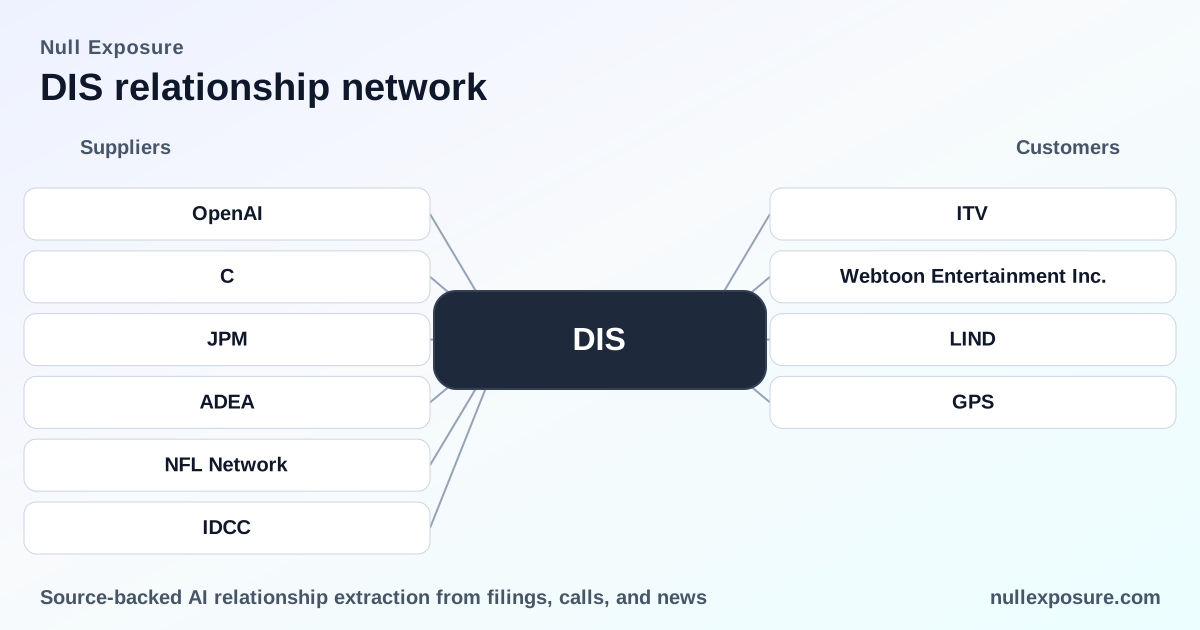
Walt Disney Company (DIS): supplier relationships that drive revenue and risk
Thesis — The Walt Disney Company monetizes an integrated media and experiences ecosystem by selling content, distribution and consumer experiences across studios, networks, DTC streaming (Disney+, Hulu, ESPN+), theme parks and licensed products; value accrues through long-term content rights, platform distribution agreements, and licensing relationships that convert IP into recurring revenue and retail/park sales. Investors should evaluate Disney not just as a creative studio but as a contracting hub whose suppliers and licensors amplify scale, margin and legal exposure. For a concise supplier intelligence portal, visit https://nullexposure.com/.
Why the supplier map matters to investors
Disney’s operating model is a combination of long-term rights amortization, ongoing licensing relationships, and a complex vendor ecosystem supporting streaming, advertising and parks commerce. Long-term contracts — particularly sports rights and multi-year IP licenses — convert big upfront commitments into predictable amortization schedules. At the same time, Disney operates as both a licensee of third‑party content and a platform licensing house to merchandise partners, creating dual-directional dependency: some vendors are critical to distribution and monetization; others are important to content supply and park retail. The company also routinely engages external service providers for specialized functions such as cybersecurity and measurement.
Key business-model implications:
- Contracting posture: Heavy use of multi-year licenses and amortized sports rights supports revenue stability but raises fixed-cost commitment risk.
- Concentration and criticality: Strategic partners for streaming (measurement, ad tech, IP licensors) are high‑impact; disputes with patent licensors or measurement providers can directly affect subscriber economics.
- Maturity: Many relationships are established and institutional; newer deals (AI integrations, IP licensing) are growth levers rather than legacy dependencies.
For a quick look at supplier relationships and related signals, see https://nullexposure.com/ before you model counterparty risk.
The supplier list investors should track
Below I summarize every supplier relationship referenced in the source set, with one-line takeaways and source pointers for due diligence.
-
OpenAI — Disney signed a strategic partnership to integrate an AI capability called “Sora” into Disney+ for interactive content curation and creative tools, positioning AI as a product differentiator for DTC engagement (FY2026 press narratives). Source: investor and industry coverage, FY2026 press narratives (March 2026).
-
Kartoon Studios / TOON (Mainframe Studios) — Mainframe Studios reported sharp production-service growth and cited Disney among its major global animation clients, underscoring outsourced animation demand (FY2026 business updates). Source: Kartoon Studios business update (May 2026).
-
AENTW — Identified as a trusted distributor of home-entertainment movies that lists Walt Disney among its studio partners, indicating Disney’s reliance on third-party physical/digital distribution networks (2024 Q4 earnings call extract). Source: AENTW earnings call (2024 Q4).
-
Adeia Inc. / ADEA — Adeia executed a long-term media IP license agreement with Disney that resolved litigation and materially improved Adeia’s guidance; this is a direct IP-license relationship expanding Disney’s content/legal rights footprint (announced Dec 2025 / FY2026). Source: Adeia press releases and FY2026 earnings commentary (Dec 2025–Feb 2026).
-
WEBTOON Entertainment / WBTN — Disney completed a strategic agreement including a development partnership and an approximate 2% equity investment in WEBTOON, signaling content-sourcing for new digital comics and cross-platform IP (2025 Q4 announcement). Source: WEBTOON and company earnings commentary (Jan 2026).
-
Fubo / FUBO — Fubo announced reseller/marketing arrangements with ESPN to expand distribution of live TV via ESPN’s commerce and digital channels and integrated ad‑tech capabilities into Disney’s ad server, pointing to commercial distribution partnerships (FY2026). Source: Fubo FY2026 results and press coverage (Q1 FY2026).
-
InterDigital / IDCC — InterDigital pursued enforcement against Disney’s streaming services and secured an injunction in Germany over HEVC technology, indicating patent-litigation risk and potential royalty exposure for Disney’s streaming stack (FY2026 legal developments). Source: InterDigital press and legal reporting (Feb–Mar 2026).
-
Veritone / VERI — Veritone disclosed commercial agreements that include ESPN, reflecting Veritone’s role in AI-driven media services sold into Disney networks and advertising partners (FY2025/2026 commercial disclosures). Source: company disclosures on commercial contract wins (FY2025).
-
SRM / SRM Entertainment (later Tron Inc.) — SRM supplies custom merchandise distributed at Walt Disney Parks and Resorts; multiple press releases cite SRM product distribution relationships with Disney parks, indicating outsourced retail/merchandising supply. Source: SRM press releases and media coverage (FY2024–FY2025).
-
BWMX — Company commentary flagged plans to expand licensing with Disney and other brands for consumer goods, signaling third-party licensees leveraging Disney IP in consumer categories (FY2025 Q4 earnings call). Source: BWMX earnings call (2025 Q4).
-
Lindblad Expeditions / LIND — Lindblad reported commercial uplift from Disney-sourced distribution and bookings via Disney travel agents, reflecting co-branded travel product distribution agreements (FY2025–FY2026). Source: Lindblad earnings calls and investor transcripts (FY2025–FY2026).
-
Ramp / RAMP — Ramp noted that Disney participated in industry gatherings and partnerships, illustrating Disney’s role as a large brand engaging fintech and adtech ecosystems (2025 Q4 commentary). Source: Ramp earnings call (2025 Q4).
-
GXO — GXO exited a large distribution center after its partnership with Disney ended, pointing to operational logistics turnover and supplier footprint adjustments affecting warehouse capacity (FY2026 operations reporting). Source: GXO industry reporting (2026).
-
Adobe — Adobe’s reporting highlights that nearly all major brands, including Disney, use Adobe’s AI-enabled marketing tools, underscoring marketing technology dependencies (TIME profile / FY2026 context). Source: media coverage and Adobe profiles (2026).
-
Comscore / SCOR — Comscore announced ESPN will adopt Comscore Content Measurement, establishing measurement and audience‑insight integration critical to ad inventory valuation across Disney’s sports and programming (FY2026 announcements). Source: Comscore press release and CES commentary (FY2026).
-
Citibank, N.A. — Citibank is designated agent on Disney’s 364‑day $5.25bn credit facility, reflecting short-term committed liquidity arrangements (Feb 27, 2026 credit agreement filing). Source: Disney 8‑K / market filings (Feb 2026).
-
JPMorgan Chase Bank, N.A. — JPMorgan serves as designated agent on Disney’s five‑year $4bn credit agreement, indicating multi-year syndicated bank financing support (Feb 27, 2026 credit agreement filing). Source: Disney 8‑K / market filings (Feb 2026).
-
iHeartMedia / IHRT — ABC will exclusively air an iHeartRadio Jingle Ball special and its next-day distribution on Hulu, showing affiliate content and event licensing across Disney broadcast and streaming platforms (FY2025–2026 programming announcements). Source: IHRT press release and ABC/Hulu programming notes (Dec 2025).
-
Scholastic / SCHL — Scholastic is a content partner with projects in development for Disney+, including live-action and animated adaptations, indicating ongoing third‑party content sourcing for children’s franchises (FY2025 projects). Source: Scholastic press release (FY2025).
-
TKO (WWE) — WWE’s deal to make ESPN the exclusive home of premium live events, including WrestleMania, represents high-value sports rights that feed Disney’s pay/live-event strategy (FY2025 deal commentary). Source: WWE/TKO earnings and deal disclosures (FY2025).
-
Funko / FNKO — Funko’s product tie-ins (e.g., Disney-exclusive Star Wars collectibles) show licensed merchandise partnerships supporting park and retail sales. Source: retail and press reporting (FY2022–FY2025).
-
Dolby Laboratories / DLB — Disney+ Hotstar’s adoption of Dolby Atmos demonstrates audio-technology integration for premium streaming experiences, implying licensing and codec partnerships. Source: platform technical announcements (2022–2026 coverage).
-
NFL Network — Disney’s ESPN DTC roadmap includes adding NFL Network to deepen live-sports inventory, reflecting distribution deals that expand premium content offerings (FY2026 product planning). Source: Disney corporate commentary on ESPN DTC (FY2026).
-
The Seven — Announced a multi‑year co-development deal with Disney to produce Japanese live-action originals, signaling regional content co-production strategies (FY2026 announcement). Source: press release (May 2026).
-
Anghami / ANGH — Anghami cited distribution and bundle partnerships including Disney+, showing regional bundling and distribution arrangements that increase Disney’s subscriber reach (FY2025–FY2026 operational reporting). Source: Anghami investor update (FY2025).
-
Roblox / RBLX — Advertising placements for Disney movies on Roblox indicate digital marketing partnerships and platform promotion strategies for franchise releases (FY2024–FY2026 reporting). Source: third-party research and media examples (2024–2026).
-
Seaport Entertainment / SEG-R — Seaport noted that termination of an ESPN lease impacted rental comparables, revealing real estate and operational interdependencies tied to Disney leases (FY2026 reporting). Source: Seaport Entertainment earnings commentary (FY2026).
-
Gray Television / GTN & GTN-A — Gray referenced content renewals and stage productions tied to Hulu pick-ups, highlighting local production demand driven by Disney streaming renewals (FY2025–FY2026). Source: Gray Television earnings transcripts (2025 Q3 / 2025 Q4).
-
Formula 1 / FWONK & Liberty Media / LLYVK — Media coverage and Liberty/Formula 1 commentary link Disney’s ESPN as the renewer and distributor of F1 rights in the U.S., illustrating marquee sports-rights exposure (FY2024–FY2026 coverage). Source: industry press and Liberty Media reporting (2024–2026).
-
Grupo Televisa / TV — Televisa commentary referenced benefits from Hulu agreements and content licensing, pointing to regional licensing and distribution synergies with Disney platforms (FY2026). Source: Grupo Televisa earnings call excerpts (FY2026).
Constraints and what they imply for modeling Disney
Disney’s supplier signals include explicit indicators of long-term contracts, use as a licensee for third-party content, and engagement of service providers for specialized functions such as cybersecurity. These corporate-level constraints imply: high fixed-cost commitments (amortized rights), complex IP/licensing exposure, and an ongoing need for specialized vendors. Model these as multi-year contractual obligations with step-change risks (renewal/non‑renewal, litigation outcomes like patent injunctions) rather than ephemeral vendor spend.
Bottom line for investors
- Positive: Disney’s supplier network supports scale: long-term sports and IP licenses are revenue-generating levers and third‑party production/merchandise partners expand monetization.
- Risk: Patent litigation (InterDigital), concentrated bank facilities, and multi‑year content commitments can create outsized cash and legal exposures if rights economics move against assumptions.
- Actionable: Monitor outcomes of IP license deals (Adeia), patent rulings (InterDigital), and strategic integrations (OpenAI/AI in Disney+) as catalysts that shift margin and subscriber economics.
For ongoing supplier tracking and structured counterparty risk views, visit https://nullexposure.com/ — the single place to align supplier intelligence with investment analysis.