AMCON Distributing Company (DIT): Supplier Map, Commercial Constraints, and What Investors Should Know
AMCON Distributing Company is a regional wholesale distributor of consumer packaged goods that monetizes by buying branded CPG and foodservice inventory and selling it through grocers, convenience stores, and foodservice channels, capturing narrow distribution margins and cashflow from inventory turns. The company’s economics depend on scale in purchasing, stable access to branded suppliers, and a leveraged working-capital structure supported by committed credit facilities. For an operational and counterparty risk view tailored to investors, see more at https://nullexposure.com/.
Operating model and what drives value
- AMCON’s business is inventory- and supplier-driven: procurement terms with major manufacturers determine gross margins and service levels, while finance arrangements convert inventory into working capital.
- Concentration and counterparty quality matter: AMCON lists a small set of large CPG manufacturers as principal suppliers, which benefits procurement pricing but concentrates supplier counterparty risk.
- Capital structure is operationally critical: the company runs with significant committed bank facilities that both fund inventory purchases and limit upside if borrowing capacity tightens.
Company-level constraints that shape supplier execution AMCON’s FY2025 Form 10‑K discloses long-term bank facilities and long-term debt as the primary financing posture, showing the business is financed through committed credit lines rather than purely on short-term trade payables—this is a long-term financing posture that raises the importance of covenant compliance and collateral valuation. The 10‑K notes combined borrowing capacity and availability (a combined capacity figure of up to $305.0 million at September 2025, with $126.8 million outstanding at the same date), which signals material scale in working-capital capacity (a >$100m spend band) and that the relationship with lenders is an active, material input to operations. The 10‑K’s supplier list identifies major manufacturers as the company’s suppliers, which operationally defines those vendors as manufacturers in AMCON’s upstream supply network. (Source: AMCON FY2025 Form 10‑K.)
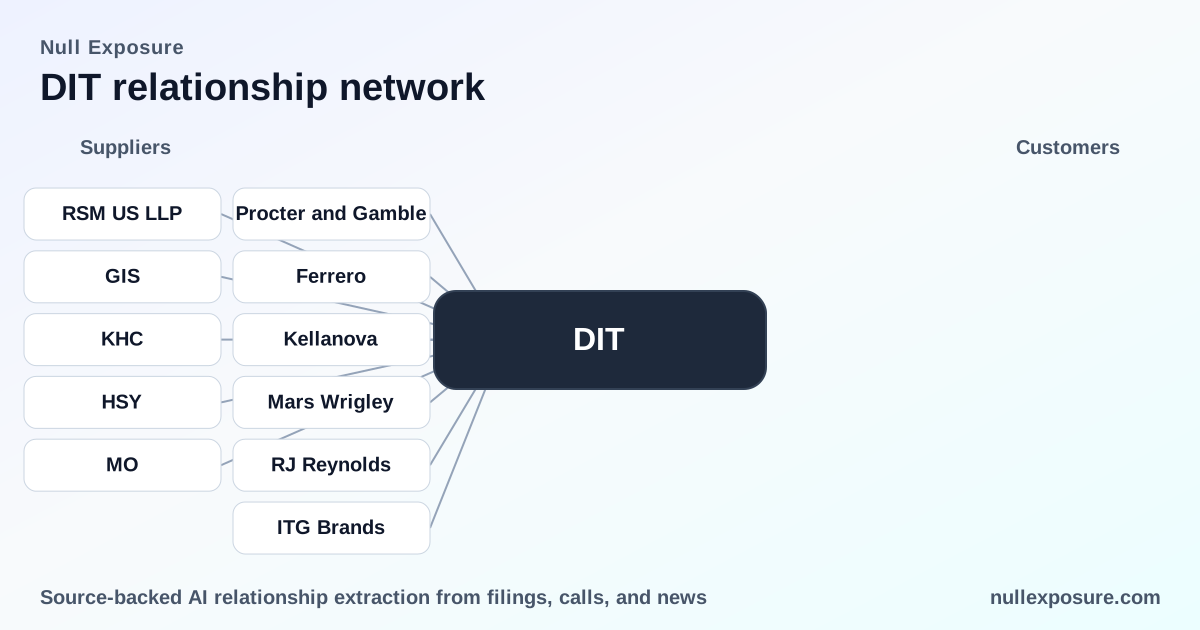
Supplier relationships — the full roster and what investors should take away The following covers every supplier or related relationship disclosed in the provided records.
Procter & Gamble
AMCON lists Procter & Gamble among its principal suppliers, indicating AMCON sources national household brands to resell across its regional distribution footprint; this is a strategic branded supplier relationship that supports steady SKU assortments and category demand. (Source: AMCON FY2025 Form 10‑K.)
Ferrero
Ferrero appears on AMCON’s principal suppliers list, which means AMCON carries globally recognized confectionery lines that support seasonal and impulse sales in convenience and grocery channels. (Source: AMCON FY2025 Form 10‑K.)
Kellanova
Kellanova (formerly part of a larger cereal/snack portfolio) is named as a principal supplier, providing packaged food SKUs that anchor grocery category distribution and price promotions. (Source: AMCON FY2025 Form 10‑K.)
Mars Wrigley
Mars Wrigley is listed among principal suppliers, delivering high-turn confectionery and impulse brands that are core to convenience-store penetration and promotional cycles. (Source: AMCON FY2025 Form 10‑K.)
RJ Reynolds
RJ Reynolds is cited as a principal supplier, reflecting AMCON’s role in distributing tobacco or nicotine-related products through retail channels where those SKUs are material to convenience-store sales mix. (Source: AMCON FY2025 Form 10‑K.)
ITG Brands
ITG Brands is included in the supplier roster, confirming AMCON’s exposure to another large tobacco manufacturer and the regulatory, logistics, and margin profile associated with tobacco distribution. (Source: AMCON FY2025 Form 10‑K.)
General Mills
General Mills is on the principal suppliers list, supplying packaged food brands that contribute to grocery category depth and recurring reorders. (Source: AMCON FY2025 Form 10‑K.)
Kraft Heinz
Kraft Heinz appears among principal suppliers, providing high-velocity canned, packaged and refrigerated items important to grocery consumers and to AMCON’s margin mix. (Source: AMCON FY2025 Form 10‑K.)
Hershey
Hershey is named as a principal supplier, supplying chocolate and confectionery SKUs that are material to impulse and seasonal revenue streams. (Source: AMCON FY2025 Form 10‑K.)
Altria
Altria is included in the principal suppliers list, indicating AMCON’s distribution exposure to cigarette and tobacco product lines provided by a major manufacturer. This relationship increases regulatory and pricing sensitivity in those SKU categories. (Source: AMCON FY2025 Form 10‑K.)
RSM US LLP (independent auditor)
RSM US LLP was ratified as AMCON’s independent registered public accounting firm for fiscal 2026 at the annual meeting, a corporate governance outcome that reinforces continuity in external financial oversight. (Source: company 8‑K and press coverage, FY2026 (annual meeting Dec 18, 2025) reported via StockTitan and The Globe and Mail.)
Operational and counterparty implications for investors
- Concentration in top manufacturers is both a strength and a risk. Large-brand suppliers deliver stable product flow and marketing support, which preserves AMCON’s ability to turn inventory and maintain shelf assortment. However, reliance on a handful of manufacturers concentrates negotiation leverage and transition risk if contract terms are tightened.
- Finance agreements are binding operational constraints. The FY2025 10‑K documents three named credit facilities and a combined borrowing capacity in the low hundreds of millions; this long-term credit posture is central to AMCON’s ability to fund inventory growth and absorb seasonal swings. (Source: AMCON FY2025 Form 10‑K.)
- Tobacco suppliers (Altria, RJ Reynolds, ITG Brands) introduce regulatory and margin volatility. These categories carry higher regulatory touchpoints and can be more profit-sensitive to excise and tax shifts.
- Supplier maturity and scale are supportive of distribution margins. Partnering with global manufacturers reduces counterparty credit risk and supports favorable vendor terms.
Mid-article call to action If you’re evaluating supplier concentration, financing risk, or counterparty exposure in small-cap distributors, get a concise operational risk brief at https://nullexposure.com/.
Investment takeaways and recommended monitoring
- Monitor facility utilization and covenant compliance monthly; the Facilities are integral to working capital and a tightening event would compress liquidity quickly. (Source: AMCON FY2025 Form 10‑K.)
- Track renewal or renegotiation activity with major CPG manufacturers, as changes to slotting, pricing, or supply commitments would directly affect gross margin and SKU availability.
- Watch tobacco and confectionery category dynamics for regulatory or input-cost shocks that could change per-unit economics.
Final note and next steps AMCON operates as a classic regional distributor whose value depends on stable branded-supplier relationships and committed lender support. For a deeper supplier-concentration profile, covenant stress scenarios, or bespoke counterparty exposure analysis, visit https://nullexposure.com/ to request a tailored briefing.
Bold summary: AMCON’s supplier book is dominated by large, mature manufacturers that provide stable product flows, but the company’s operational leverage to bank facilities and exposure to tobacco categories are the primary risks investors should monitor.