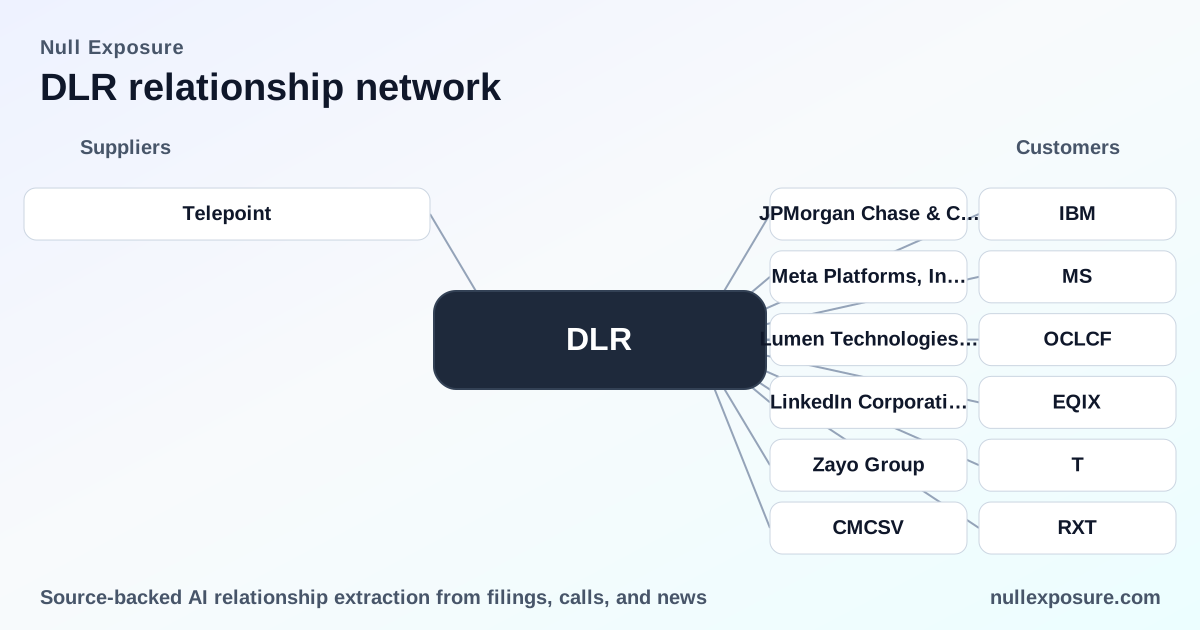
Digital Realty (DLR): Strategic supplier footprint and the Telepoint acquisition
Digital Realty operates and monetizes as a carrier‑neutral data center REIT: it owns and leases physical data center capacity, sells recurring colocation and interconnection services, and generates predictable contract revenue from long‑term leases with enterprise, cloud and network customers. The company’s business model converts real estate ownership and network-neutral connectivity into durable, subscription‑style cash flows while leveraging scale to underwrite expensive power and fiber infrastructure investments. Investors should treat growth moves like the Telepoint acquisition as capacity and interconnection plays that expand market access rather than short‑term revenue arbitrage.
Learn more about supplier intelligence and relationship signals at https://nullexposure.com/.
Quick read: Telepoint brings a Sofia interconnection hub to Digital Realty
Digital Realty announced entry into Bulgaria through the acquisition of Telepoint, a local data center and interconnection provider that operates a highly connected hub in Sofia. This is a clear strategic extension of Digital Realty’s EMEA footprint: the deal adds local capacity and peering density that directly supports cross‑border enterprise and carrier customers seeking lower latency connectivity in the Balkans.
Telepoint — press release carried by The Globe and Mail (March 2026)
Digital Realty’s entry into the Bulgarian market is enabled through the acquisition of Telepoint, described in the March 2026 Globe and Mail press release as a leading local data center and interconnection provider in Sofia. According to that release, the asset provides a high‑connectivity hub that complements Digital Realty’s existing global interconnection strategy.
Source: A press release published in The Globe and Mail, March 2026.
Telepoint — notice on SahmCapital (March 2, 2026)
A similar notice published by SahmCapital on March 2, 2026, confirmed the acquisition language and highlighted Telepoint’s role as a local interconnection provider, reinforcing the strategic emphasis on peering and regional network density rather than pure shell‑and‑floor expansion.
Source: SahmCapital news item, March 2, 2026.
What the company‑level constraints tell investors about supplier posture
Public filings and disclosures provide operational constraints that shape how Digital Realty contracts with suppliers and integrates acquisitions. These are company‑level signals rather than relationship‑specific facts.
-
Long‑term contracting posture: Digital Realty has executed long‑dated financing and lease arrangements; the Term Loan Agreement dated August 11, 2022 (filed Aug 17, 2022) and public disclosures that leases for data centers expire on various dates through 2069 demonstrate a long‑tenor capital and property commitment. This produces predictable occupancy economics but also fixes cost structure over decades.
-
Buyer behavior and fixed obligations: Filings state the company leases space and equipment under noncancelable agreements, indicating buyer obligations that constrain flexibility in capacity sourcing and vendor negotiations when market conditions change.
-
Dependency on third‑party carriers: The company discloses that it is not a telecommunications carrier and depends on the presence of carrier fiber networks to attract customers; carrier availability directly affects Digital Realty’s ability to achieve projected results, making network suppliers strategically critical even though Digital Realty remains carrier‑neutral.
Together these constraints imply a business model with high capital intensity, long visibility into cash flows, limited short‑term agility on property contracts, and operational dependence on external network providers. Investors should price in lower volatility of recurring revenue but also recognize concentration of operational risk around carrier connectivity and long‑dated lease commitments.
How Telepoint fits into the operating picture
The Telepoint acquisition should be read against the constraints above. By buying an established, locally connected hub in Sofia, Digital Realty reduces the time and execution risk of building a new interconnection facility there, while expanding the company’s coverage for customers who require local peering and lower latency to the Balkans. For operators, the deal increases options for network interconnection in a geopolitically sensitive corridor; for investors, it is an incremental, strategically consistent expansion rather than a transformational pivot.
Mid‑article note: For deeper analysis of supplier relationships and their strategic implications, visit https://nullexposure.com/.
Financial posture and strategic sensitivity
Digital Realty’s scale and margins frame how supplier relationships convert into shareholder value. The company reports market capitalization of approximately $55.3 billion, trailing EBITDA of about $2.66 billion, and recurring revenues that support a dividend of $4.88 per share (yield ≈ 2.98%). These metrics underline a mature REIT profile: stable cash yield, institutional shareholder concentration (≈99% institutions), and a capital structure that relies on syndicated bank facilities and long‑term debt.
Key implications:
- Integration and capital allocation: Acquisitions that add interconnection value are favored because they accelerate monetization of existing global fiber and peering investments; however, each deal competes with long‑term debt service and lease obligations for capital.
- Supplier criticality: Network and fiber suppliers are not optional partners; they are critical to occupancy economics and customer retention in carrier‑neutral facilities.
- Lease maturity risk: Long lease horizons provide cash flow stability but create fixed costs that limit rapid operational pruning if demand shifts regionally.
Risk profile and what to watch next
Operational and market risks are concentrated in a few areas:
- Carrier availability and pricing: Any constraints or price shocks in regional fiber capacity will materially affect demand for Digital Realty locations that rely on external carriers.
- Integration execution: Rapidly integrating local operators like Telepoint into Digital Realty’s operating model—including sales, interconnection policies and carrier neutrality—determines whether the acquisition creates immediate customer upsell opportunities.
- Capital allocation discipline: Continued M&A must be balanced against dividend commitments and long‑dated lease obligations; investors should watch leverage metrics and incremental EBITDA contribution from acquisitions.
Bottom line: actionable takeaways for investors and operators
- Telepoint is a strategic, tactical acquisition that enhances Digital Realty’s EMEA interconnection footprint without changing the company’s core REIT model. (See Globe and Mail and SahmCapital notices, March 2026.)
- Digital Realty’s supplier posture is long‑term and capital intensive; expect supplier relationships to be negotiated within the constraints of long leases and syndicated financing.
- Network carriers remain a systemic risk and strategic partner; the success of local acquisitions depends on maintaining and expanding carrier connectivity at the site level.
For further intelligence on supplier relationships and transaction signals, visit https://nullexposure.com/.
Investors and operators evaluating DLR should treat Telepoint as an expansion of interconnection capacity rather than a standalone revenue driver; the strategic upside accrues through improved customer retention and incremental colo sales in the region. Explore supplier relationship analytics and deal flow at https://nullexposure.com/.