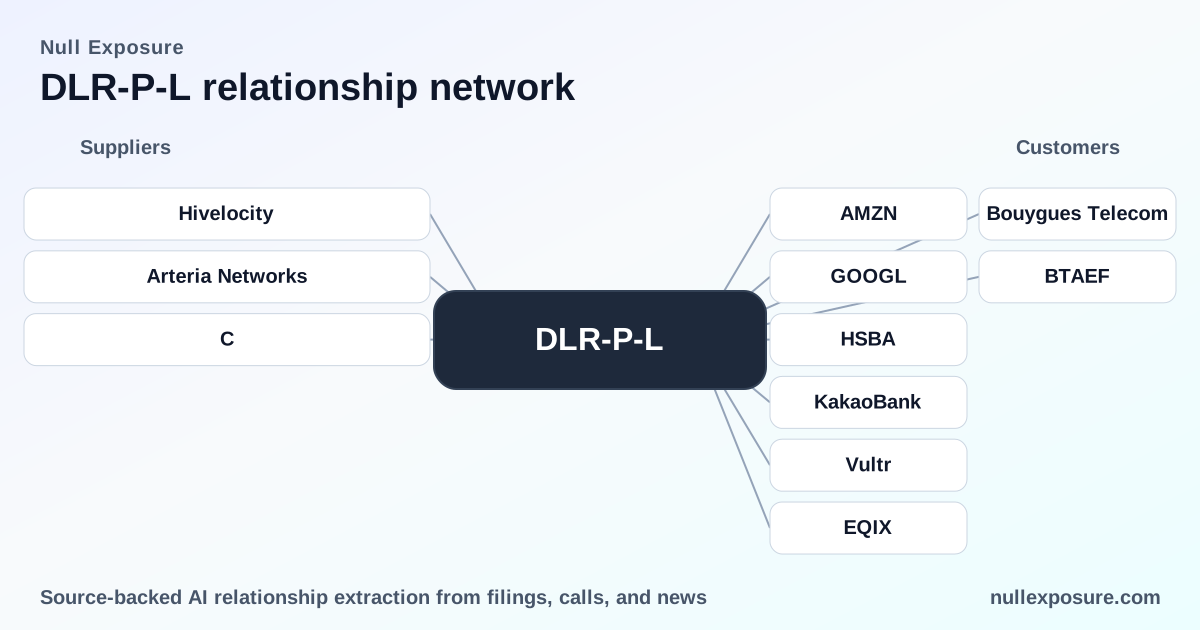
Digital Realty (DLR-P-L): Supplier relationships that shape a colocation giant
Digital Realty operates and monetizes a global portfolio of carrier‑neutral data centers by leasing space, power and networking to enterprises, cloud providers and network operators; it supplements organic growth through strategic acquisitions and localized partnerships that broaden interconnection services and density in key metros. Revenue originates from long‑term real estate leases and value‑added colocation/network services, with acquisitions and joint ventures acting as accelerants to market share and connectivity reach. For a concise supplier‑risk and partnership view, read on — and visit Null Exposure for deeper supplier intelligence: https://nullexposure.com/
Executive thesis: monetization through space, power and interconnection
Digital Realty’s business model converts capital‑intensive infrastructure into predictable cash flows through long‑duration leases and ancillary service fees. The firm's competitive advantage is scale and neutrality—it aggregates occupancy, peering and cross‑connect demand inside facilities that multiple tenants access. Growth vectors are straightforward: densify existing campuses, acquire localized colo portfolios, and partner with regional network providers to embed Digital’s platform into local service ecosystems.
For investors and operator partners, the implication is clear: Digital Realty is both a landlord and a network enabler, so supplier relationships that expand footprint or networking breadth directly translate into higher utilization and stronger pricing leverage. If you evaluate counterparties or underwrite exposure to the preferred series DLR‑P‑L, this supplier lens matters. Learn more about supplier mapping at Null Exposure: https://nullexposure.com/
How Digital Realty’s operating model constrains execution
Digital Realty’s business traits impose structural constraints that influence supplier selection and contract terms:
- Contracting posture: The company operates with long‑duration leases and capital commitments, which prioritize suppliers capable of reliable, repeatable service delivery and favorable long‑term pricing.
- Concentration and criticality: Facilities host mission‑critical workloads; supplier reliability and redundancy are treated as first‑order concerns rather than optional.
- Capital intensity and maturity: As a mature REIT with two decades of operating history, the company favors partners that can match its scale and compliance expectations and that reduce operational friction at site level.
- Commercial flexibility: Growth via acquisitions and joint ventures requires adaptable integration playbooks—suppliers that enable rapid onboarding and consistent service across geographies gain preference.
These constraints are company‑level signals: they influence procurement behavior across Digital Realty’s global footprint and affect counterparty risk profiles regardless of which specific supplier is involved.
Notable supplier and partner relationships (what investors need to know)
Below are every relationship captured in the available signals, with concise takeaways and source references.
Hivelocity — Chicago and Miami colocation acquisition
Digital Realty acquired the colocation business of Hivelocity in Chicago and Miami, expanding its metro presence and taking on localized tenant relationships and capacity in two demand centers. This transaction is an example of Digital Realty’s inorganic growth posture to capture existing colocation revenue and cross‑connect demand. Source: Data Center Dynamics, March 9, 2026.
Arteria Networks — SD‑WAN and SDN interconnection collaboration (Asia Pacific JV)
MC Digital Realty, the Asia Pacific joint venture between Digital Realty and Mitsubishi, has integrated with Arteria Networks to extend Digital’s software‑defined networking platform into Arteria’s SD‑WAN service, thereby increasing enterprise connectivity options in Japan and adjacent markets. This partnership demonstrates how Digital Realty leverages local carriers to convert facility footprint into richer managed networking propositions. Source: Data Center Knowledge, FY2021 reporting.
Citigroup — historical underwriting link to senior management
At the time of Digital Realty’s IPO, company President & CEO Andy Power was part of the underwriting team at Citigroup, a historical connection that signals the firm’s banking relationships and capital markets pedigree during its public markets entry. This background informs Digital Realty’s capital access and sponsor relationships over time. Source: REIT.com, FY2025 coverage.
What each relationship tells investors about execution risk and upside
These relationships expose several practical themes for underwriting supplier and counterparty risk:
- Acquisition as growth engine: The Hivelocity transaction confirms Digital Realty’s willingness to buy operating portfolios to accelerate metro expansion—this reduces greenfield development risk but increases integration and tenant retention risk in the short term. Acquisitions shift operational dependence onto acquired local teams and third‑party vendors.
- Local network partnerships increase value per rack: The Arteria collaboration highlights the firm’s strategy to monetize interconnection by pairing Data Center assets with regional carriers’ managed network products; this raises average revenue per customer if integration is seamless.
- Capital markets pedigree matters: Historical ties to institutions like Citigroup underscore institutional comfort with Digital Realty’s financing and underwriting processes, which supports access to debt and equity when funding large asset transactions.
These are structural takeaways that influence counterparty selection and supplier contracting.
Risk factors derived from supplier posture and relationships
- Integration risk from frequent acquisitions increases operational complexity and can pressure service levels if vendor management is not unified across the portfolio.
- Vendor concentration in critical systems (power, network fabric) represents single‑point failure risk; Digital Realty’s preference for scale can both mitigate and exacerbate this depending on supplier redundancy strategies.
- Localization vs. standardization tension: Partnerships with regional carriers improve local market fit but introduce heterogeneity in customer experience and procurement complexity across countries.
Investors should treat these as active governance items when evaluating enterprise exposure or the preferred equity tranche DLR‑P‑L.
Practical next steps for investors and operators
- Conduct targeted vendor resilience due diligence on newly acquired assets (example: Hivelocity footprint) to confirm SLAs, transfer of service contracts, and integration timelines.
- Evaluate interconnection monetization paths for joint‑venture regions (example: Japan collaboration via Arteria), focusing on cross‑connect adoption curves and managed service attachments.
- Review capital structure and refinancing history with an emphasis on the sponsor bank relationships implied by management’s past underwriting experience.
For a full supplier risk map and transaction‑level intelligence, visit Null Exposure: https://nullexposure.com/
Final takeaways
Digital Realty’s supplier relationships demonstrate an operating model that is capital‑intensive, integration‑driven and network‑centric. Acquisitions like the Hivelocity deal accelerate footprint expansion, while local carrier partnerships such as Arteria deepen interconnection monetization; historical ties to banks like Citigroup reflect the firm’s capital markets origins and execution capacity. For investors and operators, the decisive questions are how well Digital Realty executes integration and standardizes vendor governance across an increasingly heterogeneous global portfolio.
If you are evaluating exposure to Digital Realty’s preferred series or building a supplier oversight program, prioritize acquisition integration readiness, network partner SLA robustness and capital access dynamics. Explore supplier intelligence and tailored research at Null Exposure: https://nullexposure.com/