Duluth Holdings (DLTH) operates and monetizes as a vertically oriented apparel retailer: it sources product from third‑party manufacturers, sells branded workwear and casual apparel through company stores and digital channels, and earns margin on merchandise plus ancillary services (catalog, gift cards, logistics). Revenue is retail-driven and contractually anchored by long‑term store leases and concentrated APAC sourcing, which creates predictable occupancy costs and supplier concentration risk that directly affect margins and inventory cadence.
Duluth Holdings (DLTH): supplier relationships, operating constraints, and what investors should act on
Why this supplier map matters for an investor
Duluth’s economics are simple: buy manufactured goods from vendors, distribute through stores and online, and carry fixed occupancy and operating costs. That structure makes supplier reliability and lease commitments top‑tier risks to profitability. Investors should evaluate vendor concentration in APAC and the firm’s reliance on outsourced manufacturing and third‑party services alongside store lease exposure. For further research and signal coverage, visit Null Exposure.
What the company does and the commercial implications
Duluth sells work and casual apparel under the Duluth Trading brand, with revenue coming from merchandise sales across physical stores and e‑commerce; the company does not operate manufacturing facilities and relies on third parties for production and logistics. That outsourcing model reduces capital intensity but raises counterparty concentration and service dependency. The company’s fiscal metrics show negative EPS and pressured margins while revenue and gross profit remain sizable, which underscores the importance of supplier and lease management to restore operating leverage.
The relationships uncovered — straight to the point
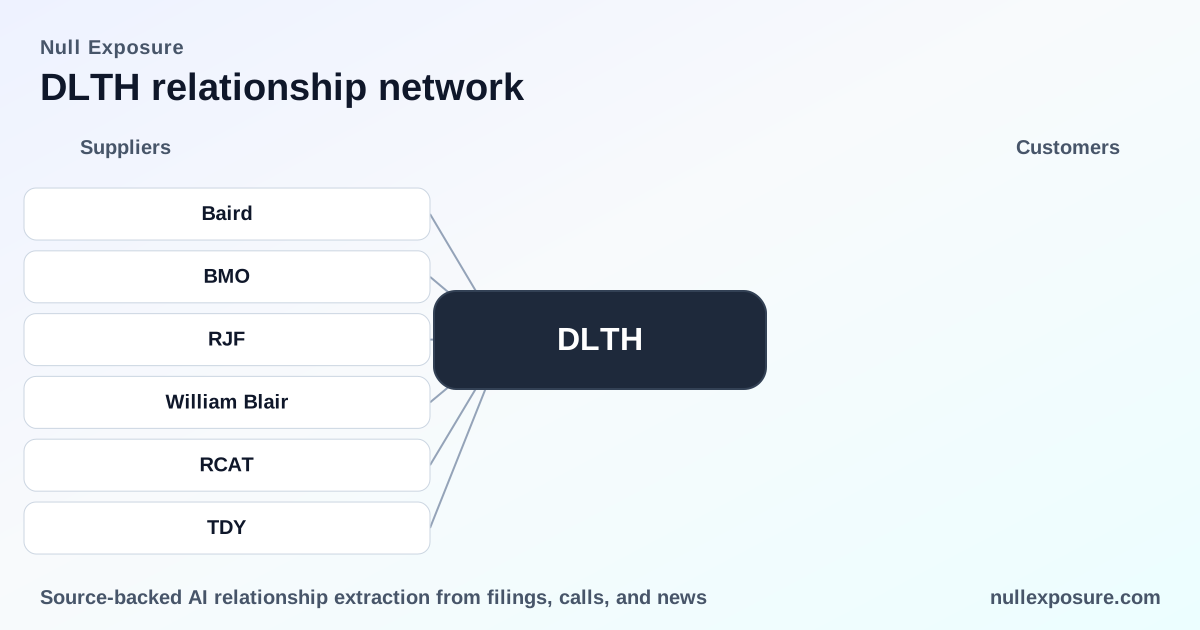
The records in scope identify four investment bank underwriters from the company’s IPO and two strategic partners called out in recent earnings commentary. Below are plain‑English summaries with source notes.
-
William Blair — William Blair served as one of the underwriters on Duluth’s public offering. This underwriting role was documented in coverage of Duluth’s FY2015 IPO process. (247wallst article, Nov 2015)
-
Baird — Baird acted as an underwriter for Duluth’s offering alongside William Blair, Raymond James and BMO Capital Markets, providing capital markets services during the FY2015 IPO. (247wallst article, Nov 2015)
-
Raymond James (RJF) — Raymond James was named among the underwriting syndicate for Duluth’s FY2015 offering, positioning it as a historical capital markets counterparty. (247wallst article, Nov 2015)
-
BMO Capital Markets (BMO) — BMO Capital Markets participated as an underwriter on Duluth’s FY2015 offering, reflecting the bank relationships Duluth established for its public listing. (247wallst article, Nov 2015)
-
Red Cat (RCAT) — Duluth’s 2025 Q4 earnings commentary notes an expansion of partnerships with defense and drone leaders, including Red Cat, signaling a strategic tie into specialized equipment or distribution channels outside core apparel retail. (Duluth 2025 Q4 earnings call, 2026)
-
Teledyne Marine (TDY) — Teledyne Marine was cited alongside Red Cat in Duluth’s 2025 Q4 remarks about expanded partnerships in subsea, defense and drone sectors, indicating Duluth is broadening supplier and integrator relationships in specialized markets. (Duluth 2025 Q4 earnings call, 2026)
Constraints and what they reveal about the operating model
The filings and excerpts in the record produce clear company‑level signals about how Duluth contracts and where the economic leverage sits.
-
Long‑term lease posture: Store leases are non‑cancelable with terms commonly from five to fifteen years and some expirations through 2041, creating fixed occupancy cost commitments that drive operating leverage. This is a structural constraint on flexibility and a decisive factor in assessing break‑even volume for each store.
-
Supplier concentration in APAC: In fiscal 2024, 43% of purchases came from Duluth’s largest supplier, an agent partner in Hong Kong, indicating material dependency on a single APAC sourcing channel and associated geopolitical/logistics risk.
-
Outsourced manufacturing: Duluth does not own manufacturing facilities and relies on third‑party vendors for production, which reduces capital burden but transfers execution risk to suppliers and contract manufacturers.
-
Service reliance across the stack: The company contracts third parties for logistics, hosting its website, call center operations, software development, catalog production, marketing, gift card processing, distribution, packaging and employee benefits, making vendor management a central operational discipline.
-
Lease spend scale: Reported lease expense line items (e.g., “Total lease expense $40,161” versus $37,548) indicate meaningful recurring occupancy costs that sit squarely on the P&L and amplify the importance of store productivity trends.
Investment implications and risk checklist
Duluth’s supplier and contract profile produces a predictable set of investment considerations:
-
Concentration risk is material. A single APAC agent accounted for 43% of purchases in fiscal 2024, creating a single point of failure for cost and availability.
-
Fixed cost leverage is high. Long lease terms through 2041 and multi‑year store commitments amplify earnings volatility when top‑line growth softens.
-
Operational execution depends on third parties. Outsourced manufacturing and wide-ranging service providers make vendor governance and contingency planning critical to margin recovery.
-
Capital markets ties are historical but informative. The IPO underwriters (William Blair, Baird, Raymond James, BMO Capital Markets) reflect who helped bring Duluth public; their presence is more historical capital structure context than ongoing operational exposure. (247wallst article, Nov 2015)
A concise investor checklist:
- Confirm supplier diversification plans and backup sourcing outside the Hong Kong agent.
- Quantify lease maturities and potential rent renegotiation windows for stores with weak sales.
- Review third‑party service contracts for single‑vendor dependencies and SLAs.
If you want a dedicated supplier risk briefing or a quick aggregation of counterparty exposure across retail peers, see Null Exposure.
Practical action and monitoring
For operators and investors the priority actions are governance and scenario planning: enforce diversification of APAC sourcing, negotiate flexibility in lease terms where possible, and establish clear escalation paths with manufacturers and logistics providers. Track inventory lead times from the Hong Kong agent and monitor the quarterly cadence of lease-related costs versus same‑store sales.
For targeted supplier intelligence and ongoing monitoring of these relationships, consult Null Exposure for signal feeds and relationship snapshots.
Final takeaway
Duluth is a retail business with outsized operational sensitivity to supplier concentration and long‑dated lease commitments. That combination creates asymmetric downside to earnings but also a clear framework for remediation—diversify sourcing, tighten vendor governance, and manage store footprint. Investors who prioritize counterparty risk and lease leverage will extract the most predictive insight from Duluth’s supplier map and the relationships documented above.