Dollar Tree (DLTR): supplier posture, contract risk, and what relationships reveal to investors
Dollar Tree operates a national network of discount variety stores that monetize primarily through high-volume retail sales of low-price merchandise and vendor-supported margin improvement programs. The company sources a large portion of goods from overseas suppliers (notably China), purchases largely on an order-by-order (spot) basis, and captures additional margin through negotiated vendor allowances, markdown reimbursements and volume rebates. This mix produces steady top-line throughput and working-capital dynamics that investors should evaluate alongside lease commitments and the company’s active supply-chain finance program.
For a consolidated view of supplier exposures and relationship mapping, visit https://nullexposure.com/.
How Dollar Tree buys, pays and ships — the operating model investors must read
Dollar Tree’s supplier operating model combines high operational flexibility with concentrated geographic sourcing. The company explicitly states that the majority of direct imports are sourced from China, and that it primarily buys products on an order‑by‑order basis and has no material long‑term purchase contracts for product supply. That contracting posture gives procurement agility and price leverage but also elevates exposure to commodity and freight volatility.
At the same time, leases and distribution arrangements introduce longer-dated commitments: leases with initial terms longer than 12 months are recognized as right‑of‑use assets and lease liabilities, while shorter leases are expensed straight‑line. Distribution in Canada is outsourced to a third party from two regional facilities, which reduces in‑house logistics capital but creates vendor dependency that is operationally relevant for Canadian coverage.
Dollar Tree runs a supply chain finance program to accelerate supplier receipts and optimize its working capital. Outstanding obligations under that program were $346.5 million as of February 1, 2025, up materially from $10.0 million a year earlier — a clear signal that supplier financing and payables management are an active element of its supplier ecosystem. (Source: company filing and fiscal disclosures, periods cited above.)
What the constraint signals tell investors about supplier risk
The company-level constraint excerpts convey four practical features of Dollar Tree’s supplier posture:
- Contracting posture: A mix of short-term spot purchase behavior for merchandise and longer-term lease commitments for stores. This produces flexibility in merchandise procurement alongside fixed occupancy cost exposure. (Evidence: purchasing and lease excerpts from filings.)
- Geographic concentration: A heavy sourcing footprint in APAC, specifically China, increases supply‑chain and tariff/geopolitical sensitivity. (Evidence: foreign supplier sourcing language.)
- Materiality / counterparty concentration: No single merchandise vendor historically accounts for more than 10% of purchases, indicating low single-vendor concentration for product supply. This reduces outsized supplier dependency risk. (Evidence: vendor materiality excerpt.)
- Working‑capital and counterparty exposure: The supply chain finance program is active and material to payables: >$300M outstanding at the start of FY2025, signaling both a tool for supplier liquidity and a credit linkage to the administering financial institution. (Evidence: program balances noted in filings.)
These constraints collectively indicate a mature retail procurement function that balances low supplier concentration with concentrated geography and meaningful contractual obligations for real estate and financed payables.
Mapping reported supplier and data-provider relationships
Below is every relationship recorded in the supplied results.
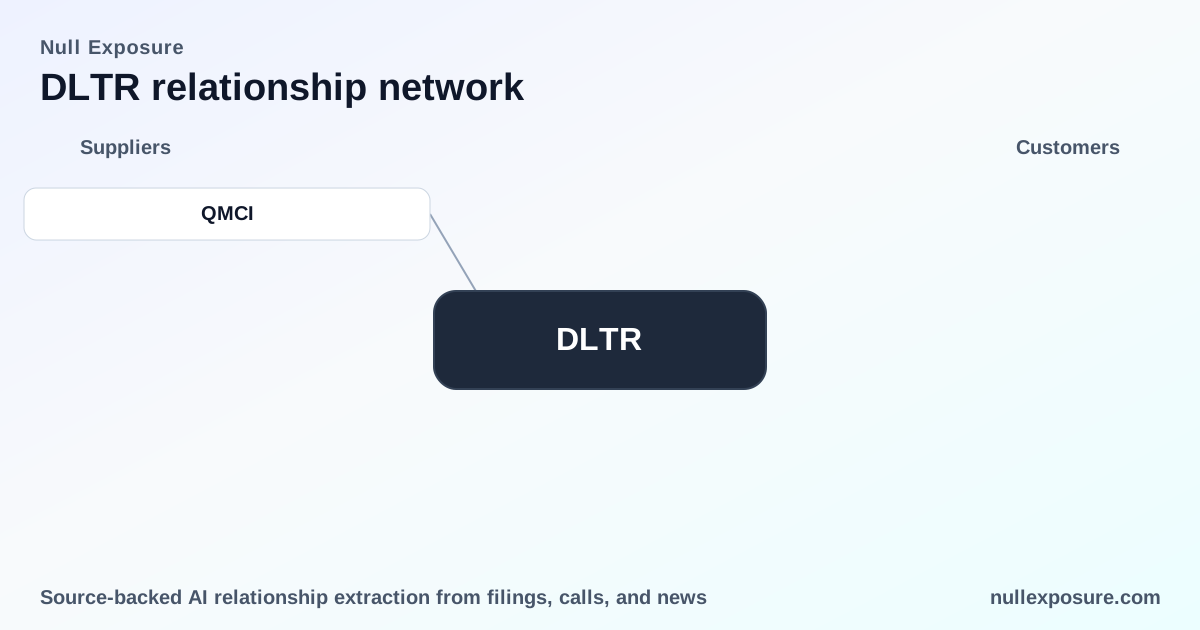
- QuoteMedia (inferred symbol QMCI): Dollar Tree used market data “powered by QuoteMedia” in a corporate press release announcing fourth-quarter earnings; the reference appears on the company site on March 9, 2026. This is a market-data provider relationship rather than a merchandise supplier, and it supports external communications and investor-facing disclosures. (Source: Dollar Tree press release on corporate site, Mar 9, 2026.)
That covers the full set of relationships returned in the supplier-scope results.
Why a QuoteMedia link is relevant to supplier analysis
While QuoteMedia is not a goods supplier, the presence of a market-data provider in the company’s communications asset stack signals a standardized investor‑communications process. For operational investors this is a minor, but useful, indicator of how Dollar Tree packages external performance metrics and third‑party data in investor materials. (Source: corporate press release, Mar 2026.)
Explore comparable supplier mappings and relationship intelligence at https://nullexposure.com/.
Investment implications — what to watch and why it matters
- Volatility exposure from spot purchasing. The order‑by‑order procurement model preserves margin flexibility, but it also transmits raw-material, freight and FX volatility directly to gross margin. Monitor commodity and freight trends alongside same‑store metrics.
- China sourcing concentration is a structural risk. Geographic concentration increases vulnerability to tariffs, port disruption and supplier reliability issues; investors should stress-test assumptions for sustained China supply.
- Low single-supplier concentration is a credit-positive. No vendor historically exceeds 10% of merchandise purchases, reducing counterparty concentration risk in the product supply chain.
- Supply-chain finance is now a material lever. The roughly $346.5 million outstanding balance under the program as of Feb. 1, 2025 is a material working-capital item that links Dollar Tree’s operational cash conversion to external financing and supplier liquidity. That creates a channel of counterparty risk to the administering bank and an operational dependency worth monitoring in diligence. (Source: corporate filing disclosures for fiscal years referenced above.)
- Real estate commitments remain important. Lease accounting for long-term store leases creates fixed operating obligations; those must be balanced against margin volatility from merchandise inputs.
Practical investor checklist and next steps
- Review procurement commentary in the next 10-Q/10-K for changes to APAC sourcing percentages and any new long‑term supplier agreements.
- Track trends in the supply‑chain finance balance and the identity/credit of the administering financial institution to understand counterparty exposure.
- Monitor freight and tariff headlines as near-term drivers of gross-margin trajectory; evaluate sensitivity assuming spot procurement behavior.
For a structured, exportable look at supplier relationships and constraint signals for DLTR and other retail names, visit https://nullexposure.com/ and review the supplier profiles.
Bottom line
Dollar Tree combines a flexible, low-concentration purchasing model with significant geographic sourcing concentration and material working‑capital programs. That combination supports operational agility and margin capture through vendor allowances, but it creates visible exposure to APAC sourcing risk and to the financiers behind its supply‑chain program. Investors should weight these dynamics against occupancy commitments and the company’s demonstrated capacity to scale financed payables when forming a thesis on operational resilience and credit risk. For further supplier-level detail and comparative benchmarks, see https://nullexposure.com/.