Delixy Holdings (DLXY): Supplier relationships and what they mean for investors
Delixy Holdings Limited operates as a wholesale trader of crude oil and oil-based products across Southeast Asia, East Asia and the Middle East and monetizes through trading spreads, distribution margins and short-term physical logistics arbitrage. The company recently completed a U.S. offering and has engaged a set of capital-markets and communications suppliers critical to its public-market transition. For investors evaluating counterparty risk and governance, the combination of tiny market capitalization, high insider control, and transactional external advisors defines the most material supplier exposure.
Learn more or run deeper supplier diligence at https://nullexposure.com/.
Where the company stands right now — a practical snapshot for portfolio managers
Delixy is a microcap energy marketer with meaningful top-line scale but razor-thin profitability. Reported TTM revenue is $273.16 million with gross profit of $3.571 million and a profit margin of 0.42%, indicating the business is primarily a volume-driven trading operation where small price moves and cost swings are decisive. Market capitalization is $12.9 million and trailing P/E is 11.29, while EV/EBITDA sits near 9.54 — valuation metrics that reflect both low margins and limited public float.
Key operating signals:
- Concentrated control: insiders hold ~71% of shares, which creates governance concentration and limited public liquidity. Institutional ownership is effectively negligible at 0.2%.
- Microcap liquidity: shares outstanding are small and float is limited (shares float ~4.3 million), which increases market impact for trading and raises execution risk for large orders.
- Maturity and margin profile: operating and gross margins are extremely thin, consistent with wholesale trading; this raises sensitivity to commodity price movement, freight costs, and receivables risk.
- Public-market posture: the company completed an offering and engaged a small-cap underwriter and specialized legal and IR advisors — a supplier mix typical of recent IPOs transitioning from private control to public reporting.
Who Delixy hired for the offering — the relationships disclosed
Below are every relationship referenced in the public press release tied to the offering; each relationship is summarized with source attribution.
-
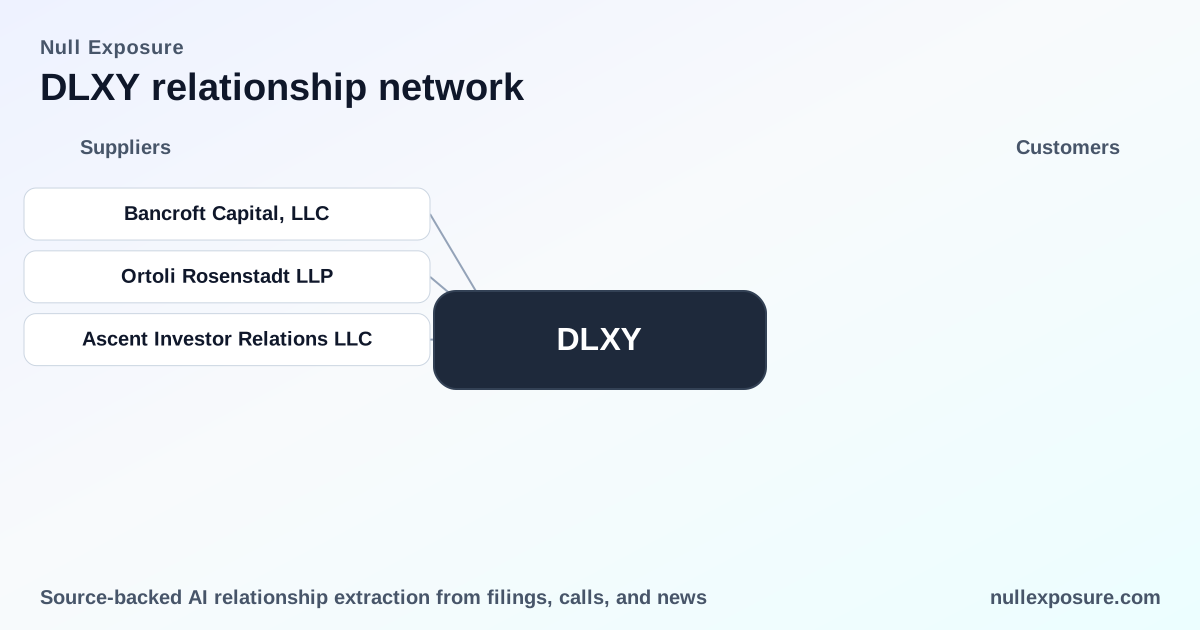
Bancroft Capital, LLC acted as the sole lead underwriter for Delixy’s offering, handling placement and syndication responsibilities for the IPO. According to the March 9, 2026 press release, Bancroft led pricing and distribution activity for the transaction (source: StockTitan news release, March 9, 2026 — https://www.stocktitan.net/news/DLXY/delixy-holdings-limited-announces-pricing-of-initial-public-69tzmrrfsnop.html).
-
Ortoli Rosenstadt LLP served as U.S. counsel to Delixy, with named partners William S. Rosenstadt and Mengyi “Jason” Ye leading the legal engagement on the offering. The same March 9, 2026 update lists the firm’s role in supporting the company’s regulatory and disclosure work for the offering (source: StockTitan news release, March 9, 2026 — https://www.stocktitan.net/news/DLXY/delixy-holdings-limited-announces-pricing-of-initial-public-69tzmrrfsnop.html).
-
Ascent Investor Relations LLC was engaged for investor and media communications, with contact details provided for investor inquiries; Delixy directed media and investor outreach through Ascent as part of the post-offering communications plan. The company’s March 9, 2026 announcement identifies Ascent as the IR contact (source: StockTitan news release, March 9, 2026 — https://www.stocktitan.net/news/DLXY/delixy-holdings-limited-announces-pricing-of-initial-public-69tzmrrfsnop.html).
What these supplier choices tell you about the business model and contracting posture
The supplier mix is consistent with a transactional, capital-markets phase for a small public company rather than a long-standing operational outsourcing program.
- Contracting posture: relationships are event-driven and short-term (underwriter and counsel for an offering; IR for market-facing communications). These are high-criticality suppliers for access to U.S. capital markets but not long-term operational vendors for trading or logistics.
- Concentration: supplier concentration is low in number but high in significance — a single underwriter and a single legal counsel comprise the capital markets stack, which concentrates execution and compliance risk during the offering window.
- Criticality: these suppliers are critical to the company’s market access and regulatory posture; failures or disputes at this stage would directly affect liquidity and disclosure credibility.
- Maturity: engagement of boutique underwriters and specialized counsel signals an early-stage public-company maturity; the firm is establishing market infrastructure rather than optimizing a diversified supplier base.
If you require deeper supplier-level diligence or ongoing monitoring of legal and IR exposures, our platform aggregates and timestamps these relationship disclosures for investors. Explore supplier intelligence at https://nullexposure.com/.
Risk implications and due-diligence checklist for investors
Investors should prioritize three diligence actions given the supplier and company profile:
- Confirm counterparty credit and performance terms for trading counterparties and logistics partners; thin operating margins and low EBITDA cushion increase counterparty exposure risk.
- Review governance and insider lock-up terms: with 71% insider ownership, evaluate potential for related-party transactions and shareholder minority protections.
- Assess liquidity and market-access resilience, including the durability of IR and legal arrangements post-offering and whether additional capital raises will be required.
Major risk factors to track: very low profit margins, microcap liquidity, concentrated insider ownership, and reliance on transactional professional services for public-market access.
Bottom line — what investors should take away
Delixy operates a volume-heavy trading business with material operational leverage but minimal margin buffer. The disclosed supplier relationships — a single lead underwriter, dedicated U.S. counsel, and an outsourced investor-relations firm — are appropriate for a recent microcap offering but also concentrate execution risk during the company’s public transition. Governance concentration and limited institutional ownership amplify the importance of monitoring counterparty exposures and disclosure quality.
If you need a supplier-focused risk brief or want to track subsequent supplier disclosures for Delixy, start here: https://nullexposure.com/. For portfolio managers seeking ongoing updates on capital-markets supplier activity, sign up for extended monitoring and alerts at https://nullexposure.com/.