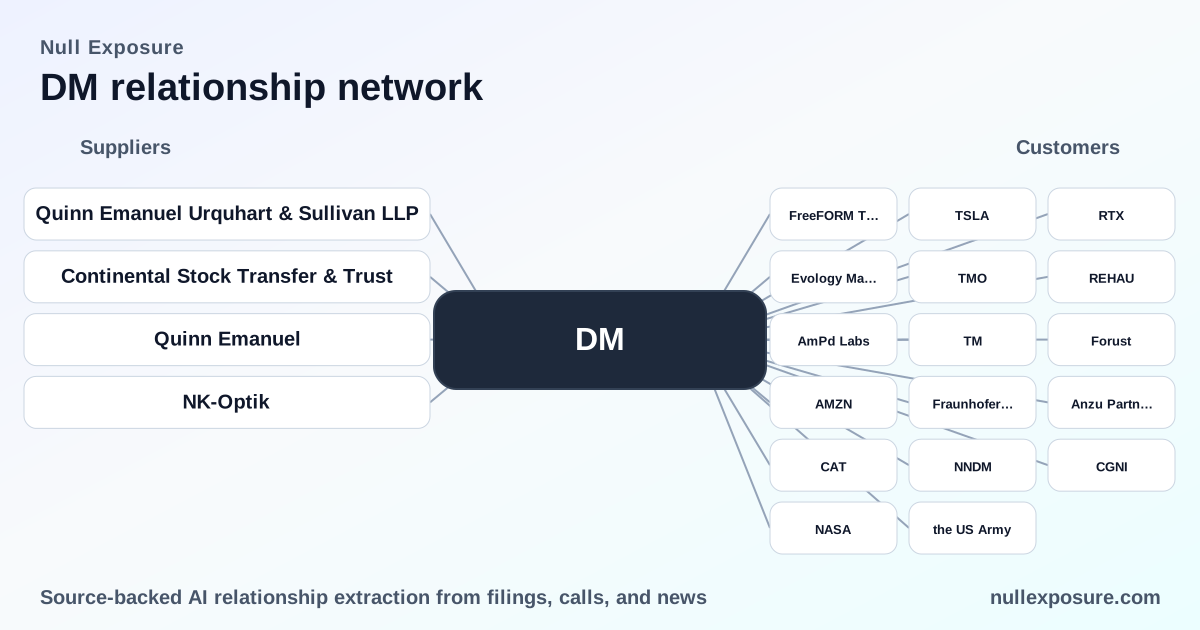
Desktop Metal (DM) — Supplier Relationships and What They Tell Investors
Desktop Metal is a hardware and materials business that monetizes by selling 3D printing systems, materials, and associated services while relying on a small set of external professional vendors to execute corporate actions and defend its interests in litigation. Revenue generation is product and service-led; supplier relationships are transactional but strategically critical during M&A, corporate governance events, and litigation. For a focused supplier-risk read on Desktop Metal, see more at https://nullexposure.com/.
Investment thesis — simple, concentrated, externally-dependent when it matters
Desktop Metal’s commercial economics rest on capital equipment sales and consumables; operationally the company outsources high-stakes functions—legal advocacy and transfer-agent services—rather than building those capabilities in-house. That contracting posture reduces fixed costs but concentrates exposure on a handful of professional suppliers that are critical during corporate transactions and disputes. For a complete supplier-risk map and ongoing monitoring, visit https://nullexposure.com/.
How these supplier ties influence investor risk and upside
Desktop Metal’s supplier relationships are not operational inputs to its printers and materials business but are governance and legal levers that materially affect balance-sheet outcomes, shareholder rights, and transaction execution. When these external providers are engaged around M&A enforcement or corporate restructurings (reverse splits, exchange agent duties), their effectiveness directly shapes investor outcomes: litigation results, fee exposure, and the mechanics of capital structure changes.
- Contracting posture: Desktop Metal uses established external providers for specialized, episodic needs—legal counsel and transfer-agent services—reflecting a lean internal model for non-core functions.
- Concentration and criticality: The roster is small and concentrated on reputable firms; this reduces counterparty diversity but increases the systemic importance of each supplier during major corporate events.
- Maturity and predictability: Suppliers in the record are mature, widely used firms which lowers operational execution risk but does not eliminate financial or reputational consequences of disputes.
Supplier-by-supplier run-down (plain-English summaries and sources)
Below I cover every relationship flagged in available reporting and what each connection implies for investors.
Quinn Emanuel Urquhart & Sullivan LLP — lead litigation counsel for high-stakes disputes
Quinn Emanuel represented Desktop Metal in litigation alleging that Nano Dimension breached a merger agreement and has since asserted unpaid fees against Desktop Metal, a claim reported alongside the firm’s role enforcing Desktop Metal’s roughly $183 million acquisition claim. According to Bloomberg Law (March 2026), Quinn Emanuel has charged Desktop Metal for its representation and has been active in court enforcement related to the Nano Dimension transaction (https://news.bloomberglaw.com/business-and-practice/quinn-emanuel-says-desktop-metal-owes-firm-29-8-million-in-fees). A separate news report described Quinn Emanuel’s participation in the Delaware litigation to enforce the acquisition (March 2026 coverage at https://www.voxelmatters.com/nano-dimension-subsidiary-desktop-files-files-for-bankruptcy/).
- Investor takeaway: Having a national litigation powerhouse like Quinn Emanuel signals Desktop Metal’s willingness to pursue aggressive enforcement of deal terms, but it also creates counterparty fee exposure and legacy legal cost risk during protracted disputes.
Continental Stock Transfer & Trust — transfer agent and exchange-agent for corporate action
Continental Stock Transfer & Trust acted as Desktop Metal’s transfer agent and served as the exchange agent for a reverse stock split, administering adjustments for electronically held shares and the mechanics of the split. Industry coverage in VoxelMatters and 3DPrint.com (reported March 2026) documents Continental’s role in the reverse-split process (https://www.voxelmatters.com/desktop-metal-to-effect-a-reverse-stock-split/; https://3dprint.com/310495/velo3d-and-desktop-metal-announce-reverse-stock-splits-while-shapeways-divests-software-assets/).
- Investor takeaway: Use of an established transfer agent for corporate actions reduces execution risk on shareholder recordkeeping and split logistics; however, these processes can still produce short-term liquidity and float impacts that investors must model.
NK-Optik — referenced supplier in historical product marketing and litigation context
NK-Optik’s Otoflash G171 curing unit was referenced in marketing material for Flexcera dental products that arose in the context of investor litigation and product positioning; coverage (FY2023) notes NK-Optik as the curing unit cited as suitable for certain dental prints (3DPrintingIndustry, March 2026 reporting on earlier litigation outcomes: https://3dprintingindustry.com/news/desktop-metal-cleared-of-fraud-and-stock-manipulation-after-defeating-investor-lawsuit-225015/).
- Investor takeaway: NK-Optik is relevant to select product marketing claims and to litigation narratives that have affected investor perceptions. These supplier references can be a reputational lever in disputes over product claims, but they are not core to Desktop Metal’s primary revenue streams.
What investors should watch next
- Legal fees and judgments. Fee claims and litigation posture (notably Quinn Emanuel’s insistence on compensation) can shift cash requirements and attention from operations; track disclosures for legal accruals and settlement developments.
- Corporate actions execution. Transfer-agent performance during reverse splits and other shareholder actions affects float, voting mechanics, and short-term tradability—verify agent confirmations and shareholder communications.
- Reputational lines in product claims. References to equipment vendors in product marketing can reemerge in future legal or regulatory challenges, influencing brand and customer contracts.
Practical implications for portfolio managers
- Short horizon traders should expect volatility around corporate action windows (reverse split mechanics) and litigation headlines.
- Long-term investors should treat these external professional relationships as governance controls: capable providers reduce operational friction but do not eliminate legal or settlement risk that can affect equity value.
- Credit and treasury teams should monitor cash reserved for litigation and potential indemnities; vendor fee claims are real cash drains that can strain liquidity if multiple disputes converge.
For a deeper supplier-risk profile and ongoing alerts on Desktop Metal, visit https://nullexposure.com/ — our platform tracks these professional relationships and notifies investors when new supplier actions change the risk calculus.
Conclusion — supplier risk is targeted but consequential
Desktop Metal’s external supplier map is compact but strategically important: legal counsel and transfer agents are the levers that determine outcomes in M&A and shareholder actions, and references to product vendors can re-enter investor disputes. These relationships are with mature providers, which reduces operational execution risk, but they also concentrate exposure: a small number of service providers can generate outsized financial and governance consequences. Stay current with legal filings and corporate-action notices; for continuous monitoring and supplier analytics, return to https://nullexposure.com/.