DNNG: What investors and operators need to know about the supplier relationships behind the ticker
DNNG is the Leverage Shares 2x Long DNN Daily ETF, a leveraged exchange-traded product that monetizes through issuer economics — primarily management fees and market-making spreads — while depending on creation/redemption mechanics and liquidity from authorized participants. For investors and platform operators, DNNG’s commercial model is simple in structure but sensitive to short-term flows and sentiment, which directly influence trading liquidity and revenue capture for the issuer and counterparties.
If you need an immediate counterparty and exposure map for DNNG, see our platform: https://nullexposure.com/
How DNNG earns money and how that shapes supplier relationships
Leverage ETF issuers collect ongoing fee income and rely on a network of market makers, custodians, and authorized participants to maintain intraday liquidity and execute the creation/redemption lifecycle. That operating posture creates a few company-level realities:
- Contracting posture is transactional and market-driven. Relationships with market makers and APs are typically governed by standard market agreements that are renewed or adjusted according to flow economics, not long-term captive contracts.
- Concentration risk is operationally relevant. If liquidity is concentrated with a small set of APs or dealers, a withdrawal of those counterparties disrupts creation/redemption and amplifies price dislocation.
- Criticality is high for intermediaries during stress. Custodians, prime brokers, and settlement partners become mission-critical when leveraged product flows accelerate, because intraday leverage must be managed and collateral posted.
- Maturity is visible in public trading behavior, not private contracts. Absent detailed filings in the public record, maturity and robustness of supplier relationships are inferred from trading liquidity, spreads, and volatility.
No explicit contractual constraints were provided in the available disclosure for DNNG; this absence itself is a company-level signal indicating limited public visibility into bespoke counterparty arrangements and reinforces the need for active market surveillance.
The one explicit relationship investors should note
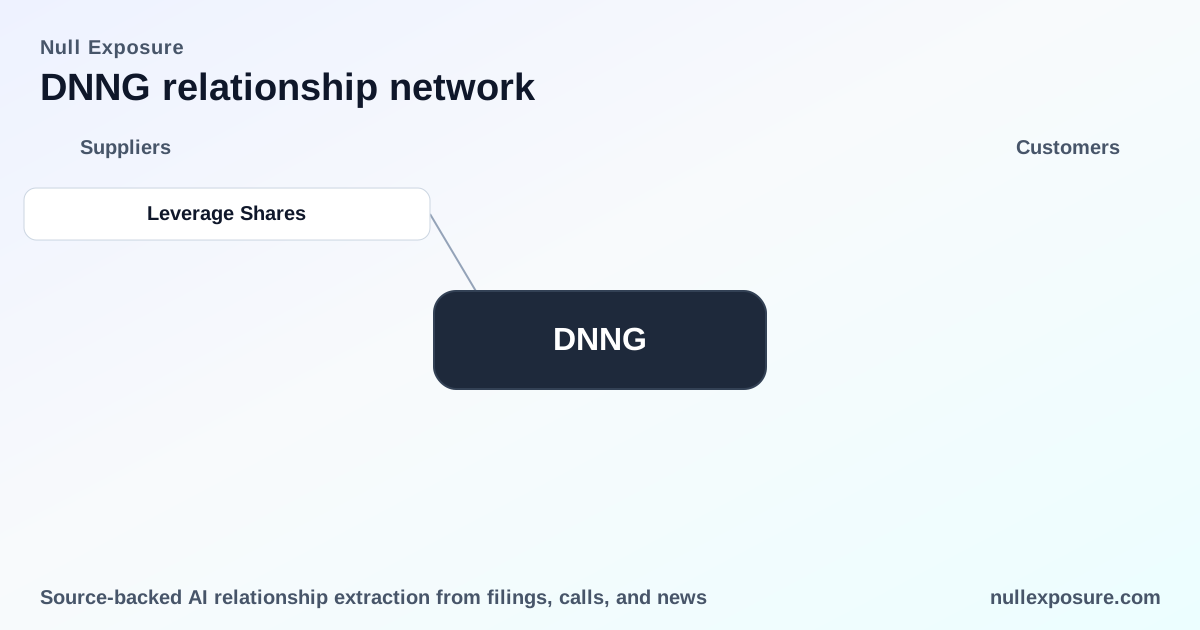
Leverage Shares — According to a market note on March 9, 2026, the Leverage Shares 2x Long DNN Daily ETF (DNNG) traded down 9.04% to $12.62, signaling a negative shift in investor sentiment that day and putting pressure on short-term liquidity and market-maker risk appetite (Meyka, March 9, 2026).
Why that relationship matters to operators and counterparties
The issuer–product relationship is the central node for risk and revenue. When the issuer’s ETF experiences rapid outflows or negative sentiment, market makers and APs face increased hedging and financing costs; custodians and settlement agents face higher operational throughput; exchanges and liquidity venues see widening spreads that reduce tradability. For trading platforms and institutional counterparties, the Leverage Shares issuer relationship is both the source of fee income and the point of concentration for operational risk.
Key takeaway: issuer-led leveraged products transmit market moves quickly into counterparty economics, so operators must monitor flows and market-maker capacity continuously.
https://nullexposure.com/ is a live resource if you want a consolidated view of these dynamics.
What the March 2026 price move signals for supply-chain counterparties
- Short-term funding pressure: A 9% intraday move in a leveraged ETF compresses market-maker P&L and raises margin calls for hedges.
- Liquidity retreat risk: Dealers can narrow two-way quotes or withdraw, increasing friction for end investors and for platforms that list the product.
- Fee revenue volatility: Issuer revenues from fees remain, but the economics of distribution and secondary market spreads can temporarily reduce effective monetization.
Practical monitoring checklist for investors and operators
Use this checklist to convert the relationship signal into operational oversight and investment decisions:
- Track intraday volume and bid-ask spreads on DNNG to infer market-maker capacity and spread capture.
- Monitor creation/redemption notices and filings from the issuer to detect structural flow changes.
- Verify counterparty concentration: confirm the roster of active authorized participants and major dealers if accessible.
- Assess custody and settlement robustness — elevated fail rates or settlement exceptions are early warnings.
- Maintain communications protocol with trading counterparties for fast confirmation when sentiment shifts.
Risk focus: rapid sentiment moves in leveraged products create asymmetric operational risk that is not visible from fee schedules alone.
Calls to action for due diligence
Begin with primary sources and continuous market surveillance: confirm issuer notices, review exchange-level tape, and triangulate with sentiment reports. For a consolidated operational view and ongoing exposure monitoring, start here: https://nullexposure.com/
Final investor guidance — what to do next
DNNG’s public footprint in the available data is concentrated in a single, clear market-sentiment event tied to Leverage Shares’ 2x Long DNN Daily ETF. That concentration underscores two imperatives for investors and platform operators: maintain real-time liquidity and counterparty visibility, and build threshold triggers that translate sudden price moves into operational actions (tighten hedges, increase margin checks, or pause new flows).
For a streamlined way to map out these supplier and counterparty relationships and set monitoring thresholds, visit our hub: https://nullexposure.com/
Bottom line: DNNG’s mechanics make it a high-sensitivity instrument for counterparties — revenue flows are straightforward, but operational risk concentrates when market sentiment turns. Keep supplier relationships and liquidity metrics front and center in any evaluation.