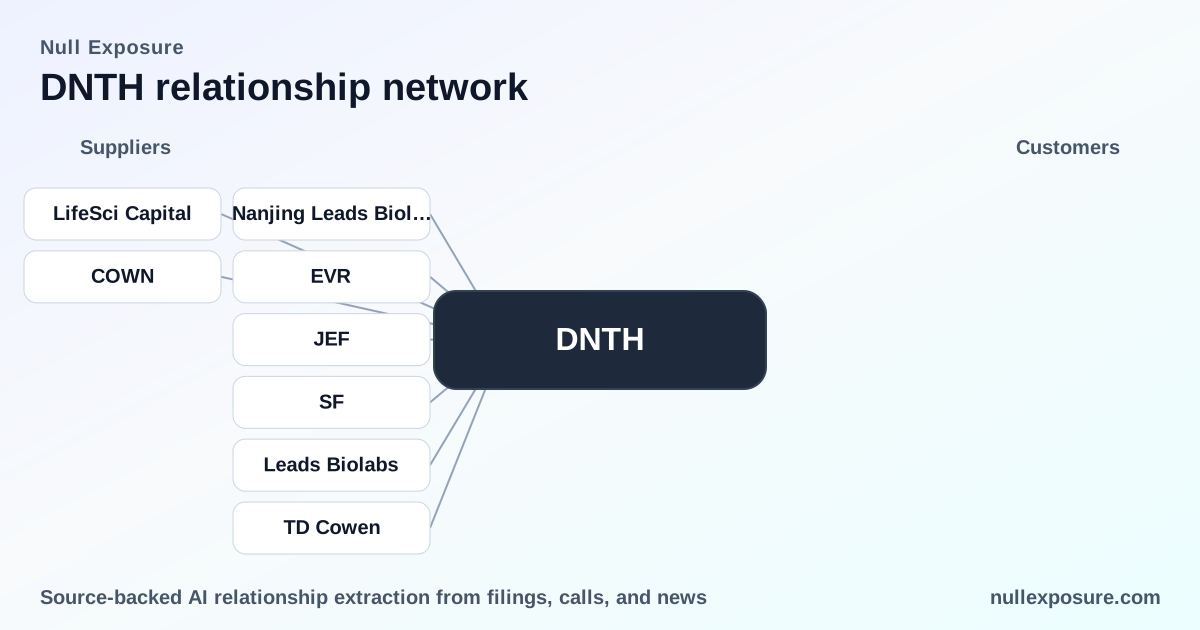
Dianthus Therapeutics (DNTH): Supplier and partner map for investors
Dianthus Therapeutics operates as a clinical-stage biotech developer of monoclonal antibody and fusion-protein therapies for severe autoimmune and inflammatory diseases. The company monetizes by in‑licensing promising biologics, progressing them through clinical development and then capturing value via future commercialization or additional licensing and partnering, while funding R&D and operations through equity offerings arranged by investment banks. For commercial and operational execution, Dianthus relies heavily on third‑party licensors, contract manufacturers and capital markets relationships to advance programs like DNTH212 and DNTH103. Explore a consolidated view of these supplier and partner relationships and what they mean for investors: https://nullexposure.com/
How Dianthus structures outsourcers and monetization in plain terms
Dianthus’s business model is licensing-driven and asset-light. The company secures intellectual property and development rights (licenses) for novel molecules, outsources manufacturing and development work to CDMOs and specialist research partners, and funds the clinical pathway through public equity raises and investment banking syndicates. This model scales program exposure with relatively low fixed capital but creates concentration and supply-chain criticality that directly affect clinical timelines and valuation.
Who Dianthus is working with — relationship map and sources
Below are the relationships surfaced in public reports and press releases. Each entry is a concise, plain‑English summary with a source reference.
Nanjing Leads Biolabs Co., Ltd. / Leads Biolabs
Dianthus entered an exclusive license for DNTH212 (called LBL‑047 in Greater China) that gives Dianthus global rights outside Greater China and creates a joint development path to push the candidate through global clinical trials. This deal positions Dianthus to commercialize a bifunctional BDCA2 and BAFF/APRIL inhibitor developed by Leads Biolabs (reported March 9, 2026). (QuiverQuant press release, March 9, 2026 — https://www.quiverquant.com/news/Dianthus+Therapeutics+Initiates+Licensing+Agreement+for+DNTH212%2C+a+Promising+Treatment+for+Autoimmune+Diseases+with+Unique+Mechanism+of+Action; also reported via StockTitan and MarketBeat on March 9–13, 2026 — https://www.stocktitan.net/news/DNTH/leads-biolabs-and-dianthus-therapeutics-announce-initiation-of-phase-q2t2pyzsbkol.html and https://www.marketbeat.com/instant-alerts/dianthus-therapeutics-conference-dnth-eyes-q2-2026-cidp-phase-3-interim-readout-expands-pipeline-plans-2026-02-13/)
Jefferies
Jefferies acted as one of the joint book‑running managers on Dianthus’s public equity offering that raised hundreds of millions to advance clinical programs, underscoring its role in equity capital markets execution for DNTH. (QuiverQuant news on the offering, March 9, 2026 — https://www.quiverquant.com/news/Dianthus+Therapeutics+Closes+%24288+Million+Public+Offering+to+Advance+Clinical+Development+of+Antibody+Therapeutics; StockTitan coverage of the upsized pricing, March 9, 2026 — https://www.stocktitan.net/news/DNTH/dianthus-therapeutics-inc-announces-pricing-of-upsized-251-million-yktitzaf8wrm.html)
Evercore ISI
Evercore ISI served as a joint book‑running manager on the same public offering, contributing to syndicate placement and distribution that funded near‑term development. (QuiverQuant news on the offering, March 9, 2026 — https://www.quiverquant.com/news/Dianthus+Therapeutics+Closes+%24288+Million+Public+Offering+to+Advance+Clinical+Development+of+Antibody+Therapeutics)
Stifel
Stifel joined the syndicate as a joint book‑running manager on Dianthus’s equity raise, reflecting a multi‑bank financing strategy to underwrite pipeline advancement. (QuiverQuant announcement, March 9, 2026; StockTitan coverage of the upsized pricing, March 9, 2026 — https://www.quiverquant.com/news/Dianthus+Therapeutics+Closes+%24288+Million+Public+Offering+to+Advance+Clinical+Development+of+Antibody+Therapeutics; https://www.stocktitan.net/news/DNTH/dianthus-therapeutics-inc-announces-pricing-of-upsized-251-million-yktitzaf8wrm.html)
TD Cowen
TD Cowen acted as a joint book‑running manager in Dianthus’s capital raise, part of the multi‑bank syndicate that supplied immediate funding for clinical workstreams. (QuiverQuant news, March 9, 2026; StockTitan pricing report, March 9, 2026 — https://www.quiverquant.com/news/Dianthus+Therapeutics+Closes+%24288+Million+Public+Offering+to+Advance+Clinical+Development+of+Antibody+Therapeutics; https://www.stocktitan.net/news/DNTH/dianthus-therapeutics-inc-announces-pricing-of-upsized-251-million-yktitzaf8wrm.html)
LifeSci Capital
LifeSci Capital is identified as a lead manager on the equity offering, indicating a specialized life‑sciences book‑runner function that likely helped position the raise with sector‑focused investors. (QuiverQuant offering summary, March 9, 2026 — https://www.quiverquant.com/news/Dianthus+Therapeutics+Closes+%24288+Million+Public+Offering+to+Advance+Clinical+Development+of+Antibody+Therapeutics)
(For additional primary press coverage of the license and offering, see the StockTitan reports published March 9, 2026 — https://www.stocktitan.net/news/DNTH/dianthus-therapeutics-inc-announces-pricing-of-upsized-251-million-yktitzaf8wrm.html and https://www.stocktitan.net/news/DNTH/dianthus-therapeutics-announces-exclusive-license-agreement-with-t2i1pzrfqlxm.html)
Operating model constraints and what they signal for investors
The public filings and disclosures describe a set of recurring contract patterns and operational constraints that define Dianthus’s risk/reward profile:
-
Licensing-centric contracting posture. Dianthus relies on multiple license agreements (e.g., OmniAb, Alloy) to source discovery assets and platform technology, which is a core part of how the company builds pipeline optionality. Evidence: company license excerpts for Alloy and OmniAb cited in filings.
-
Framework and MSA relationships for manufacturing. The company has framework/master services agreements (for example, a WuXi Biologics MSA cited in the filings) and cell‑line license agreements that institutionalize work orders and GMP manufacturing. This creates structured but dependent sourcing for clinical supply.
-
Geographic concentration and supply risk in APAC. The filings explicitly note exposure from engaging contract manufacturers located in China, which elevates geopolitical and operational disruption risk tied to APAC policy or logistics changes.
-
Critical supplier dependency. Filings flag sole‑source arrangements (WuXi Biologics) for DNTH103 supply — a critical relationship that would materially affect clinical timelines if disrupted.
-
Service‑provider heavy model with active third‑party CRO/CDMO involvement. Dianthus contracts multiple specialized vendors for R&D, cybersecurity, and platform research, reflecting a mature outsourcing profile rather than in‑house vertical integration.
-
Spend profile consistent with early clinical-stage R&D. Disclosed annual fees and R&D payments fall into two primary bands: $100k–$1M for licensing/annual fees to partners like Alloy/OmniAb, and $1M–$10M for collaborative research obligations (IONTAS), indicating controllable but non‑trivial recurring partner spend.
Collectively, these signals describe a company that is agile in assembling external capabilities but dependent on a small group of specialized partners for supply and discovery inputs — a structural exposure investors must price.
Learn more about mapping supplier concentration at https://nullexposure.com/
Risk implications for operators and investors
- Operational continuity risk is elevated. Sole‑source GMP arrangements and APAC manufacturing concentration mean clinical supply interruptions will directly delay milestones and cash consumption.
- Capital markets execution is material to runway. Recent multi‑hundred‑million equity raises coordinated by Jefferies, Evercore ISI, TD Cowen, Stifel and LifeSci Capital highlight that access to syndicated equity capital is a primary pathway to derisking programs. (QuiverQuant offering coverage, March 9, 2026 — https://www.quiverquant.com/news/Dianthus+Therapeutics+Closes+%24288+Million+Public+Offering+to+Advance+Clinical+Development+of+Antibody+Therapeutics)
- Partner selection drives strategic optionality. The Leads Biolabs license expands Dianthus’s product slate into bifunctional fusion proteins, improving long‑term commercial optionality if DNTH212 advances.
Bottom line and investor action points
- Dianthus is a licensing-driven, capital markets‑funded clinical developer that outsources manufacturing and research. This structure delivers high optionality at lower fixed cost but concentrates risk in a handful of suppliers.
- Key near‑term value drivers are clinical progress on licensed assets and the company’s ability to manage CDMO relationships and supply continuity. Monitor supply contracts and manufacturing footprint disclosures for changes.
If you evaluate suppliers and partner risk as part of investment or operational diligence, start with a tailored supplier concentration review — begin at https://nullexposure.com/ to see how supplier signals map to valuation sensitivity.
For investor diligence support or to request a supplier‑risk brief tailored to DNTH, visit https://nullexposure.com/ and contact our research team.