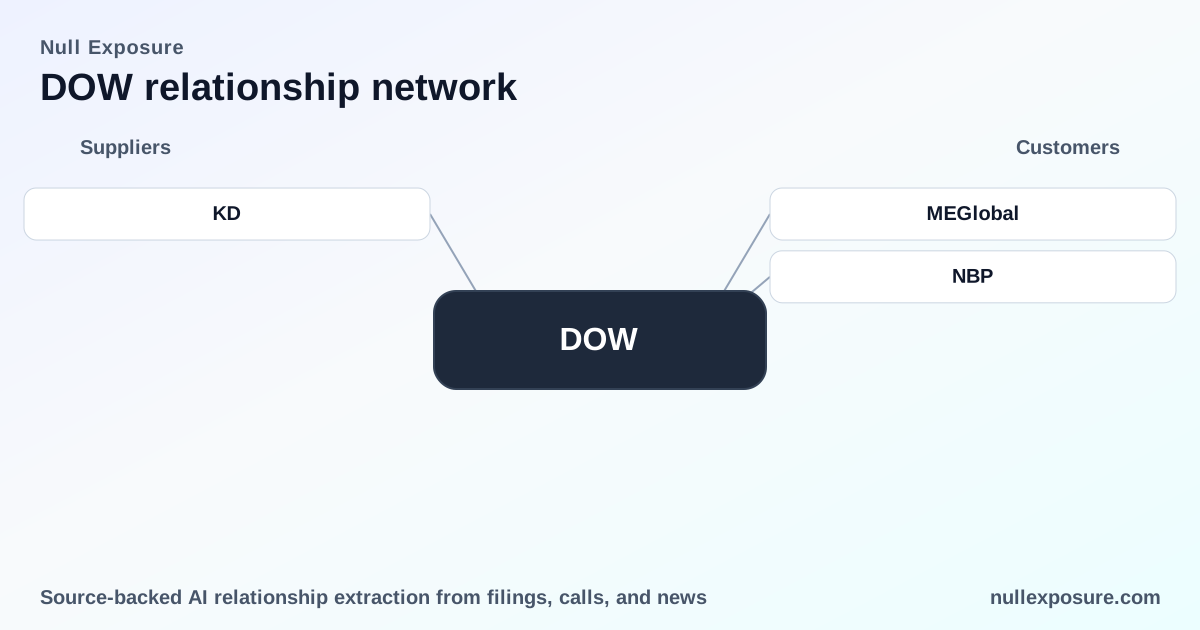
Dow Inc: Supplier relationships that shape cost, uptime and strategic modernization
Dow Inc is a global commodity chemicals manufacturer that monetizes through large-scale production and sale of basic chemicals and engineered materials, with revenue driven by volume, feedstock procurement, and the pricing mechanisms embedded in long- and short-term supply contracts. Dow’s operating margin and cash generation are tightly coupled to supplier terms for raw materials, infrastructure service arrangements at key manufacturing sites, and selective technology partnerships that reduce operating cost or enable digital transformation. For investors and operators, the supplier book is therefore a primary driver of input-cost volatility, operational continuity, and strategic optionality.
Explore more supplier intelligence at Null Exposure.
Why supplier relationships are an active value lever for Dow
Dow’s business is commodity-exposed: revenue TTM is roughly $39.97 billion with EBITDA around $2.70 billion, so small shifts in feedstock cost or site service availability can materially compress margins. Supplier contracts control three levers simultaneously: input cost, uptime risk for large integrated plants, and optionality for technology-led efficiency gains. Dow’s mix of long-term take-or-pay style arrangements and short-term purchases creates a deliberate hedging posture—locking volumes where necessary while keeping flexibility to react to market swings.
The relationships the market flagged — one notable supplier partner
H2 and H3 sections below cover every relationship flagged in the source material.
Kyndryl: IT modernization and AI-driven automation
Dow expanded a collaboration with Kyndryl to modernize its application landscape using AI and automation, a strategic outsourcing move to accelerate digital transformation and reduce legacy maintenance drag. This is a technology services relationship focused on application modernization and operational automation. A StockTitan news item (March 9, 2026) reported on the expanded collaboration between Dow and Kyndryl to deploy AI and automation across Dow’s application stack (FY2026). Source: StockTitan news, March 2026 — https://www.stocktitan.net/news/DOW/page-34.html.
Operating model constraints and what they signal to investors
The underlying constraint excerpts in Dow’s disclosures reveal a coherent supplier posture and maturity profile that inform risk assessment and contracting strategy:
-
Contracting posture: mix of long-term and short-term agreements. Dow explicitly purchases raw materials on both long-term and short-term contracts; it uses long-term arrangements to secure critical feedstocks and short-term purchases to capture favorable spot markets. This structure reduces exposure to chronic shortages while preserving agility to manage cyclical price moves. Evidence: company disclosures describing both short- and long-term raw-material contracts.
-
Global supplier footprint with concentration in energy and feedstock sources. Dow sources raw materials from regional, international and national oil and gas companies, indicating a global supplier base but concentrated commodity exposure that links Dow to energy-market cyclicality and geopolitical supply dynamics.
-
Role diversity: buyer, seller and service consumer. Company-level filings describe Dow as a buyer of feedstocks, a seller via joint-venture supply arrangements (joint ventures producing silicon inputs and selling to equity owners under guaranteed return pricing), and a consumer of third-party services (for infrastructure and cybersecurity-controlled vendors). These roles indicate complex counterparty relationships that include take-or-pay economics and service-level criticality.
-
Service-provider dependencies and governance maturity. Dow maintains formal cybersecurity review processes and ongoing vendor assessments when engaging third-party service providers, a signal of mature vendor governance necessary for critical IT and operational services. The disclosures also describe infrastructure services provided by third parties at multiple Gulf Coast sites—highlighting outsourcing of non-product-producing infrastructure with direct implications for site availability.
-
Receivables financing optionality. A vendor program allows suppliers to sell receivables due from Dow to financial intermediaries, which positions Dow within broader working-capital and supply-chain finance arrangements and can reduce supplier credit risk while leaving payment terms intact.
Collectively these constraints paint a company that is contractually sophisticated, globally sourced, and operationally dependent on both feedstock suppliers and outsourced service providers.
What investors and operators should watch next
-
Feedstock contract re-pricing and margin sensitivity. With commodity input exposure and a mix of contract tenors, monitor feedstock contract renewals and take-or-pay provisions that can lock in unfavorable pricing in a rising-cost environment. Dow’s margins are already under pressure relative to peak cyclicals; procurement outcomes will drive near-term earnings stability.
-
Operational continuity at Gulf Coast sites. Outsourced infrastructure services at multiple manufacturing sites are a single point where service providers can create cascading availability impacts; assess counterparty concentration and disaster recovery clauses.
-
Digital modernization as margin lever. The Kyndryl engagement is not merely IT outsourcing; it is a targeted program to extract operating efficiency through AI and automation, and therefore a potential medium-term margin improvement lever if implemented at scale.
For a deeper supplier-risk view and to map these relationships across counterparties, visit Null Exposure.
Practical portfolio and operational actions
-
For investors: stress-test earnings models for scenarios in which long-term feedstock contracts reset at higher levels and where infrastructure-service outages reduce plant run rates; incorporate supplier dispute and receivables-financing dynamics into working-capital forecasts.
-
For operators: demand clear service-level agreements and vendor redundancy plans for infrastructure at Gulf Coast sites; prioritize cybersecurity hygiene and continuous vendor scoring for mission-critical IT providers engaged in application modernization.
Final takeaways and where to go from here
Dow’s supplier architecture is a strategic asset and a risk vector. The company balances locked-in long-term feedstock arrangements and short-term flexibility, leverages joint-venture supply mechanisms to manage input flows, and outsources critical infrastructure and IT modernization to third-party providers such as Kyndryl. Investors should treat supplier contract cadence, feedstock pricing mechanisms, and outsourced service governance as first-order drivers of near-term earnings and mid-term operational resilience.
To review a mapped view of Dow’s supplier relationships and constraints, see the Null Exposure homepage: Null Exposure. For a custom supplier-risk briefing or to integrate this supplier intelligence into portfolio models, start at https://nullexposure.com/.