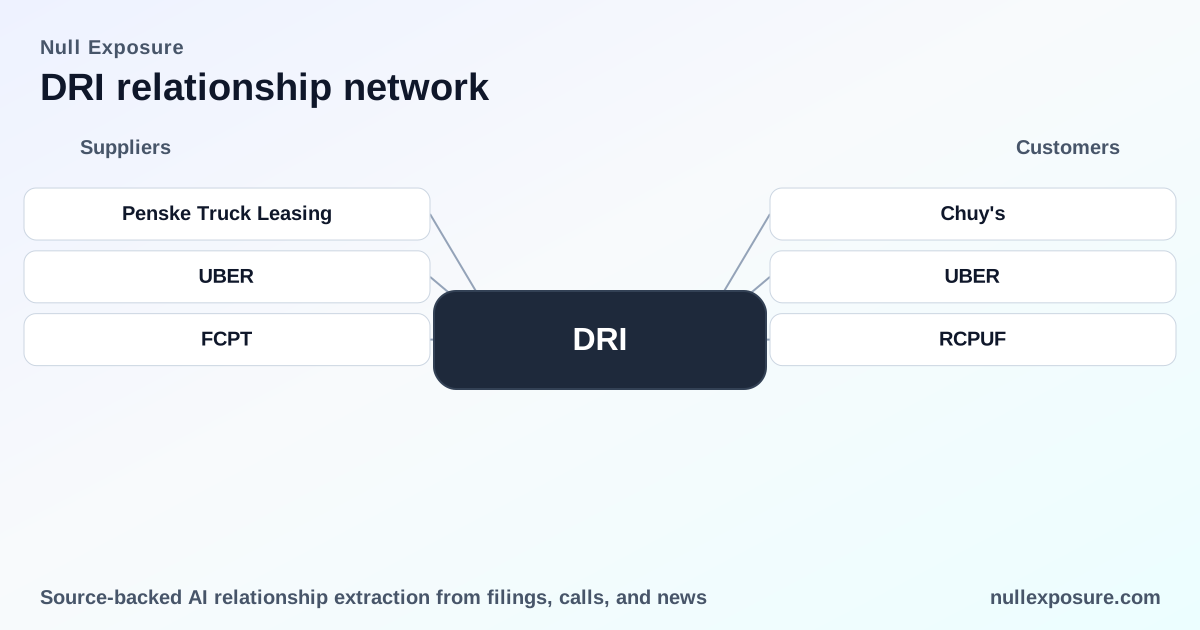
Darden Restaurants: supplier posture, lease exposure and delivery economics that move the P&L
Darden Restaurants operates a multi-brand full-service restaurant platform that monetizes through in-restaurant sales, delivery and steady recurring rent commitments across franchise and corporate-owned locations. The company controls costs through long-term supplier contracts, national distribution networks and direct sourcing from producers, while monetizing delivery and marketing partnerships to protect check and margin dynamics. For investors, the key monitorables are supply-chain durability, landlord lease exposure, and third‑party delivery economics—each has a direct line to operating margins and cash flow.
Explore more supplier relationship intelligence at https://nullexposure.com/
How Darden structures supplier risk and why it matters to returns
Darden’s procurement model is deliberate and centrally managed. The company leverages competitive bids and long-term contracts to secure availability and price, sources from over 1,400 suppliers across 30+ countries, and treats distribution as a core operational input rather than a discretionary vendor expense. That operating posture creates predictable input costs and supports consistent gross margins, but it also concentrates execution risk in a handful of national distributors and landlords.
Key company-level signals:
- Contracting posture: Procurement relies on long-term vendor agreements and multi-year vendor relationships, which limits short-term price volatility but raises switching costs and concentration risk.
- Global sourcing: Physical inputs originate from more than 30 countries, creating exposure to cross-border supply disruptions and commodity cycles.
- Operational criticality: Reliable procurement and distribution are critical to restaurant operations and guest satisfaction—supply failures translate directly into lost sales.
- Role mix and maturity: Darden functions as buyer, distributor partner and direct-sourcing operator with mature, long-standing supplier relationships, supporting scale purchasing power and execution reliability.
These constraints are embedded in the operating model and inform how investors should view both margin stability and downside scenarios.
Supplier and partner relationships investors need on their radar
Below are every supplier/partner relationship identified in the most recent public results, with concise takeaways and source references.
Penske Truck Leasing — community logistics partner
Darden’s philanthropic arm worked with Penske Truck Leasing to fund over 50 vehicles for food assistance programs in communities where Darden operates, indicating a logistical partnership that supports charitable distribution and community outreach. According to the 2026 Q1 earnings call, the Darden Foundation and Penske funded these vehicles to meet rising food-assistance demand (2026 Q1 earnings call).
Uber — delivery economics and promotional funding
Darden runs multi-channel delivery campaigns and has operational pilots and rollouts with Uber; Uber Direct pilots expanded into multiple Darden concepts and delivery fees collected by Uber were passed through and offset in restaurant expenses, helping protect check mix by roughly 40 basis points in a quarter. Management disclosed that Olive Garden promotions included an offer of 1 million free deliveries partially funded by Uber, and that Cheddar’s and Chuy’s expanded Uber Direct after successful pilots (2025 Q4 earnings call).
Four Corners Property Trust, Inc. — landlord and lease concentration exposure
Four Corners flagged Darden as a meaningful tenant concentration for certain properties and discussed conversions of Bahama Breeze locations into other Darden concepts while rent and lease obligations remain in place during conversion discussions. A Four Corners filing and related analyst coverage in FY2026 noted that Darden’s decisions to close or convert concepts create short-term landlord negotiation dynamics but that Darden continues paying rent, taxes and insurance while alternatives are explored (FY2026 Four Corners filings and FY2026 earnings call transcripts, March 2026).
What these relationships mean for investors — practical implications
The supplier and partner relationships form three critical investment channels:
- Margin protection through delivery partnerships. Darden monetizes scale in delivery by negotiating fee pass-throughs and co-funded marketing (Uber funding a delivery promotion and delivery fees passed to Uber but offset in expenses), which preserves guest checks and margins during aggressive promotional campaigns.
- Operational continuity via long-term sourcing and distribution. Long-term supplier and national distribution agreements create predictable ingredient flows and price discipline, supporting steady gross margins but concentrating risk in a few large vendors.
- Real estate and lease exposure. Landlord relationships, typified by Four Corners’ dependence on Darden rents, create a two-way sensitivity: Darden has flexibility to convert concepts in place, but landlords face concentrated tenant risk—Darden’s commitment to paying rent during conversion periods protects suppliers and landlords in the near term while the company executes concept transitions.
Risk factors that change the valuation equation
Investors should weigh these supplier signals when sizing Darden positions:
- Concentration risk: A small set of national distributors and large landlords represent single-point-of-failure exposures for supply and occupancy costs; that concentration amplifies downside during simultaneous disruptions.
- Global sourcing volatility: Reliance on products originating in 30+ countries makes procurement vulnerable to currency, logistics and geopolitical shocks that can widen food cost inflation.
- Contractual stickiness: Long-term vendor and lease contracts reduce short-run flexibility to reprice, which protects margins when costs are benign but can lock in unfavorable terms during commodity shocks.
How to use this analysis in investment decisions
For operators and investors: monitor quarterly commentary for changes to long-term vendor commitments, any renegotiation language with landlords, and delivery partnership economics like passthroughs and co-funded promotions. Track the conversion cadence of underperforming concepts because that informs near-term capex, lease obligations, and same-store sales trends.
If you want continuous, supplier-level monitoring on Darden and comparable restaurant operators, visit https://nullexposure.com/ for coverage and signal tracking.
Bottom line — stable model, concentrated levers
Darden runs a mature, vertically aware procurement and distribution strategy that supports predictable margins and scale in delivery economics, but the firm’s returns are sensitive to a few concentrated levers: national distributors, large landlord relationships and global sourcing pathways. Investors should treat supplier and lease disclosures as operationally critical inputs to earnings forecasts and downside stress tests.
For ongoing coverage and supplier intelligence, explore more at https://nullexposure.com/