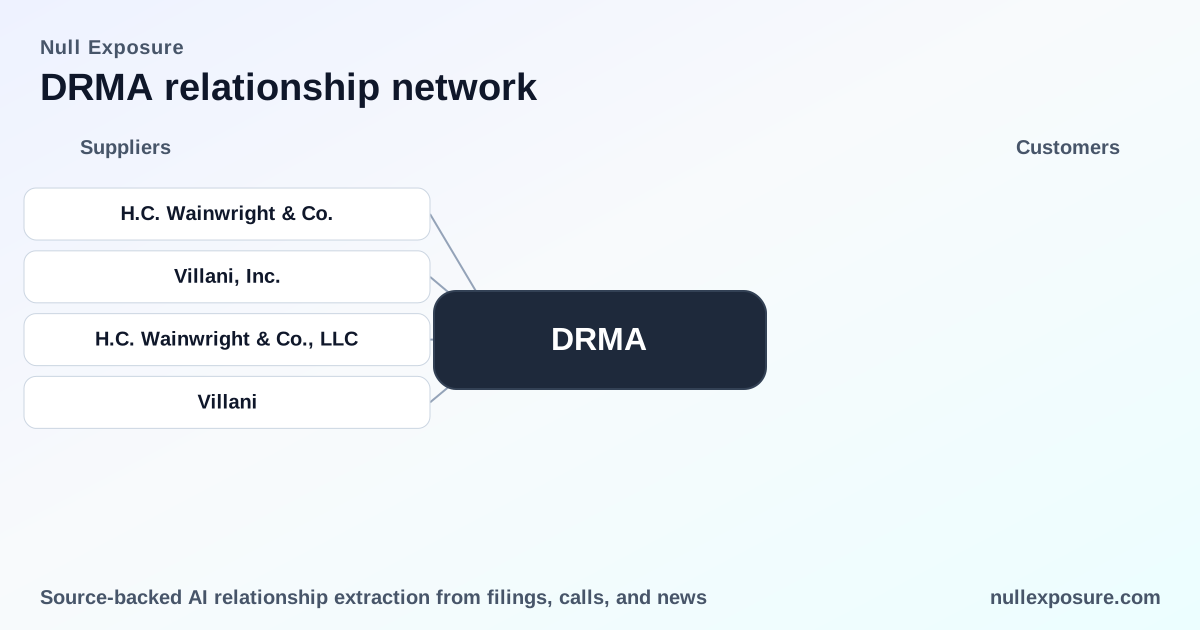
Dermata Therapeutics (DRMA): supplier relationships that shape clinical progress and financing
Dermata Therapeutics operates as a clinical-stage dermatology company that monetizes through a combination of equity financing and the eventual commercialization or out-licensing of its lead therapeutics (including DMT310/XYNGARI™). The firm advances product candidates through outsourced development and relies on licensed biological raw materials and third‑party clinical/IT service providers; short-term financial runway and ongoing at‑the‑market and private placement programs fund operations while regulatory milestones create optionality for partners and acquirers. For a concise intelligence feed and relationship tracking for investment teams, visit the NullExposure homepage: https://nullexposure.com/.
What the supplier footprint tells investors in one sentence
Dermata runs a highly outsourced development model with concentrated raw‑material supply and active capital markets dependence; that combination creates asymmetric upside if trials succeed and asymmetric operational risk if supply or funding lines shift.
For more detailed supplier and partner context, see our coverage at https://nullexposure.com/.
Operating model signals investors need to internalize
- Contracting posture: Dermata relies on long‑term, indefinite supply agreements for critical raw material inputs — contracts that, by description, continue until termination. That creates a high barrier to rapid substitution and elevates supply governance to a strategic priority.
- Outsourcing and subscription posture: The company outsources clinical development and IT through third‑party service providers and SaaS, which reduces in‑house infrastructure needs but increases vendor management and operational dependency.
- Concentration and geography risk: Management discloses a single qualified source for its Spongilla raw material and identifies that supplier as a Russian entity; this produces geographic concentration in EMEA and exposure to sanctions and export controls.
- Materiality and criticality: The supply relationship is described as critical and material—termination would disrupt product development and regulatory filings, while existing shipments cover near‑term Phase 3 needs.
- Roles and maturity: Supplier relationships span manufacturer roles (raw material collection/processing) and service provider roles (CROs, SaaS), and are characterized as active and operationally necessary for ongoing trials.
These are company-level signals derived from disclosed contract language and risk descriptions, and they define where governance, legal, and contingency planning should be prioritized.
Relationships on the record — what public filings and press covered
H.C. Wainwright & Co. — placement agent (StockTitan: March 2026)
H.C. Wainwright acted as the exclusive placement agent for a Dermata private offering that closed for up to $12.4 million, underwritten via an exclusive engagement. A StockTitan news item covering the offering closing reported the broker role and exclusivity in FY2025 filings.
Villani, Inc. — license grant to Dermata (SEC filing reported via StockTitan: March 2026)
A company filing reported that Villani granted Dermata an exclusive, sub‑licensable, royalty‑bearing license under certain patents and know‑how to develop and sell sponge‑based dermatologic products, establishing formal IP and development rights under that agreement. The SEC filing language was summarized in a StockTitan SEC‑filings report in FY2025.
H.C. Wainwright & Co. — placement agent (Parameter/market report: March 2026)
A market report noted again that H.C. Wainwright serves as Dermata’s exclusive placement agent for a financing transaction, a relationship that coincided with an insider‑backed $4.1 million offering and a notable share price response in the market. Parameter’s coverage in FY2025 reiterated the brokered financing role.
H.C. Wainwright & Co. — placement agent (StockTitan: March 2026, duplicate coverage)
Separate StockTitan coverage also described H.C. Wainwright acting exclusively for an offering tied to Dermata’s private placement activity, reinforcing that the company uses a single broker for multiple capital raises in the period.
H.C. Wainwright & Co., LLC — ATM expansion (The Globe and Mail press release: Jan 27, 2026)
A press release reported that on January 27, 2026 Dermata increased its at‑the‑market (ATM) offering capacity with H.C. Wainwright & Co., LLC by $705,000 after prior ATM sales of $3.45 million, confirming ongoing utilization of ATM equity issuance as a liquidity mechanism in FY2026.
Villani — termination of prior license (Reuters/TradingView report: 2025)
A Reuters report picked up on an SEC filing that Dermata terminated the March 31, 2017 license agreement with Villani, with the filing stating Villani would not be entitled to receive further milestones or payments due after the termination date; this was reported in FY2025 coverage.
What investors should read into these partner flows
- Capital markets reliance is explicit. Repeated exclusive engagements with H.C. Wainwright — private placements and ATM programs — reveal that Dermata regularly monetizes equity rather than relying on upfront partner milestone payments. That elevates dilution and execution risk as primary financial drivers.
- IP and licensing are active levers. The record shows both a license grant from Villani and a subsequent termination event; licensing dynamics are live, affecting freedom‑to‑operate, milestone exposure, and potential royalty streams.
- Supply concentration is the critical operational risk. Company disclosures describe a single qualified source for Spongilla raw material located in Russia/EMEA and label the supply arrangement as material and critical; the firm has secured shipments sufficient for two Phase 3 programs, but geopolitics and export controls are an ongoing vector of operational risk.
- Vendor outsourcing reduces fixed costs but increases vendor counterparty risk. Dependence on CROs and SaaS providers accelerates development capacity yet transfers execution risk externally.
Visit https://nullexposure.com/ for relationship mapping and alerts that track these exact signals against filings and newsflow.
Investment checklist — what to monitor next
- Track any new supply agreements or secondary qualified suppliers to reduce Spongilla concentration risk.
- Watch Dermata’s ATM usage, private placements, and placement agent disclosures for dilution cadence and financing terms.
- Follow further SEC filings around the Villani termination and any residual IP disputes or settlement provisions.
- Confirm clinical milestone timing and how shipments on hand map to Phase 3 enrollment and NDA filing readiness.
For hands‑on investor due diligence and supplier risk scoring, see our platform at https://nullexposure.com/.
Bottom line
Dermata’s supplier and partner footprint reflects a classic small‑cap biotech profile: high operational leverage to a few strategic suppliers and outsourcers, and sustained dependence on equity markets for funding. Investors should weigh the upside from successful Phase 3 execution and potential product commercialization against concentrated supply geography and recurring dilution risk. Active monitoring of supply diversification, license resolutions, and placement economics will separate speculative exposure from informed, risk‑managed positions.