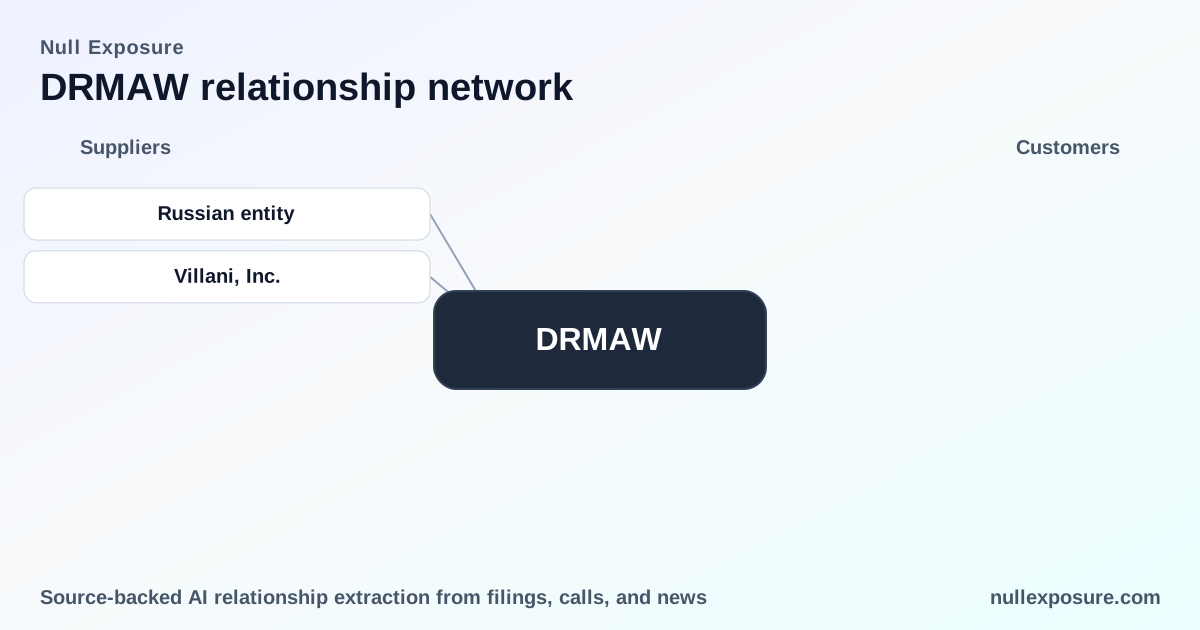
DRMAW — Supplier-network analysis and operational risks for Dermata Therapeutics
Dermata Therapeutics commercializes Spongilla-based dermatology candidates (notably XYNGARI™ and DMT410) by licensing patented Spongilla formulations and securing exclusive raw-material supply for clinical development and future commercialization. The company monetizes through product approvals and downstream sales of proprietary therapeutics, while relying on licensed intellectual property and a tightly controlled supply chain for its core active ingredient. For investors and operator teams, the critical question is not science alone but whether procurement and IP arrangements create single‑point concentration and geopolitical exposure that can interrupt development timelines and value realization. Learn more at https://nullexposure.com/.
How Dermata’s business model converts biology into value
Dermata’s model combines three commercial levers: exclusive IP rights for Spongilla formulations (through license agreements), sole-sourced raw material supply to preserve product consistency, and outsourced clinical development via CROs. Revenues will only flow once regulatory approvals are achieved and products are launched; until then the company is cash‑burn dependent and value accrues to successful trial outcomes. This structure makes supplier and license relationships high‑leverage elements of valuation: supply interruptions, license disputes, or CRO failures directly threaten timelines and the company’s ability to file for approval.
Supplier and license relationships: what the filings say
Russian entity — exclusive raw-material counterparty
Dermata discloses that it is a party to an exclusive supply agreement for the Spongilla raw material used in XYNGARI and DMT410, and identifies the counterparty as a Russian entity in its FY2024 Form 10‑K. The filing states the material is sourced from a freshwater sponge in the Volga River delta, an area partially protected by a Russian government entity, creating geopolitical and export‑control sensitivity. (Source: Dermata FY2024 Form 10‑K, drmaw-2024-12-31.)
Villani, Inc. — IP licensor for Spongilla formulations
Dermata holds an exclusive, sublicensable, royalty‑bearing license from Villani, Inc., originally executed March 31, 2017, that covers the Licensed Patents necessary to formulate, develop, seek regulatory approval for, make or sell Spongilla-containing products for skin diseases. That license underpins Dermata’s right to commercialize the Spongilla platform and is a foundational legal asset. (Source: Dermata FY2024 Form 10‑K, drmaw-2024-12-31.)
Company-level constraints that shape operational posture
The 10‑K disclosures collectively define Dermata’s contracting posture and operational constraints:
- Long‑term, exclusive procurement posture: The company describes its supply agreement as having an indefinite term unless terminated, consistent with a long‑term sole‑source procurement model that prioritizes supply-chain stability and product uniformity.
- High concentration and single‑source exposure: Filings identify a single qualified source of Spongilla raw material, meaning supplier concentration is a material operational dependency rather than a tactical choice.
- Criticality to development: Dermata directly states that termination of the supply contract would disrupt product development and harm the business, making the supplier relationship critical rather than simply important.
- Active, maturing program stage: The company has received multiple shipments sufficient to initiate and complete two Phase 3 studies and expects to use those supplies to support an NDA filing upon successful trial completion—evidence the relationship is operational and material to near‑term milestones.
- Geographic exposure across EMEA/NA/LATAM: Clinical enrollment spans the United States and Latin America, while raw-material harvesting originates from the Volga River delta in Russia, creating multi‑regional regulatory and logistics complexity.
- Outsourced IS and clinical services: Dermata outsources its IT environment to third‑party SaaS providers and relies on CROs and investigative sites for trials, indicating a hybrid model of heavy outsourcing plus single‑source raw material.
- Contract spend and CRO engagement: The company disclosed a CRO contract totaling approximately $7.0 million that runs from Q4 2023 to H1 2025 with a 30‑day termination notice, showing meaningful third‑party spend in services rather than manufacturing.
These constraints create a business model where intellectual property rights and a single raw‑material supply relationship jointly determine the firm’s ability to execute clinical and regulatory milestones.
Strategic and operational implications for investors and operators
- Geopolitical risk is direct and material. Sourcing an active ingredient from the Volga delta and naming a Russian counterparty in an exclusive agreement links Dermata to export controls, sanctions risk, and potential supply‑chain interruption. This is a cash‑flow and timeline risk, not a theoretical one.
- Single‑source manufacturing increases option value for the supplier and exit risk for Dermata. Exclusive, indefinite-term supply contracts reduce short-term re‑qualification costs but create leverage for the supplier and limited operational flexibility for Dermata.
- Clinical program timing is inventory‑sensitive. Filings confirm Dermata has received multiple shipments that will support its two Phase 3 studies; inventory sufficiency mitigates immediate disruption risk but does not eliminate future sourcing vulnerability.
For procurement, compliance, and investor monitoring teams, a focused diligence program is essential: contract rights/termination triggers, inventory burn-rate modeling, sanctions screening, and contingency sourcing options must be top priorities. For research teams assessing valuation, adjust timelines for any credible scenario where replenishment requires lengthy qualification or geopolitical negotiation.
Learn more about supplier-counterparty intelligence at https://nullexposure.com/.
Practical next steps for counterparties and risk teams
- Obtain and review the supply agreement termination provisions, exclusivity carve‑outs, and force‑majeure clauses to quantify the firm’s operational runway and legal remedies.
- Model inventory consumption against Phase‑3 enrollment pace and map lead times for alternative sourcing and qualification.
- Conduct enhanced sanctions and export‑control screening for the Russian supply chain nodes and any intermediaries involved in shipping or processing.
- For CRO and service providers, note the disclosed $7M CRO engagement and its short termination window when negotiating rate cards or capacity commitments.
Closing takeaways and action
Dermata’s near‑term value hinges on two interlocking factors: IP control via the Villani license and uninterrupted access to Spongilla raw material sourced under an exclusive arrangement tied to Russia. That dual dependency converts supplier and license relationships into binary risk toggles for regulatory timelines and valuation.
For a structured supplier‑risk review and competitive intelligence tailored to this exposure, visit https://nullexposure.com/ to start a tailored assessment and monitoring plan.