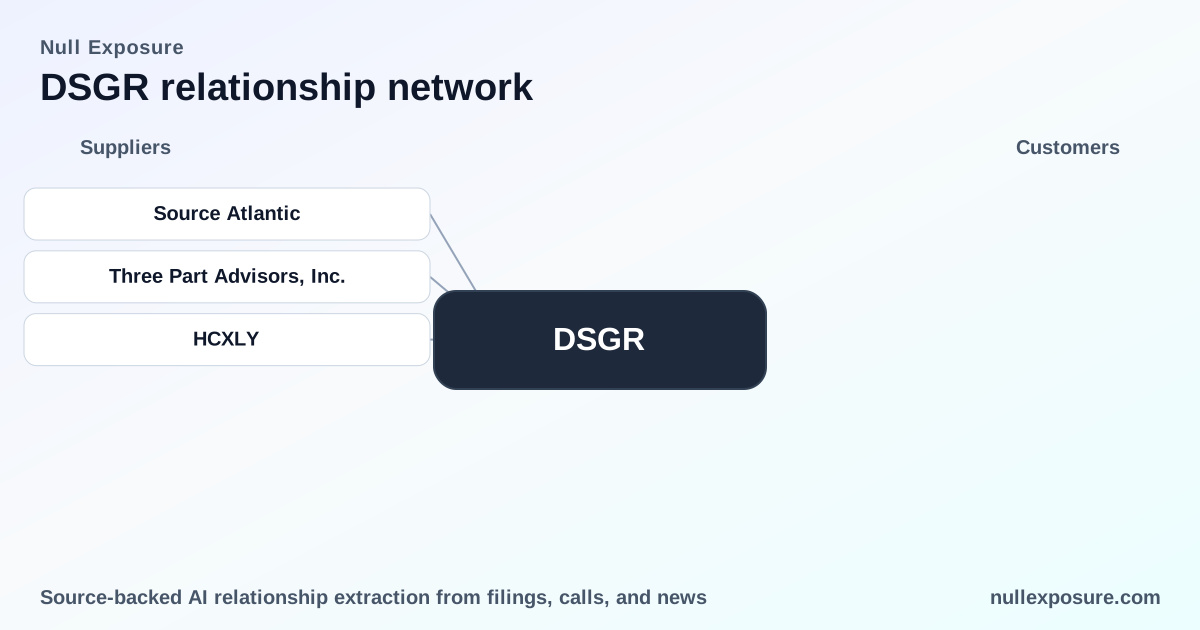
Distribution Solutions Group (DSGR): supplier map and implications for investors and operators
Distribution Solutions Group sells and distributes specialty maintenance, repair and operations (MRO) products across industrial, commercial and government channels and monetizes through product margins, scale-driven procurement economics and bolt‑on M&A. The company’s revenue base is near $2.0 billion with recurring purchase flows from an extensive supplier set, while recent acquisitions and contractual purchase commitments materially shape near‑term cash needs and supplier exposure. For investors and operating partners, the story is a blend of broad supplier diversification and targeted concentration pockets driven by divisional supplier footprints and an active acquisition program. Learn more about supplier relationships and operational signals at https://nullexposure.com/.
How DSGR makes money and why supplier structure matters
Distribution Solutions Group captures margin primarily on product sales and aftermarket services to the MRO channel, scaling gross margin through a national distribution footprint and integrating acquired businesses. Revenue was about $1.98 billion and adjusted EBITDA around $160.6 million in the latest trailing figures, reflecting a business where procurement and supply continuity directly feed operating leverage and free cash flow generation. The company funds growth through operating cash and acquisitive activity—recent deals and purchase commitments have driven material investing cash outflows and contractual buying obligations.
Key balance‑sheet and operating signals: DSGR reported meaningful investing activity tied to acquisitions and had contractual commitments of roughly $173 million for purchases over the next twelve months, which create committed spend and operational dependency on supplier performance. These are important for underwriting working capital and integration risk.
For a deeper view into supplier exposures and contract signals, visit https://nullexposure.com/.
What the disclosures say about supplier concentration and contracting posture
DSGR’s public disclosures convey two complementary supply‑side realities:
- Broad supplier base with low single‑vendor dependence in most divisions. The filing cites thousands of suppliers with the largest suppliers representing single‑digit percentages of purchases in many parts of the business, which supports resilience and negotiating leverage.
- Localized concentration risk exists. One division (Canada Branch Division) reported a supplier that accounted for approximately 18% of product purchases in 2024, a material concentration that increases operational risk in that geography.
- Contractual purchase commitments are meaningful in scale. The company disclosed roughly $173 million of purchase commitments over the next year, indicating multi‑period contracts and committed inventory flows that influence cash needs and supplier negotiations.
- Service providers and management agreements have been used for integration and interim management. The company recorded modest consulting expenses in the $1–$10 million band over recent years, and historical novations removed certain management agreements after the 2022 mergers—evidence the firm uses third‑party management and then consolidates governance as deals settle.
These characteristics indicate a low to moderate supplier concentration risk overall but elevated single‑supplier exposure geographically, combined with a contracting posture that mixes broad spot purchases with multi‑year commitments in pockets.
Supplier and third‑party relationships to know right now
Source Atlantic — part of the acquisition pipeline
DSGR recorded net cash used in investing activities in 2024 that included the purchase of Source Atlantic alongside other strategic acquisitions (ESS, S&S Automotive, TCR and ConRes TE assets). This indicates Source Atlantic was an acquisition target consolidated into DSGR’s growth plan and contributed to the company’s capital deployment in FY2024. (Source: DSGR 2024 Form 10‑K.)
Three Part Advisors, Inc. — investor relations contact
Three Part Advisors, Inc. is listed as the investor relations contact for DSGR in a March 2026 press release announcing quarterly results timing, with named contacts Steven Hooser and Sandy Martin. This reflects the firm’s external communications channel rather than a procurement or operational supplier relationship. (Source: March 2026 press release published on AI Journ and syndicated by StockTitan.)
Hisco — a transaction noted in investing cash flows
DSGR’s disclosures state that net cash used in investing activities for 2023 was driven primarily by the Hisco transaction, confirming Hisco’s role as a material acquisition event in the company’s recent M&A activity. That transaction was identified in the 2024 Form 10‑K disclosures as a driver of investment cash flow alongside other capital expenditures. (Source: DSGR 2024 Form 10‑K.)
Constraints and company‑level signals that affect supplier risk
DSGR’s filings and notes produce consistent, company‑level signals relevant to supplier diligence:
- Diversified purchasing footprint but discrete concentration pockets. Statements about thousands of suppliers and top‑10 supplier share suggest overall dispersion, while explicit disclosure of an 18% single‑supplier share in Canada highlights a material local dependency.
- Committed spend and integration cash flow pressure. Contractual commitments of about $173 million and heavy investing cash outflows tied to acquisitions mean procurement and integration performance will materially affect near‑term liquidity and margin realization.
- Use of external management/consulting during integration. The company recorded consulting expenses in the low‑millions for interim executive and integration support and documented novations that terminated legacy management agreements after mergers—an operational pattern that reduces long‑term service dependency but increases short‑term reliance on third‑party advisors.
- Spend‑scale mix across bands. Evidence spans both $1–$10M consulting cost lines and >$100M purchase commitments, suggesting the supplier ecosystem ranges from small consulting engagements to large, contractually committed product purchases.
These constraints define a business model that is operationally mature with active M&A and moderate supplier concentration risks concentrated by division, and where procurement governance and integration execution are primary value levers.
For ongoing monitoring of DSGR supplier exposures and relationship shifts, visit https://nullexposure.com/.
Implications for investors and operators
For investors: underwrite DSGR with an emphasis on integration execution, the pace of synergies from acquisitions, and the company’s ability to convert committed purchase structures into stable working capital performance. Concentration in specific divisions—most notably the Canada Branch Division—requires active monitoring and could be a source of margin volatility if suppliers constrain supply or negotiate price.
For operators: prioritize vendor continuity plans for the pockets of supplier concentration, accelerate supplier diversification where a single vendor accounts for high share, and integrate procurement terms of acquired businesses to capture scale economics.
If you want a tailored supplier‑risk run‑down for DSGR or to track these relationships over time, start here: https://nullexposure.com/.
Bottom line
Distribution Solutions Group operates as a scale‑driven industrial distributor that grows by acquisition and relies on a broadly diversified supplier base with targeted concentration and contractual commitments that can create near‑term cash and operational stress. Active monitoring of divisional supplier concentration, disciplined integration execution, and contract management are the primary levers for protecting margin and supporting valuation upside. For investors and operators focused on supply risk and integration outcomes, DSGR’s disclosures provide clear signals to prioritize supplier continuity and procurement governance—areas where measurable improvements will deliver disproportionate returns.