Diana Shipping (DSX): the financing and supplier map investors need
Diana Shipping operates a classic asset-heavy ocean freight business: it owns and charters drybulk vessels and monetizes through time and voyage charters, opportunistic spot exposure, and periodic asset sales while funding operations with asset-backed bank facilities and occasional capital-market activity. For investors and operators evaluating DSX as a supplier counterparty, the practical picture is simple: cash generation is bunched around charter cycles and vessel disposals, and liquidity is dependent on bank financing relationships that support near-term fleet decisions and M&A proposals. If you want a consolidated view of counterparties that materially affect that liquidity, start here and then review issuer filings and loan terms at length. Visit https://nullexposure.com/ to track these relationships across assignments and filings.
How Diana Shipping runs the business and what that implies for suppliers
Diana Shipping is a mid-cap maritime operator with $213.5M revenue (TTM) and $77.9M EBITDA in the latest period, and a market capitalization around $268.6M. The company shows positive operating margin (14%) but modest profitability overall, so working capital and debt capacity drive decision-making. Management converts older tonnage into cash through sales and levers bank credit to fund fleet activity; those are structural operating model characteristics rather than episodic events.
- Contracting posture: DSX engages in short-to-medium term charters and relies on asset-backed lending for capital expenditure and liquidity; counterparties should expect standard shipping collateral and covenant profiles.
- Concentration and criticality: Financing relationships are critical for near-term liquidity and strategic actions (acquisitions, refinancing, vessel purchases), but the bank counterparties observed are multiple institutions rather than a single sole lender.
- Maturity profile: The company manages fleet lifecycle proactively — selling older vessels to generate liquidity — which produces episodic cash inflows and reduces operational cost and capital needs over time.
These operating signals make DSX a counterparty whose credit exposure is materially driven by voyage economics and bank facility access, not a diversified receivables book.
Supplier and financing relationships that move the needle
Below I cover every relationship flagged in the supplier-scope results and explain why each matters.
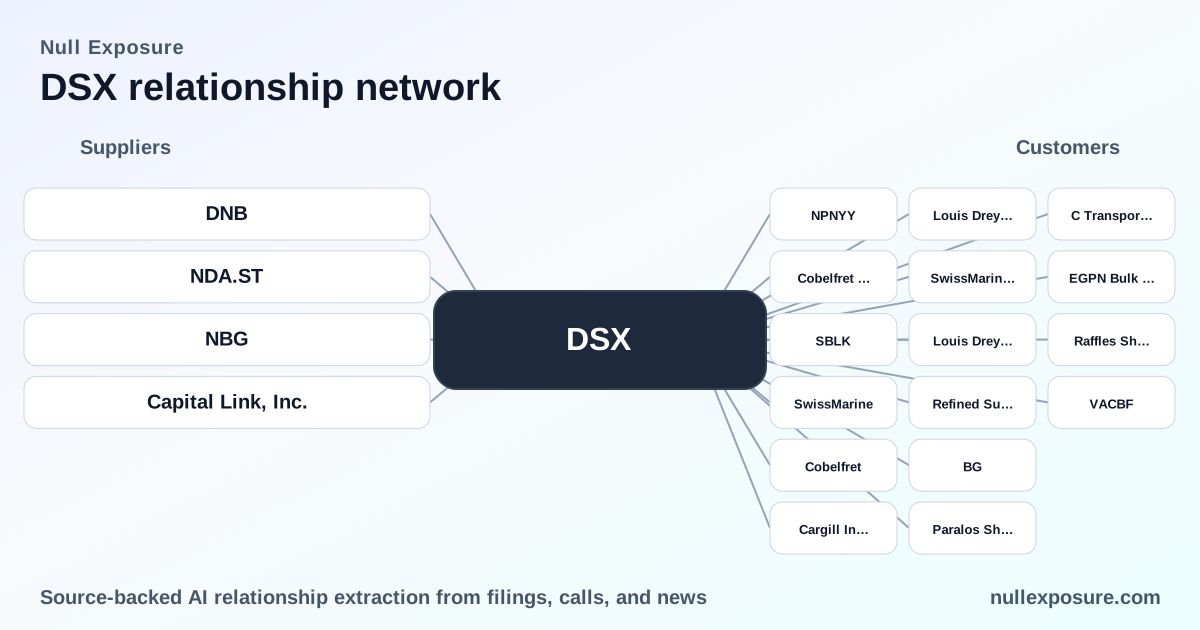
DNB Bank — A financing letter from DNB Bank supported an acquisition proposal connected to DSX activity, signaling explicit lender backing for M&A-level transactions (reported March 9, 2026). This shows DNB is willing to provide transaction-level comfort, which raises the bank’s relevance to any counterparty risk assessment. (Source: Container-News, March 9, 2026.)
Nordea Bank — Nordea, together with DNB, provided a high-confidence financing letter for the same acquisition proposal, indicating coordinated lender support from two Nordic banks for strategic action (reported March 9, 2026). That joint backing increases available leverage for DSX at the transaction level. (Source: Container-News, March 9, 2026.)
National Bank of Greece — In Q4/FY2025 earnings remarks, management documented vessel sales that generated about $23 million and the drawdown of $55 million under a new loan facility with National Bank of Greece, highlighting active balance-sheet management through asset disposals plus fresh bank debt for liquidity (reported in the FY2026 period). This is direct evidence of the company using bank lending to bridge operations and fleet investment. (Source: InsiderMonkey earnings call transcript, Q4 2025.)
Capital Link, Inc. — Capital Link functions as Diana Shipping’s investor relations/media contact, providing primary communication channels to investors and analysts (contact details published in March 2026 investor notices). For suppliers and counterparties, an active IR adviser improves transparency and timing for announcements that affect counterparty exposure. (Source: Futunn news post, March 9, 2026.)
What those relationships mean for counterparty risk and procurement
The pattern across disclosed relationships is straightforward: DSX runs a bank-centric liquidity model and uses investor communications strategically. The presence of financing letters for M&A-level proposals and a new loan facility combined with vessel disposals demonstrates a dual approach to funding — sell assets to raise immediate cash and use secured bank debt for working capital or strategic deals.
- Operationally critical counterparties: Banks that underwrite facilities and issue financing letters are the principal suppliers in terms of systemic importance; their participation determines whether DSX can act on acquisitions or absorb market shocks.
- Commercial counterparties: IR firms like Capital Link are important for market signaling, not credit provision; they influence market perception but do not alleviate liquidity risk.
If you are a supplier evaluating credit terms with DSX, price in the company’s dependence on secured financing and treat bank-backed commitments as a leading indicator of near-term capacity to settle obligations.
Visit https://nullexposure.com/ to see how these counterparties map against covenant events and public filings across other shipping names.
Operational constraints and company-level signals
Presenting company-level constraints as decision drivers clarifies where operational risk sits, even when no formal constraint documents are listed:
- Secured lending posture: Asset-backed loans and facility drawdowns are the primary tool for liquidity management; suppliers should expect lien-based credit structures.
- Event-driven cash flows: Vessel sales create material but irregular cash injections, so operating cash is episodic rather than fully recurring.
- Counterparty diversification: DSX engages multiple banks and market advisors, providing some diversification of funding sources but not complete insulation from a coordinated funding pullback in shipping markets.
- Maturity and cadence: Fleet renewal and sale cycles are recurring and affect capital needs; expect periods of elevated supplier payment risk around heavy capex or refinancing points.
These signals affect procurement negotiations, collateral calls, and working-capital terms for counterparties.
Investment takeaways and a practical checklist
- Financing support drives strategic optionality. Bank letters and new facilities materially expand management’s ability to pursue deals or manage liquidity.
- Asset sales are a repeatable plug for near-term cash. Suppliers should model intermittent inflows rather than steady operational cash when setting terms.
- Transparency is adequate via retained IR counsel. Active investor relations reduce information asymmetry on funding events.
Quick checklist for counterparties and investors:
- Confirm whether payment terms are secured or unsecured and request copies of relevant security filings.
- Monitor bank facility announcements and vessel sales closely; they precede liquidity changes.
- Use investor communications from Capital Link and quarterly transcripts to time exposure adjustments.
If you want a consolidated view of these lender and supplier relationships across shipping and related sectors, explore our analysis and relationship maps at https://nullexposure.com/.
Bottom line
Diana Shipping is a balance-sheet-managed shipping operator whose supplier risk profile is dominated by bank financing and occasional asset disposals. For investors and vendors, the practical counterparty question is not only charter economics but whether the bank corridors — reflected in financing letters and facility drawdowns — are active and supportive. Track those lender actions and investor disclosures as the central inputs to any credit or operational decision regarding DSX. For ongoing monitoring and deeper relationship analytics, visit https://nullexposure.com/.