DTE Energy: Supplier relationships, contracting posture, and what investors should watch
DTE Energy operates as a diversified, Detroit-based energy company with core monetization through regulated electric operations and adjacent energy-services businesses; it collects tariffed revenues from utility customers while generating ancillary income from non-regulated energy activities. With a market capitalization near $31.0 billion and trailing revenue of $15.8 billion, DTE presents a classic regulated-utility supplier footprint: steady cash flows, capital-intensive supply chains, and deliberate contracting for fuels and specialized services.
If you are mapping counterparty risk or evaluating supplier concentration for DTE, start from the company-level signals below and then drill into individual supplier relationships. For a consolidated supplier view and more actionable vendor intelligence, visit https://nullexposure.com/.
How DTE sources fuel and services — a hybrid contracting posture
DTE’s disclosures show a hybrid procurement strategy for coal and industrial materials: the company expects to cover the majority of coal needs through long-term contracts, while using short-term agreements and spot purchases for the balance. According to DTE’s filings on fuel procurement, this mix deliberately balances supply security with market flexibility.
- Implication for suppliers: Long-term contracts signal predictable volumes and bargaining leverage for incumbent providers; short-term and spot activity creates windows for new entrants and price exposure. For investors, that combination reduces single-supplier concentration risk but retains sensitivity to commodity-price volatility.
- Operational consequence: A hybrid posture supports continuity for generation while preserving optionality to take advantage of favorable market prices.
DTE’s supplier roles — buyer of commodities; consumer of specialized services
DTE’s corporate disclosures identify two clear supplier roles at the company level: commodity buyer and service consumer. The registrant filings note dependency on supplies such as copper and limestone and industrial materials to sustain operations and maintenance, and they also describe engagement of third parties to conduct cybersecurity maturity assessments.
- Commodity buyer: DTE purchases fuel and industrial materials under varying contract tenors; suppliers supplying critical inputs are operationally important and can influence outage risk and unit economics.
- Service consumer: DTE contracts specialist service providers—particularly for cybersecurity and compliance assessments—which are critical for resilience and regulatory posture.
These are company-level signals drawn from DTE’s public filings and reflect how the firm organizes procurement rather than being tied to any single supplier.
For deeper supplier benchmarking and contract-level analysis, explore https://nullexposure.com/.
Relationships on record: what the source material shows
Below is every supplier-related relationship identified in the source results and a concise, plain-English summary of each.
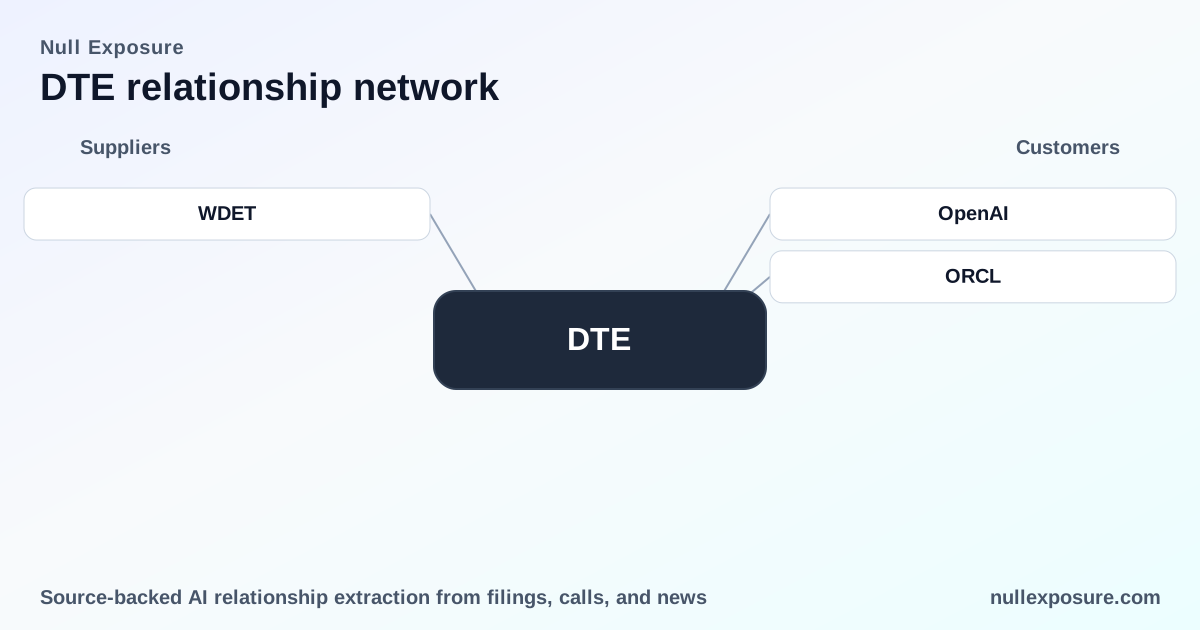
- WDET (public radio): DTE Energy is listed as a sponsor of WDET, indicating a media sponsorship relationship rather than an operational supplier contract; this is noted in WDET’s coverage (Feb 2026) where an editor’s note discloses DTE’s sponsorship. (WDET, Feb 23, 2026)
What the constraints tell investors about business model characteristics
The constraints extracted from DTE’s disclosures provide a compact view of procurement and supplier interactions; treat these as company-level indicators:
- Contracting posture: The explicit mix of long-term, short-term, and spot contracts for coal signals a hybrid procurement model—prioritizing supply security with opportunistic buying to manage costs and market risk.
- Concentration and criticality: The company acknowledges dependency on certain commodities (copper, limestone, etc.), which frames supplier criticality for maintenance and uptime; however, the use of diverse contract tenors reduces single-supplier concentration risk.
- Maturity of supplier relationships: Engaging independent cybersecurity assessors indicates mature governance around third-party service oversight and an emphasis on external validation of controls.
- Roles and bargaining: DTE functions primarily as a buyer for industrial inputs and a consumer of specialty services—this dual posture gives the company negotiating leverage on commoditized purchases and requires careful vendor management for high-skill service providers.
These signals combine to portray DTE as a capital-intensive regulated utility with structured procurement and institutional vendor governance, which aligns with its financial profile (EBITDA of approximately $3.6 billion, dividend yield near 3.0%, and high institutional ownership).
Practical diligence checklist for investors and operators
When evaluating supplier exposure at DTE, prioritize the following items:
- Contract tenor and renewal terms for fuel supplies versus spot exposure.
- Supplier concentration metrics for critical industrial inputs and single-point-of-failure vendors.
- Service provider SLAs and evidence of third-party cybersecurity assessments.
- Regulatory sensitivity—local media and stakeholder scrutiny around rate cases or infrastructure projects can affect reputational and regulatory risk; for example, local reporting has covered accountability and rate discussions involving the company (WDET, Feb 2026).
- Counterparty credit and indemnity language for long-term fuel contracts.
Final takeaways and next steps
- DTE’s procurement is deliberately diversified across long-term, short-term, and spot buying, reducing concentration but maintaining exposure to commodity cycles.
- The company operates as both a large buyer of physical commodities and a mature consumer of specialist services, including cybersecurity assessments that demonstrate formal third-party oversight.
- Media relationships such as sponsorships (e.g., WDET) are part of the company’s public engagement and have limited operational impact but can affect public perception during regulatory debates.
For a consolidated supplier map, contract-level summaries, and prioritized counterparty risk scoring tied to DTE’s public disclosures, visit https://nullexposure.com/. If you want a tailored supplier risk brief or an investor-ready vendor due diligence package for DTE, start your analysis at https://nullexposure.com/ and convert reporting into actionable decisions.