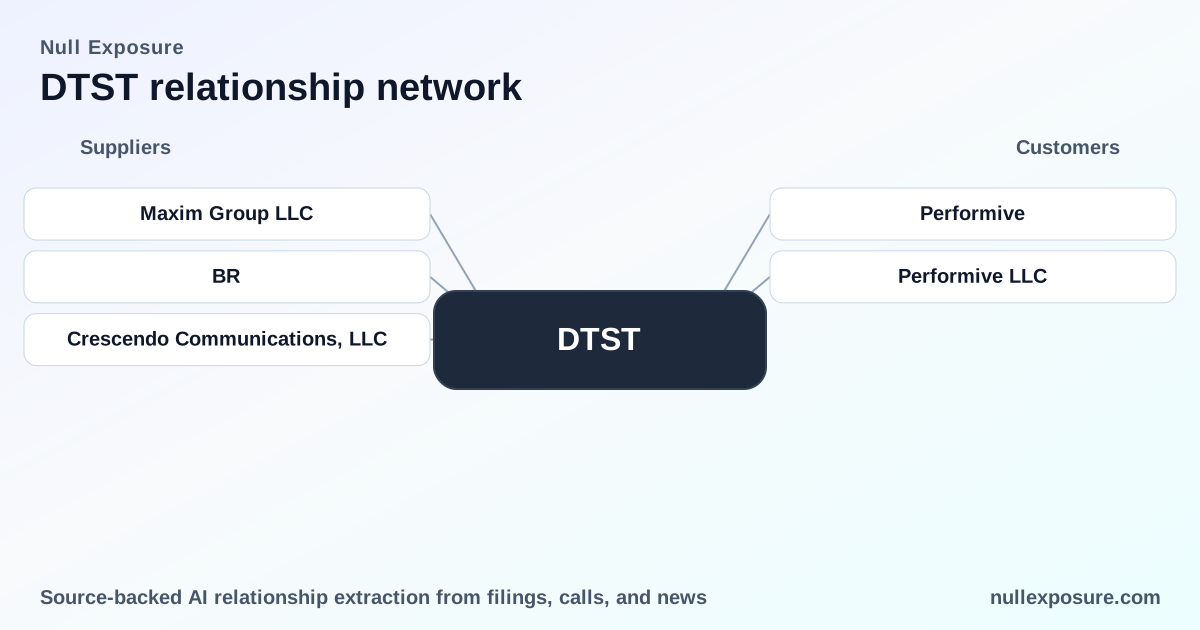
Data Storage Corporation (DTST): Supplier relationships that reveal a finance-first operating posture
Data Storage Corporation operates a multi-cloud information technology services business headquartered in Melville, New York and monetizes through recurring managed cloud services, professional IT solutions and periodic capital-marketing transactions that reshape equity structure. The company’s external supplier footprint in public records is dominated by investor‑services and capital‑markets providers — underlining a business model that funds growth and liquidity events through third‑party financial intermediaries rather than by outsourcing large operational vendors. For investor diligence and counterparty risk assessment, this roster is material. Learn more about supplier intelligence at https://nullexposure.com/.
What the public record actually shows about DTST’s external partners
The record returned for DTST’s supplier scope is compact and concentrated into a few, high‑visibility financial service providers and an investor relations firm. Below I list each result verbatim with a plain‑English summary and source reference so you can trace the evidence yourself.
-
Maxim Group LLC (FY2021) — Maxim Group acted as the sole book‑running manager on an upsized $10.8 million public offering that Data Storage closed in May 2021, demonstrating the company’s prior reliance on boutique investment banking for equity capital raises. According to a GlobeNewswire release dated May 18, 2021, Maxim led the transaction and placement activity for DTST’s public offering.
Source: GlobeNewswire, May 18, 2021. -
Broadridge Corporate Issuer Solutions, LLC (FY2025) — Broadridge was named as the Information Agent for a tender offer announced in December 2025, handling questions and distribution of offer materials to shareholders. The company specified Broadridge’s Edgewood, NY contact details in its GlobeNewswire tender‑offer announcement on December 8, 2025.
Source: GlobeNewswire, December 8, 2025. -
Broadridge Corporate Issuer Solutions, LLC (FY2026) — In the tender‑offer completion announcement, Broadridge again appears as the point of contact for operational questions about the offer, confirming its active role in executing DTST’s share repurchase completed in early 2026. A QuiverQuant news item covering the completion of the tender offer published contact instructions for Broadridge.
Source: QuiverQuant news, 2026. -
Crescendo Communications, LLC (FY2026) — Crescendo is documented as DTST’s investor‑relations and strategic communications partner in a January 14, 2026 business‑update release, including a direct email and phone contact for investor inquiries; Crescendo was also credited with strategic advisory appointments and a website relaunch in the same release. GlobeNewswire published the company’s January 2026 update referencing Crescendo.
Source: GlobeNewswire, January 14, 2026. -
Crescendo Communications, LLC (FY2026, alternate notice) — A QuiverQuant item repeating DTST’s tender‑offer completion also lists Crescendo as the contact for investor communications, reinforcing the firm’s role as the company’s public‑market communications conduit during capital return activity.
Source: QuiverQuant news, 2026. -
Crescendo Communications, LLC (FY2025) — In coverage of a prior share repurchase, Yahoo Finance carried DTST’s investor contact information that lists Crescendo Communications as the company’s IR contact, confirming continuity of the relationship at least through 2025.
Source: Yahoo Finance, 2026 (reporting on FY2025 repurchase).
Middle takeaways: concentration and purpose behind the vendor list
The documented supplier set is narrow and finance‑oriented, composed of an investment bank (Maxim), a corporate issuer agent (Broadridge) and an investor relations/communications advisor (Crescendo). That pattern reveals specific operating characteristics:
- Contracting posture: DTST contracts selectively for capital‑markets services and investor communications rather than large-scale outsourced IT vendors in public filings; the company executes transactional relationships for capital formation and shareholder actions.
- Concentration risk: External supplier concentration is high in the financial services category — a small number of specialist providers control mission‑critical functions like shareholder communications and tender administration.
- Criticality: These suppliers handle legally and operationally critical events (public offering, tender offer, investor messaging), so their operational performance is material to DTST’s corporate actions and market credibility.
- Maturity and sophistication: Relationships with established market participants (Broadridge, Maxim, Crescendo) signal a standard institutional approach to capital markets and IR execution rather than ad‑hoc or informal handling.
These are company‑level signals drawn from the record rather than constraints tied to specific vendor contracts. No supplier constraints were flagged in the source material returned for this sweep.
Explore deeper supplier context and historical filings at https://nullexposure.com/ — our platform aggregates exactly this sort of cross‑referenced evidence.
What investors and operators should watch next
- Liquidity and governance dynamics. DTST’s market capitalization (~$29.2M) and repeated use of buyback/tender mechanics show active balance‑sheet management; investor‑service partners will be central to any future capital moves. Investors should track press releases listing Broadridge and Crescendo for early signals of repeat tender or repurchase activity.
- Operational vendor risk is limited in public records. The visible supplier set focuses on capital markets and communications, not core cloud or infrastructure vendors; therefore vendor‑operational risk is not evident from these filings but should be validated through diligence with management.
- Concentration is a source of execution risk. If a single provider experiences a failure during a shareholder action, DTST’s ability to execute could be compromised. That exposure is operationally limited but legally sensitive.
Final read: how this influences investment posture
The supplier footprint in public materials indicates a capital‑markets centric operating model where outside expertise is used for fundraising, tender administration and investor relations rather than for day‑to‑day technology delivery in the documents reviewed. For investors, that equals two actionable items: monitor communications from Crescendo for tone and transparency, and treat Broadridge‑handled filings and notices as primary indicators of share‑structure actions.
For a deeper supplier and counterparty audit, review the company’s filing history and press release archives alongside third‑party confirmations. Visit https://nullexposure.com/ for additional supplier‑level signals and tools to track these relationships in real time.
Bottom line: DTST runs its capital moves through recognized financial intermediaries, creating clear operational dependencies around investor communications and tender execution — dependencies that are material for governance and liquidity outcomes.