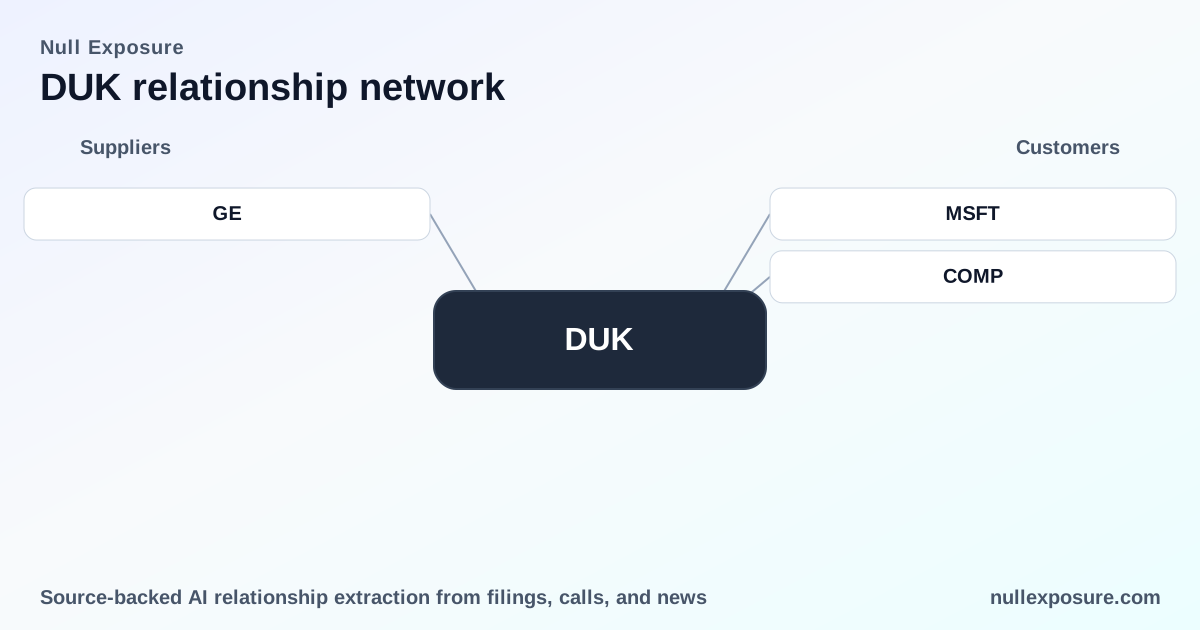
Duke Energy (DUK) supplier relationships: what investors need to know
Duke Energy operates as a vertically integrated, regulated electric and natural gas holding company that monetizes through regulated utility revenues, long-term power and fuel contracts, and rate-base recovery of capital investments. The company's supplier posture combines extended procurement commitments for generation inputs and structured arrangements with equipment and EPC players to support capital projects, creating predictable cash flows that underwrite dividend policy and capital spending. For investors evaluating counterparty and operational risk, the supplier footprint is best read through two lenses: capital equipment and engineering partners for fleet modernization, and long-duration commodity and capacity contracts that stabilize fuel and pipeline availability. Learn more at https://nullexposure.com/.
Why supplier relationships matter to Duke's investment story
Duke’s business model is built on regulated returns and the predictability of utility cash flows, but that predictability depends on supplier reliability for turbines, nuclear fuel, coal and gas delivery, and large-scale construction partners. Suppliers are not peripheral vendors — they are operationally critical and financially material, because missed deliveries or cost overruns flow through capital programs and regulatory proceedings. Duke’s market cap ($104 billion) and EBITDA ($16.3 billion) reflect a large, capital-intensive platform where supplier performance affects both near-term operations and multi-year rate base outcomes.
Single reported supplier relationship in the set — what it means
GE Vernova: a framework for turbine procurement and EPC interface
Duke disclosed a framework agreement with GE Vernova for turbine procurement and referenced contractual provisions with EPC contractors designed to create efficiency over time. This signals a structured procurement relationship for generating assets and integration with construction partners that support Duke’s fleet modernization and new-build programs. According to Duke’s Q4 2025 earnings call, the framework addresses turbine sourcing and aligns with EPC contracting provisions intended to capture efficiencies. (Source: Duke Energy 2025 Q4 earnings call, March 2026.)
All company-level supplier signals pulled from filings and disclosures
The filing excerpts and disclosure constraints collectively describe Duke’s supplier posture and operational constraints. Read these as company-level characteristics that shape supplier risk, not as claims about a single named vendor unless explicitly stated.
- Long-term contracting is the default: Duke discloses multiple procurement streams with terms exceeding one year — for purchased power, nuclear fuel (uranium concentrates, conversion and enrichment), and pipeline/storage capacity (fixed-payment terms up to 18 years). This demonstrates a procurement strategy that locks in supply and price exposure where reliability is paramount, particularly for nuclear and pipeline capacity. (Source: company regulatory filings and disclosures, 2024–2025.)
- Spot purchases are used selectively: The company balances long-term contracts with short-term spot market agreements to meet coal demand and other needs, giving operational flexibility where cost or availability conditions warrant. (Source: company filings, 2024–2025.)
- Geographic sourcing is North America–centric for fuel: Coal purchased for the Carolinas is sourced from Central Appalachia, Northern Appalachia and the Illinois Basin, underscoring regional supply concentration for thermal generation. (Source: company filing excerpts, 2024–2025.)
- Multiple supplier roles exist across the enterprise: Duke operates simultaneously as a buyer, seller, reseller and contracting counterparty — evidence includes asset purchase agreements, reseller arrangements under state tax law, and a voluntary supply chain finance program that allows suppliers to sell receivables to financial institutions. These roles highlight complex commercial flows and embedded financial relationships with vendors and financiers. (Source: various Duke filings and program descriptions, 2024–2025.)
- Service-provider dependencies for large projects: Engineering, procurement and construction (EPC) agreements and long-term debt arrangements demonstrate reliance on external contractors and professional services for capital projects and financing mechanics. (Source: historical and recent regulatory filings referenced by Duke.)
What these signals mean for investors — operating constraints and risk posture
Duke’s supplier disclosures create a clear operational profile investors should internalize.
- Contracting posture — conservative and long-dated: Duke prefers long-term contracts for core inputs (uranium, pipeline capacity, many purchased power agreements), which reduces commodity price volatility but increases counterparty and term-risk exposure.
- Concentration and criticality — high for key inputs: Nuclear fuel, turbines and EPC contractors are critical to operations; delays or supplier failures in these areas directly affect service reliability and capital recovery via rate cases.
- Maturity and complexity — institutional and negotiated: The mix of long-term supply deals, framework procurement agreements and supply chain finance programs reflects mature commercial capabilities and ongoing negotiation with large industrial partners and financial institutions.
- Financial linkage — suppliers and financiers integrated: The presence of a supply chain finance program and reseller arrangements implies that some suppliers rely on Duke’s credit profile to access liquidity, which can create contagion if financial stress emerges in either direction.
If you want a deeper read on how supplier contracts interact with Duke’s capital program and regulatory filings, visit https://nullexposure.com/ for detailed supplier relationship mapping.
Investment implications: what to watch and what to act on
- Operational risk — high impact, low frequency: Major turbine deliveries and EPC execution failures would be low-frequency but high-impact events; they directly affect capital spend timelines and regulatory outcomes. Investors should track project schedules and major equipment supplier relationships.
- Counterparty credit — manageable but material: Long-term fuel and capacity contracts limit commodity exposure but concentrate credit and performance risk on longstanding counterparties and regional suppliers.
- Regulatory pass-throughs — a buffer and a constraint: Regulated returns provide recovery mechanisms for many supplier-related costs, but regulatory approval delays create timing risk for earnings recognition.
- Liquidity and financing — supplier-linked opportunity: The voluntary supply chain finance program indicates Duke’s balance-sheet resources are monetized by suppliers; changes in this program’s uptake or terms could signal shifting supplier credit dynamics.
Actionable checklist for operators and investors:
- Monitor EPC and major equipment delivery schedules and any disclosures tied to turbine procurement with GE Vernova.
- Watch regulatory filings for adjustments to rate-base treatment following project cost or schedule changes.
- Track supply chain finance program participation as a barometer of supplier liquidity and Duke’s credit utility.
Conclusion and next steps
Duke’s supplier architecture is deliberately structured: long-term commitments for critical inputs coupled with negotiated equipment frameworks and integrated finance programs. This structure supports stable utility cash flows but concentrates operational risk in key suppliers and contractors. For investors and operators focused on counterparty risk and project execution, the most material relationships are those tied to generation equipment (like GE Vernova) and long-dated fuel and pipeline contracts.
Explore detailed supplier relationship mappings and nuanced exposure analysis at https://nullexposure.com/. For a tailored review of Duke’s counterparty and contractual exposures, visit https://nullexposure.com/ and request a focused supplier-risk briefing.