DUOG supplier relationships: what investors need to know
DUOG operates as a commercial supplier that generates revenue by licensing access and distribution arrangements with financial issuers, distributors and brand partners; the company monetizes through contractual fees, placement and distribution agreements, and advisory relationships that translate partner channels into recurring and transactional revenue. This note maps the supplier-side relationships disclosed in our feed, distills the commercial implications for investors and operators, and highlights the governance signals that matter for underwriting counterparty risk. For an interactive view of supplier footprints and change history, start at the Null Exposure homepage: https://nullexposure.com/
What the visible supplier network contains (short read)
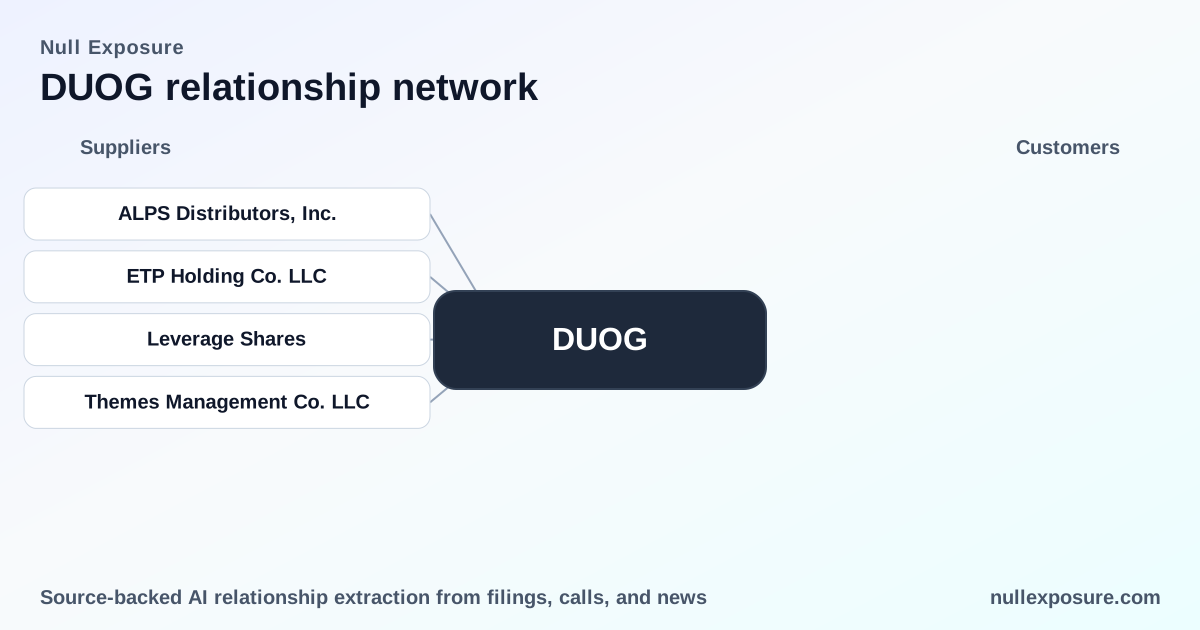
The supplier footprint for DUOG in the March 2026 extraction is compact and concentrated across four named counterparties: a distributor, an issuer, a branded partner and a primary advisor. That concentration implies a small, relationship-driven commercial model where each counterparty is likely to move material distribution or issuance flow if the relationship changes. All relationships in the extract are documented from a TradingView company page captured on March 9, 2026.
- ALPS Distributors, Inc. — Distributor. ALPS is listed as a distribution partner for DUOG, suggesting DUOG uses established fund/distribution channels to reach end investors. Source: TradingView page, first seen March 9, 2026 (https://www.tradingview.com/symbols/BOATS-DUOG/).
- ETP Holding Co. LLC — Issuer. ETP Holding is cited as an issuer working with DUOG, indicating DUOG supports or supplies products that feed into exchange-traded or structured product issuance. Source: TradingView page, first seen March 9, 2026 (https://www.tradingview.com/symbols/BOATS-DUOG/).
- Leverage Shares — Brand partner. Leverage Shares is named as a brand partner, which positions DUOG in branded product or labeled distribution arrangements that translate to co-marketing and revenue-sharing mechanics. Source: TradingView page, first seen March 9, 2026 (https://www.tradingview.com/symbols/BOATS-DUOG/).
- Themes Management Co. LLC — Primary advisor. Themes Management is called out as a primary advisor, reflecting an advisory or index/strategy construction role that underpins product design and market positioning for DUOG’s supplier activity. Source: TradingView page, first seen March 9, 2026 (https://www.tradingview.com/symbols/BOATS-DUOG/).
How these relationships shape DUOG’s operating posture
DUOG’s supplier map signals a partner-centric, channel-dependent business model. The presence of an established distributor (ALPS) and an issuer (ETP Holding) shows the company structurally aligns with intermediated capital markets flows rather than direct retail sales. The brand partner (Leverage Shares) and the primary advisor (Themes Management) indicate product co-branding and advisory depth—both behaviors consistent with monetizing intellectual property and distribution access.
- Contracting posture: The counterparty set suggests DUOG negotiates standard distribution and advisory contracts rather than being a principal market-maker; commercial terms are likely focused on fees, revenue sharing and placement commitments.
- Concentration risk: With four visible named partners, concentration is material—loss of one large distributor or the issuer relationship would have outsized commercial impact.
- Criticality: Distributor and issuer roles are operationally critical because they control access to investor flows and product structuring, respectively. The advisor and brand partner are commercially important for product design and marketing.
- Maturity: The mix of distributor, issuer, brand and advisor points to a mature execution model where DUOG leverages external specialists instead of vertically integrating every function.
These elements define how underwriters should approach counterparty exposure: focus due diligence on distributor contracts, issuer reliance provisions and the economics embedded in any branded product arrangements.
Midway check: for an aggregated supplier exposure dashboard and alerts tied to counterparties like ALPS and Leverage Shares, visit Null Exposure: https://nullexposure.com/
Relationship-level notes investors will use in diligence
- ALPS Distributors, Inc. is recorded as DUOG’s distributor in the March 9, 2026 feed; this indicates DUOG leverages third-party distribution networks to access investor flow rather than direct-to-investor channels. Source: TradingView (Mar 9, 2026).
- ETP Holding Co. LLC is listed as an issuer tied to DUOG’s activity, signaling that product issuance functions are outsourced or coordinated with specialized issuing entities. Source: TradingView (Mar 9, 2026).
- Leverage Shares is referenced as a brand partner, which points to co-branded product offerings where marketing, positioning and possibly fee splits are negotiated with a brand owner. Source: TradingView (Mar 9, 2026).
- Themes Management Co. LLC is named as a primary advisor, evidencing an advisory or index-construction relationship that underpins product definitions or strategy tilts used in DUOG-supplied products. Source: TradingView (Mar 9, 2026).
Governance signal: what’s missing in constraints
Our supplier-scope extraction returned no formal constraints for DUOG. That is a company-level signal indicating the feed did not capture contractual restrictions, special covenants, or supplier-side embargoes in this sweep. Absence of constraints in the feed does not replace direct contract review—it simply means there were no flagged constraints in the supplier-oriented sources we ingested on this cycle. Investors should therefore prioritize reviewing distributor and issuer agreements for exclusivity, termination rights and revenue waterfalls.
Key investment takeaways and operational next steps
- Concentrated partner set increases execution risk. Each named relationship performs a distinct commercial role—distribution, issuance, branding and advisory—and loss or renegotiation of any single link would materially affect go-to-market economics.
- Revenue model anchored in channel and brand economics. DUOG’s monetization is dependent on fee and revenue-sharing arrangements with distributors and brand partners rather than large-scale direct volume.
- Diligence priorities are contractual terms and dependency clauses. Request copies of distribution agreements with ALPS, issuance terms with ETP Holding, and the revenue split or IP licensing terms with Leverage Shares and Themes Management.
- No constraints flagged — but validate anyway. The absence of captured constraints is a neutral signal; underwriters must still verify exclusivity, change-of-control clauses and termination triggers in each counterparty agreement.
For a consolidated supplier risk report and continuous monitoring tied to these counterparties, start with Null Exposure’s home page and subscribe: https://nullexposure.com/
Final read: what investors should act on now
DUOG runs a lean, partner-reliant supplier model that monetizes through distribution, issuance and branded advisory channels. The commercial logic is straightforward but concentrated: protect against distributor and issuer churn, and validate the economics of branded and advisory arrangements. For active monitoring, comparative exposure checks, and alerts on counterparties like ALPS and Leverage Shares, visit Null Exposure and set up supplier feeds: https://nullexposure.com/