Enterprise Bancorp (EBTC): Supplier relationships that shape a regional bank’s operating edge
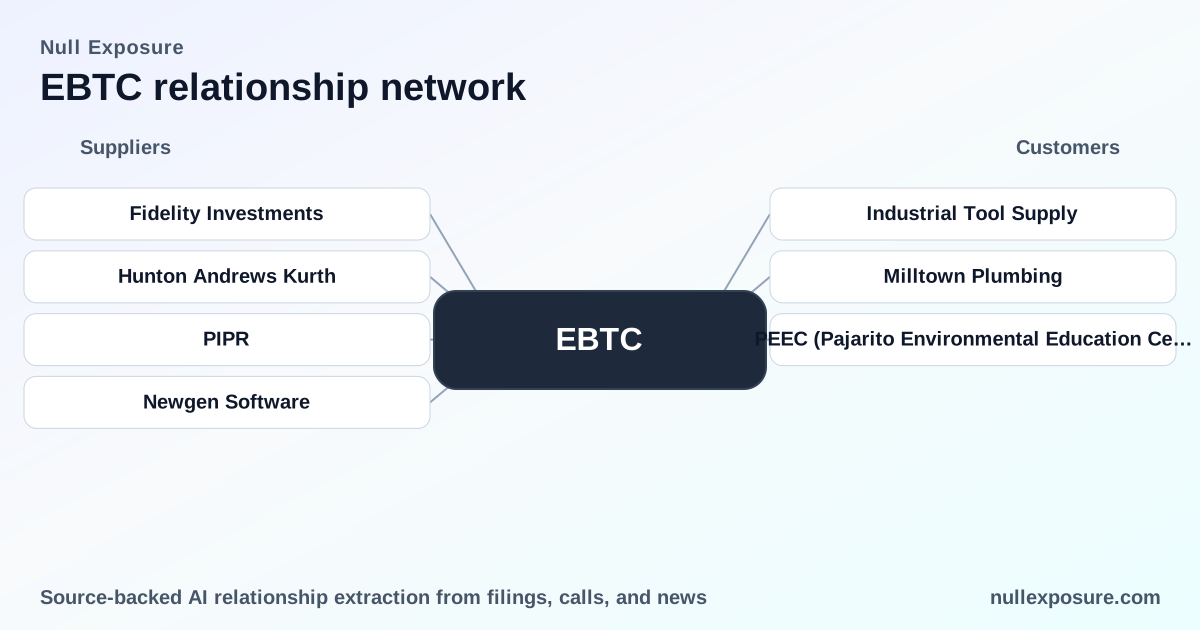
Enterprise Bancorp operates through Enterprise Bank & Trust as a classic regional commercial bank: it generates revenue from interest spread, commercial and consumer lending, and fee-based wealth-management services while returning capital via a modest dividend. The company’s monetization is relationship-driven — loans, deposits, and wealth-management referrals — supported by strategic vendor and advisor relationships that influence underwriting efficiency, client services, and capital markets execution. For investors and operators, the supplier map reflects both operational dependencies and value levers: legal and investment-banking advisors for transactions, technology partners for lending automation, and custodial/wealth platforms for client-facing services.
Explore more supplier intelligence at https://nullexposure.com/.
Quick take: what matters to investors and operators
Enterprise is a mature, profitable regional bank with 126 consecutive profitable quarters, a market capitalization near $496 million, and a dividend yield of roughly 2.45%. These company attributes produce a contracting posture that prioritizes stability and risk management, not rapid vendor switching: vendors are chosen for regulatory fit, continuity, and integration with existing bank systems. Key commercial relationships therefore carry outsized operational importance — advisory firms when a strategic sale or capital event occurs, platform partnerships for wealth and lending automation, and law firms for transaction and regulatory work.
Supplier relationships: the map and why each matters
Below are the supplier relationships surfaced in our intelligence for EBTC. Each entry includes a concise, plain-English summary with a source reference.
Fidelity Investments — wealth services integration
Enterprise Bank & Trust partnered with Fidelity Investments to deliver custodial and investment services to its wealth-management clients, integrating Fidelity’s capabilities into the bank’s client offering and broadening product access for depositors and high-net-worth relationships. According to a March 2026 LA Daily Post feature referencing the arrangement (citing FY2022 activity), Fidelity supports Enterprise’s wealth-management channel and client servicing: https://ladailypost.com/martinez-the-many-ways-enterprise-bank-trusts-partnership-with-fidelity-investments-enhances-financial-services-available-for-clients/.
Piper Sandler — strategic financial adviser on a sale process
Enterprise engaged Piper Sandler as its financial adviser in a sale transaction announced in FY2024, providing deal execution, valuation, and strategic advice critical to the bank’s disposition process. MonitorDaily reported that Piper Sandler advised Enterprise in the context of the acquisition by Independent Bank and Rockland: https://www.monitordaily.com/independent-bank-and-rockland-to-acquire-enterprise-bancorp-and-enterprise-bank/.
Hunton Andrews Kurth — legal counsel for the transaction
Enterprise retained Hunton Andrews Kurth as legal counsel for the FY2024 strategic transaction, supplying regulatory, transactional, and compliance support through the sale process — an essential supplier role for insured-depository institutions undergoing M&A. MonitorDaily covered the engagement of Hunton Andrews Kurth alongside Piper Sandler: https://www.monitordaily.com/independent-bank-and-rockland-to-acquire-enterprise-bancorp-and-enterprise-bank/.
Newgen Software — commercial lending platform deployment
Enterprise Bank deployed Newgen Software’s commercial lending solution to streamline its commercial loan origination and servicing, a tech investment that increases underwriting throughput and reduces manual workflow cost. Enterprise Times reported the implementation in February 2025, noting the platform’s role in commercial lending modernization: https://www.enterprisetimes.co.uk/2025/02/11/enterprise-bank-streamlines-commercial-loans-with-newgen-sofware/.
Operating-model signals and contracting constraints you should consider
With no explicit supplier-contract excerpts disclosed in the relationship data, the following company-level signals describe Enterprise’s likely contracting posture and business-model constraints:
- Conservative, relationship-focused contracting. Enterprise’s regional-bank model and long record of profitability favor stable, long-term vendor relationships for mission-critical services (custody, lending platforms, legal counsel). That contracting posture supports regulatory continuity and reduces operational risk.
- Concentration and ownership signals. Insiders hold roughly 20.8% of shares and institutions about 35%, implying a governance mix that balances founder/management influence with institutional oversight — a factor in vendor selection and approval cycles.
- Criticality of vendor services. Technology and custody partners (e.g., Newgen, Fidelity) are operationally critical: failures or integrations that underperform would directly affect loan throughput and client-facing wealth services, which are core revenue drivers.
- Maturity and lower growth bias. The company’s long profitability streak, dividend policy, moderate P/E (~12.1), and stable beta (~0.73) indicate mature operations with emphasis on capital preservation and steady returns rather than aggressive platform experimentation.
- Transaction-driven advisory engagements. The use of Piper Sandler and Hunton Andrews Kurth for an M&A process signals periodic reliance on high-quality external advisers for strategic events rather than in-house execution of large transformational transactions.
What investors and operators should watch next
- Integration effectiveness for Newgen: monitor loan-automation metrics (time-to-decision, origination volumes) that translate platform investment into cost savings and faster underwriting. Successful integration directly improves margins on the commercial book.
- Wealth channel economics with Fidelity: watch referral volumes, custody fees retained, and cross-sell conversion from wealth to banking products; Fidelity’s role is strategic for fee income and client retention.
- Transaction closure and advisory outcomes: the Piper Sandler / Hunton Andrews Kurth engagements indicate a completed or in-process M&A outcome that will materially change scale and vendor requirements; confirm deal terms and post-close integration plans.
If you track supplier risk and strategic dependencies for regional banks, review the full supplier map and transaction intelligence at https://nullexposure.com/ for deeper context.
Bottom line: relationships are strategic levers, not just line items
Enterprise Bancorp’s supplier set reflects a measured, risk-aware operating model: strategic advisers for corporate actions, a major wealth custodian to support fee income, and a focused technology partner to improve lending economics. For investors, these relationships reveal where operational improvements and M&A execution will create value; for operators, they highlight integration points that determine service continuity and client outcomes. Monitor vendor integration metrics and the outcomes from the FY2024 transaction closely — these will determine whether these supplier relationships are value-accretive or merely defensive.
For a structured supplier-risk view and transaction monitoring, visit https://nullexposure.com/ to see how these relationships evolve and what they imply for EBTC’s valuation and operational risk.