ECAT: How the BlackRock-managed ESG Trust Fits into a supplier-risk lens
BlackRock ESG Capital Allocation Trust (ECAT) is a BlackRock-managed, NYSE-listed investment trust that builds a diversified portfolio of public equities and private holdings with an ESG tilt. The vehicle monetizes through investment performance and the asset-management relationship with BlackRock — generating value for shareholders from capital appreciation, realized gains and any net investment income, while BlackRock captures management economics tied to asset stewardship and active allocation. For allocators and operators, the core decision is not whether ECAT invests in ESG themes, but how the BlackRock relationship, valuation profile and liquidity characteristics influence portfolio risk and operational dependency.
Explore more supplier intelligence at https://nullexposure.com/ to understand counterparty concentration and exposure across your holdings.
How ECAT operates and where the cashflows originate
ECAT is structured as a specialized trust under the BlackRock platform. Its revenue profile is driven indirectly — shareholder returns arise from underlying portfolio performance rather than standalone operating revenues — and the manager relationship supplies the operational capability, governance framework and fee mechanics that underwrite the product. The Trust is positioned to deliver risk-adjusted returns by combining liquid equities with private investments under BlackRock’s ESG integration framework.
Key, verifiable balance-sheet and market signals: market capitalization around $1.39 billion, a trailing P/E of 6.5, a price-to-sales of 6.43 and a price-to-book near 0.864, with shares outstanding near 99.5 million and institutional ownership at ~36.8% (latest quarter 2025-12-31). These metrics frame how investors will value the manager relationship and liquidity profile when sizing allocations.
Supplier relationships you should map (and what they mean)
This section covers every relationship noted in the provided sources for ECAT.
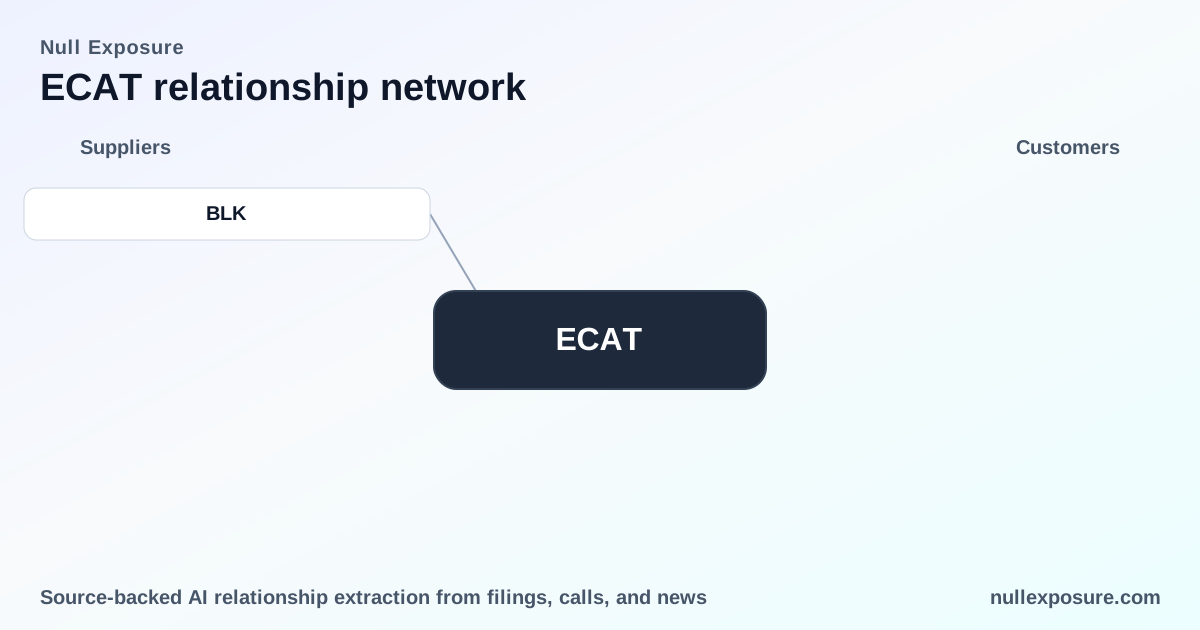
- BlackRock (BLK) — The Trust is managed by BlackRock, which provides portfolio management, ESG integration and operational oversight; this manager relationship is central to ECAT’s strategy and economics. A market news release referencing ECAT highlighted this linkage in March 2026. (See StockTradersDaily news release, March 9, 2026.)
According to the Trust’s public profile and filings as of the latest quarter (2025-12-31), the BlackRock management relationship is the defining supplier arrangement for ECAT.
What the relationships imply for contracting posture and operational risk
With no other third parties recorded in the supplied results, the management relationship with BlackRock is the dominant supplier dependency. Treat the following as company-level operating signals rather than relationship-level assertions, because the source constraints did not enumerate other counterparties.
- Contracting posture — Delegated and centralized. ECAT relies on BlackRock for investment decisions and operational execution; that implies a concentrated contracting posture where the manager holds latitude over day-to-day portfolio choices and ESG integration standards.
- Concentration — Manager-centric. The absence of other supplier entries in the data means single-manager concentration is a material structural feature; decisions by BlackRock materially affect ECAT’s strategy, risk controls and distribution mechanics.
- Criticality — High. The manager is critical to performance delivery and compliance with ESG commitments; any operational disruption at the manager level would directly impair the Trust.
- Maturity — Institutional platform. Listing on the NYSE, established market cap and institutional ownership suggest a mature product lifecycle and institutional investor acceptance, which reduces certain execution risks but reinforces dependence on BlackRock’s continuity and reputation.
These characteristics inform negotiation posture and monitoring priorities for allocators: ensure robust reporting, clear fee transparency and exit mechanics are codified given the concentrated supplier relationship.
Explore supplier exposure mapping and governance checks at https://nullexposure.com/ for a deeper view of counterparty criticality.
Risk and opportunity checklist for investors and operators
Below are practical, focused points that translate the above signals into action.
- Valuation leverage: Trailing P/E of 6.5 and price-to-book below 1 can indicate an opportunity for value-oriented allocations or reflect market discounting of the trust structure — parse attribution between underlying asset performance and trust-level discounts/premiums.
- Manager dependency: BlackRock’s role is both a competitive advantage and a concentration risk; prioritize contractual clarity on portfolio mandates, ESG reporting cadence and governance escalation.
- Liquidity and NAV dynamics: As a listed trust with private investments, monitor trading spreads and NAV transparency; premium/discount dynamics will materially affect realized returns for market-timed investors.
- Institutional backing: With roughly 36.8% institutional ownership, expect lower idiosyncratic volatility from retail trading but more sensitivity to re-ratings by large allocators or macro shocks to equity markets.
- Dividend and income profile: The Trust shows no dividend per share or yield in the latest profile, positioning total return rather than income as the primary investor payoff.
Tactical follow-ups for commercial counterparties and ops teams
Operators negotiating with or monitoring ECAT should insist on:
- Regular, standardized reporting linking ESG outcomes to financial performance.
- Defined escalation clauses and business-continuity commitments from the manager.
- Visibility into private holdings valuation methodology and liquidity assumptions.
Bottom line: where ECAT sits in a counterparty map
ECAT is a BlackRock-managed ESG allocation vehicle whose supplier risk is concentrated and manager-centric. For investors this creates both an efficiency (leveraging BlackRock’s platform and distribution) and a dependency (single-manager operational and governance exposure). Valuation metrics and institutional ownership suggest a mature product that requires active monitoring of premium/discount dynamics, NAV transparency and manager contractual safeguards.
For a concise supplier-risk assessment and monitoring playbook, visit https://nullexposure.com/ and evaluate how concentrated management relationships affect your portfolio exposures.
Next steps: if BlackRock’s stewardship and the Trust’s valuation profile matter to your allocation, codify reporting expectations, stress-test exit scenarios and monitor NAV/premium trends monthly. For deeper supplier mapping and continuous monitoring of counterparty exposure, return to https://nullexposure.com/.