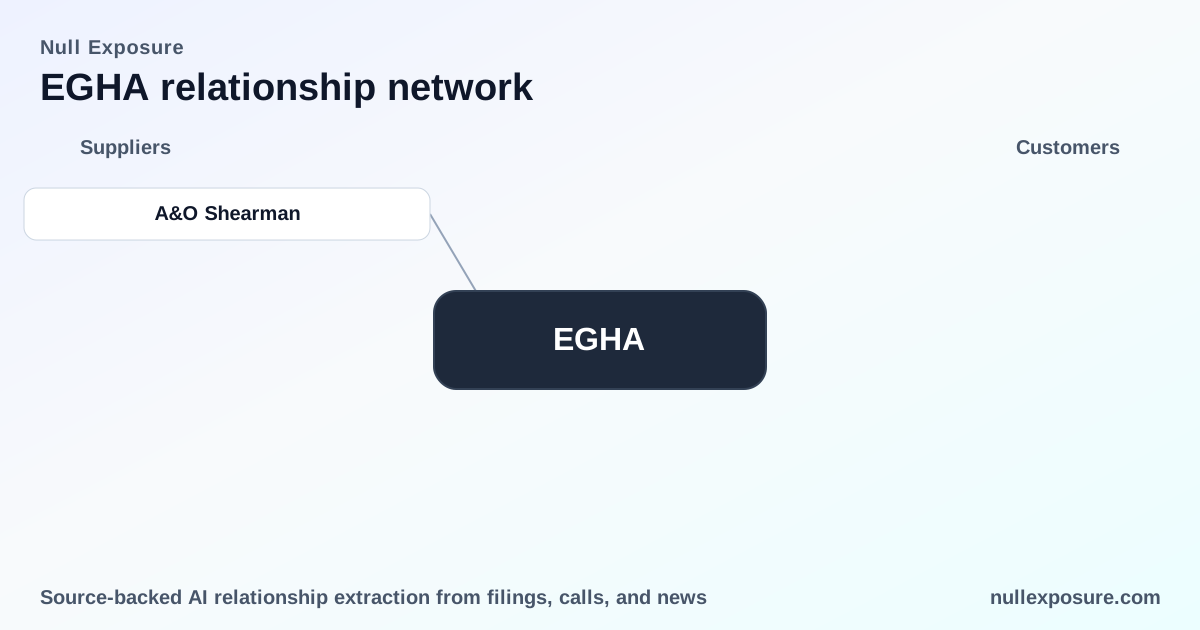
EGH Acquisition Corp. (EGHA): what operators and investors need to know about the supplier landscape
EGH Acquisition Corp. is a classic special-purpose acquisition company (SPAC): a publicly listed shell created to acquire or merge with an operating business and monetize sponsor equity through a business combination. The company currently holds no operating revenue, negative book value per share, and derives value exclusively from its public listing and its announced combination with Hecate Energy Group LLC; its monetization path is execution of that deal and subsequent market re-rating of the combined entity. For hands-on investor diligence and counterparty risk assessment, the relevant supplier relationships are concentrated, transaction-driven, and highly material to deal execution. Visit https://nullexposure.com/ for a consolidated view of supplier exposures and advisory history.
Market snapshot and operating posture
EGHA is a NASDAQ-listed SPAC headquartered in Saint Petersburg, Florida, classified in Financial Services under the “Shell Companies” industry. The company reports essentially no operating metrics: revenue, EBITDA, and margins are all zero; book value per share is negative at -0.243. Current market capitalization sits near $208.9 million with 15.5 million shares outstanding and minimal institutional ownership (~7.7%). The equity has traded tightly around the low-tens in the past year (52-week range $9.31–$10.39), consistent with pre-combination SPAC price behavior.
What this means for supplier risk and commercial posture
- Contracting posture is transitional and deal-focused. EGHA functions as a sponsor vehicle: supplier engagements are concentrated around legal, financial and transaction advisors rather than ongoing operational vendors.
- Concentration risk is high. A single announced business combination dominates the company’s valuation and supplier spend; counterparty failures tied to that transaction would have outsized impact.
- Criticality of advisors is elevated. Law firms and investment banks engaged for the combination are operationally critical for closing, regulatory compliance, and messaging to public markets.
- Maturity is embryonic. The company has no operating revenue stream and limited historical counterparties; supplier relationships are therefore short-duration, high-impact contracts rather than long-term procurement commitments.
Supply-side relationships: the advisers that run the deal
EGHA’s supplier relationships are sparse and concentrated on transactional advisers. The public record identifies the firm engaging legal counsel for its announced business combination. Below is the complete set of supplier relationships surfaced in public reporting.
A&O Shearman — transaction counsel for the Hecate combination
A&O Shearman guided EGH Acquisition Corp. in connection with its announced USD 1.2 billion pre-money enterprise value business combination with independent energy infrastructure developer Hecate Energy Group LLC. According to a firm announcement dated March 9, 2026, A&O Shearman acted as legal counsel on the transaction, a relationship that is both contractually central to closing and reputationally visible to investors. (A&O Shearman press release, March 9, 2026)
How to read that relationship for investment and operational decisions
- Legal counsel is a gating factor for completion. In SPAC transactions, counsel handles regulatory filings, disclosure controls, and transactional structure; the quality and continuity of counsel materially affects closing risk.
- This relationship is short-duration but high-leverage. Counsel fees and deliverables are concentrated around stages: announcement, proxy/meeting materials, and closing. Successful navigation of those milestones will drive EGHA’s ability to convert implied value into an operating equity stake.
- Counterparty transparency matters. Investors should look beyond the name of the adviser to the scope of work and any disclosed fees or side letters that affect economics or lockups.
Financial and strategic implications for investors
The corporate truth for EGHA is straightforward: value hinges on the announced combination with Hecate Energy and the market’s reception post-close. EGHA itself contributes no operating cash flow; all economic upside is realized through the success of the merger and the governance and incentives embedded in the SPAC-sponsor structure. Key implications:
- Execution risk dominates. Legal, accounting, and financing suppliers are the active margin between announcement and consummation. Any breakdown in advisor deliverables increases the probability of deal renegotiation or abandonment.
- Concentration of supplier counterparties increases single-point-of-failure risk. With a lean supplier roster, vendor disputes or missed regulatory deadlines are amplified.
- Limited legacy obligations reduce ongoing operational drag, but also offer minimal downside absorption—there are no operating revenues to offset transaction costs if a deal stalls.
Mid-article resource: further supplier intelligence and monitoring
For investors conducting ongoing monitoring of EGHA’s supplier state and to track changes in advisory panels around the combination, consult consolidated supplier intelligence at https://nullexposure.com/. That portal centralizes announced advisers, public filings, and newsflow that determine whether EGHA’s execution timeline is on track.
Risk checklist for operators and counterparties
- Confirm scope and term: ensure legal retainer and fee milestones align with your risk tolerance for pre-close work.
- Verify disclosure obligations: counsel engagement affects what appears in filings; align PR and legal tasks tightly to avoid inconsistency.
- Stress-test close conditions: any financing commitments, sponsor indemnities, or side agreements should be understood and capped for counterparty exposure.
Closing assessment and recommendations
EGH Acquisition Corp. is a classic, concentrated SPAC where advisory relationships are the company’s operational backbone. The most important supplier relationship disclosed to date is its engagement with A&O Shearman as transaction counsel for the announced USD 1.2 billion pre-money combination with Hecate Energy; that counsel relationship is central to closing timelines and regulatory compliance. Investors and counterparties should prioritize tracking adviser disclosures, fee arrangements, and milestone certainties—these are the levers that determine whether the SPAC converts its headline valuation into a functioning public business.
For a continuous feed of supplier-level intelligence and to benchmark EGHA’s advisory roster against peers, visit https://nullexposure.com/. For bespoke research or to commission deeper counterparty diligence on EGHA’s advisers, start with the homepage at https://nullexposure.com/ and engage directly with the analyst team.