EHI-R supplier map: what investors need to know about counterparties on a rights offering
EHI-R’s supplier footprint is compact and transactional: the vehicle relies on an external asset manager for portfolio decisions and a specialist information agent for investor communications tied to a transferable rights offering. Monetization runs through fund-level fee income and discrete capital‑raising events where third‑party vendors are paid for execution and distribution services, not through a broad, vertically integrated supplier base. For investors and operators assessing counterparty exposure, the defining questions are vendor concentration, operational criticality in capital events, and the reputational and execution quality of those vendors. Visit the nullexposure homepage for deeper supplier intelligence: https://nullexposure.com/
The operational picture in plain English
EHI-R’s publicly visible supplier relationships around the rights offering show a classic fund outsourcing posture. The asset manager oversees investment decisions and fund economics, while a specialist information agent handles investor outreach and procedural execution for the offering. That combination tells investors that EHI-R outsources both strategic control (investment management) and transactional execution (offering logistics), which shortens the vendor list but raises the importance of each retained counterparty.
This structure produces three practical characteristics for diligence:
- High counterparty concentration: a small number of suppliers provide mission‑critical services.
- Event-driven criticality: supplier importance spikes during capital-raising events (e.g., rights offerings).
- Mature counterparties preferred: funds typically contract established vendors to reduce execution risk for investor-facing events.
If you want a structured view of supplier relationships across multiple issuers, start here: https://nullexposure.com/
Who’s on the list and what they do
Below are the relationships discovered in public coverage of the transferable rights offering linked to EHI-R.
-
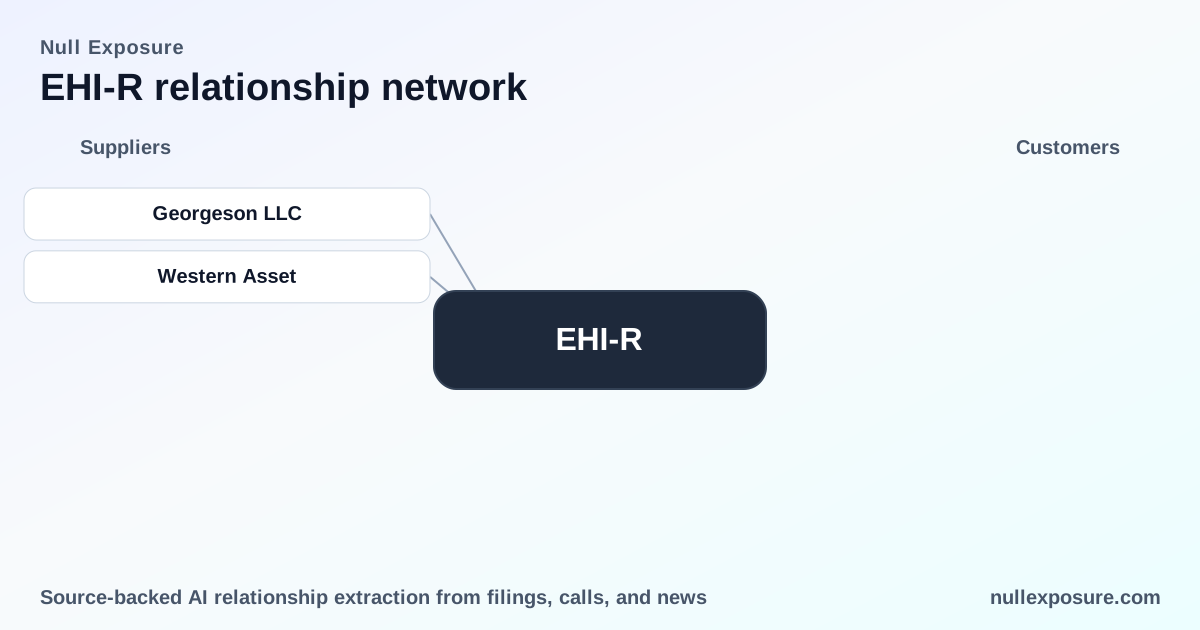
Georgeson LLC — Georgeson is identified as the Information Agent for the transferable rights offering, responsible for investor inquiries and communications; the press release directs inquiries to Georgeson at 866‑856‑2826. According to the Business Wire distribution on October 15, 2024, Georgeson handled offer communications and investor servicing for the event (Business Wire / FinancialContent, Oct 15, 2024).
-
Western Asset — Western Asset is the investment manager for the fund associated with the offering and is described as running an actively managed strategy; the release notes that active management does not guarantee outcomes but confirms Western Asset’s managerial role. This is recorded in the same October 15, 2024 press distribution covering the final results of the transferable rights offering (Business Wire / Wedbush and FinancialContent, Oct 15, 2024).
Those two entities represent the full supplier set identified in the public notices associated with the rights offering; both appear in multiple distributor feeds for the same press release.
What these relationships imply for investors and operators
The supplier mix provides clear operational signals:
- Concentration risk is real. With only the manager and an information agent disclosed around the offering, a single vendor failure or reputational issue could have outsized operational and communications impacts during capital events.
- Execution risk is event-focused. The information agent’s role is mission-critical for investor communications, subscription processing, and regulatory notices tied to the offering; failures would affect fund flows and compliance timelines more than day‑to‑day portfolio management.
- Counterparty maturity reduces operational friction. Both Western Asset and Georgeson are established names in asset management and proxy/investor communications respectively, which lowers baseline execution risk relative to lesser‑known vendors.
- Cost structure is concentrated into fee lines. Monetization for the fund flows through management fees and proceeds from rights transactions where vendors are paid on a per‑event or contractual basis rather than via an ongoing broad vendor ecosystem.
These are firm‑level signals about how EHI-R operates rather than granular contractual terms; the public notices reviewed do not disclose detailed contractual provisions, service levels, or termination clauses.
Constraints and governance signals investors should probe
Public coverage did not surface binding contractual constraints or granular supplier SLAs, so diligence should focus on governance evidence and contingency planning:
- Ask for service‑level documentation and remediation/backup procedures for the information agent function.
- Confirm management continuity plans at Western Asset for handling market stress around capital events.
- Validate insurance, indemnities, and dispute mechanisms that protect the fund and shareholders if a supplier fails to execute.
These are company-level governance signals to request during counterparty diligence because the press disclosures do not include explicit constraint excerpts naming specific contractual limitations.
If you want a comparative supplier risk profile or wish to benchmark EHI-R’s relationships against peers, start here: https://nullexposure.com/
Practical recommendations and next steps
For investors and operators evaluating EHI-R relationships, prioritize the following actions:
- Obtain the information agent engagement letter and confirm operational responsibilities, timelines, and escalation paths for capital events.
- Review Western Asset’s mandate, fee schedule, and recent performance memos tied to the fund to assess alignment and incentive structures.
- Require evidence of redundancy and business‑continuity planning for investor communications, including backup vendors or escalation chains.
Key takeaway: EHI-R’s supplier roster is small and consequential; diligence should be precise—focus on contract terms and contingency mechanisms rather than searching for a long list of vendors.
For ongoing monitoring and a structured supplier view across funds and offerings, visit the nullexposure homepage: https://nullexposure.com/
Closing summary
EHI-R’s public supplier footprint for the transferable rights offering is lean: Georgeson LLC as information agent and Western Asset as manager. That configuration delivers operational clarity and reduced vendor sprawl but concentrates execution risk around discrete capital‑raising events. Investors and operators should leverage contractual scrutiny and contingency planning to convert that concentration into manageable, transparent counterparty exposure.