Entergy Louisiana (ELC) — what suppliers tell investors about risk and runway
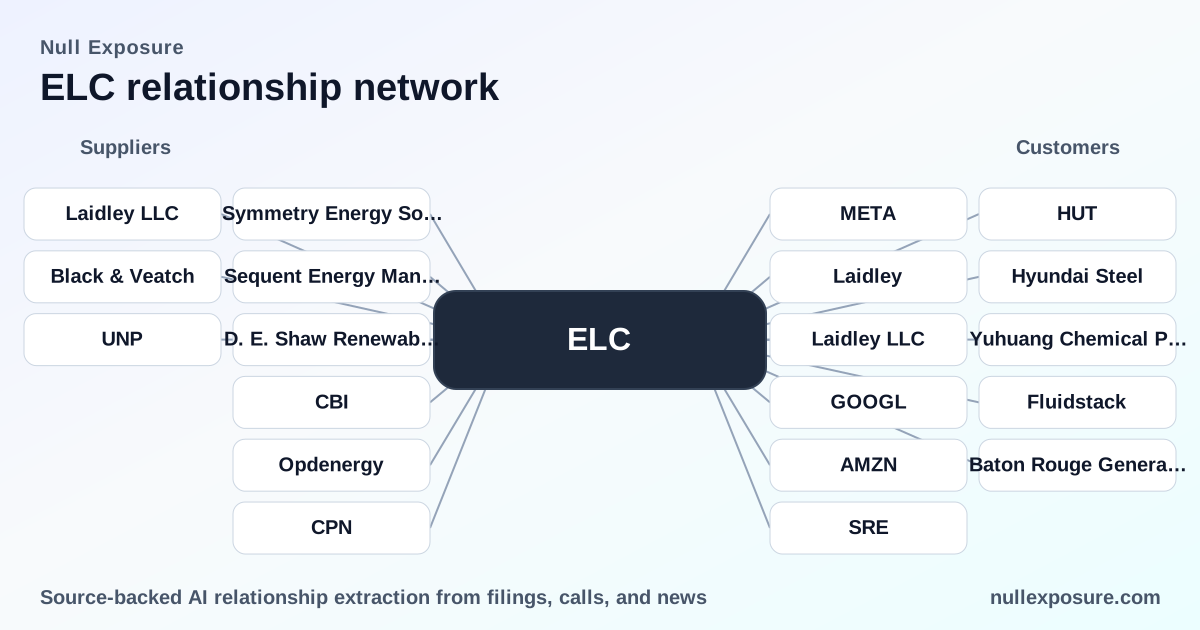
Entergy Louisiana operates as a regulated utility that generates, transmits, distributes and sells electricity in Louisiana, monetizing through retail and wholesale power sales, long-term power purchase agreements (PPAs), and commodity procurement for fuel and purchased power that is largely recovered through regulated rates. The firm’s supplier map spans short-term fuel counterparties, multi-decade renewable PPAs, EPC contractors for new-build projects and logistics providers for fuel delivery—each relationship shaping cash flow stability and regulatory risk for investors in the preferred security. For a concise view of supplier exposures and to model counterparty risk, see our portal: https://nullexposure.com/
How Entergy Louisiana buys power and secures supply — the big picture
Entergy Louisiana runs a mixed contracting posture that leans on long-dated agreements for predictable supply while retaining some short-term commodity activity to manage price volatility. The company is a net buyer of energy and acts as the counterparty across several 20-year solar PPAs, multi-year fuel contracts, and a mix of shorter-term natural gas swaps and options used for hedging. These choices produce predictable cash requirements but also concentrate execution risk in a small set of counterparties and construction partners.
- Contracting posture: A material portion of supply is covered by long-term PPAs and extension agreements (company-level evidence indicates contracts extending to 2031 and 20-year PPAs for solar projects), supporting earnings stability under regulated cost recovery.
- Concentration and criticality: Entergy relies on a handful of developers and EPCs for renewable additions and a small set of fuel suppliers for gas procurement, increasing counterparty criticality for operations and rate-case narratives.
- Maturity and flexibility: Long-dated PPAs insulate the utility from short-term market swings but reduce flexibility to capture lower spot prices; the utility complements these with short-term swaps and options to hedge exposure.
- Spend signal: Audit and regulatory fee lines reflect material vendor spend (e.g., total fees around the low‑tens of millions), suggesting supplier engagements in the $10m–$100m spend band for significant categories.
If you assess counterparty credit or operational continuity for ELC positions, these supplier facts are primary inputs. Review full coverage and portfolio-tailored reports at https://nullexposure.com/
Supplier relationships that matter — one-line profiles and sources
- Symmetry Energy Solutions — Entergy Louisiana has been purchasing natural gas for resale under a firm contract since April 2024, and Entergy New Orleans holds a no‑notice gas purchase agreement to ensure delivery at specified points and volumes. Source: Entergy 10‑K, FY2024 (company filing).
- Sequent Energy Management L.P. — Entergy’s prior contract with Sequent was not renewed and ended in March 2024, reducing one prior gas-supplier relationship. Source: Entergy 10‑K, FY2024 (company filing).
- D. E. Shaw Renewable Investments (DESRI) — DESRI developed and built solar facilities that will supply Entergy Louisiana under 20‑year PPAs, including a 50 MW Sunlight Road facility entering commercial operations. Source: Entergy press release (entergy.com), March 2026 and prior approvals, FY2022–FY2024 press materials.
- CB&I (Chicago Bridge & Iron / CBI) — CB&I was selected as the EPC contractor for the St. Charles plant, a material construction relationship tied to generation capacity additions. Source: Entergy news release (archival), FY2017 (company news archive).
- Opdenergy — Opdenergy is the builder of the Allen Parish solar facility that Entergy will purchase under a 20‑year agreement, forming part of a 350 MW development program. Source: Entergy press release, FY2021 and FY2022 approvals (company news).
- Calpine Corporation — Regulators approved an agreement for Entergy Louisiana to buy a natural gas‑fired peaking unit after construction by a Calpine subsidiary, creating a build‑and‑purchase commercial contract. Source: Entergy press release (regulatory approval), FY2018.
- Laidley LLC — Laidley, a real‑estate entity with a 20% stake in a data center, has an agreement to build three natural gas turbines and supply electricity to the facility for 15 years without shifting costs to household and small-business customers. Source: LaIlluminator reporting, Feb 27, 2026 (local news).
- Black & Veatch — Black & Veatch will provide full EPC services for the Sterlington renewable project, supporting construction and commissioning for Entergy’s decarbonization agenda. Source: Entergy press release, FY2024 (company news).
- Union Pacific — Coal transportation to Arkansas is covered by an existing Union Pacific rail transportation agreement expected to supply Entergy Arkansas’ rail needs for 2025, reflecting logistics contracting for thermal generation fuel. Source: Entergy 10‑K, FY2024 (company filing).
What these relationships imply for investment risk and operational resilience
The supplier list reveals three structural themes investors should price into ELC exposure:
-
Revenue stability through regulated recovery but counterparty execution risk. Long-term PPAs and regulated cost recovery provide predictable cash flows, but delays or performance problems with EPCs (CB&I, Black & Veatch) or project developers (DESRI, Opdenergy) translate into capital and regulatory risk that impact utility rate cases and preferred dividend coverage.
-
Fuel procurement mix and short-term commodity exposure. The transition from legacy suppliers (Sequent contract ended) to newer firm gas arrangements (Symmetry) and the continued use of swaps/options create a two‑layer exposure: structural (long-term purchases) and tactical (short-term hedges). Investors should monitor fuel contract tenors and hedge effectiveness disclosed in future filings.
-
Logistics and manufacturing concentration. Dependence on a limited set of rail and parts suppliers (Union Pacific and a shrinking pool of nuclear parts manufacturers) creates single-point-of-failure scenarios for fuel delivery and plant availability; company-level disclosures already signal increasing dependence on fewer suppliers for specialized components.
Company-level constraints reinforce these themes: dominant long-term contracting behavior, some short-term hedging activity, global sourcing for uranium, a clear buyer posture, evidence of reliance on external service providers, and spend lines consistent with material vendor engagements (audit/fee totals in the low‑tens of millions). Treat these as structural inputs when stress‑testing counterparty credit and recovery scenarios.
For an investor-ready counterparty risk matrix and scenario testing guide, visit our resources: https://nullexposure.com/
Bottom line and action items for investors
Entergy Louisiana’s supplier footprint combines stability from long-term PPAs and regulated recovery with concentrated execution risk around a handful of developers, EPCs and fuel logistics providers. Monitor the performance and contractual milestones for DESRI and Opdenergy solar projects, the operational delivery under Symmetry gas contracts, EPC progress on St. Charles and Sterlington projects, and any regulatory outcomes tied to Calpine-built generating capacity. These vendor outcomes feed directly into investor returns and preferred dividend security.
If you are assessing ELC exposure for portfolio allocation, credit work or operational counterparties, consult our detailed supplier maps and stress-testing tools at https://nullexposure.com/ — they translate these supplier relationships into actionable credit and operational scenarios.