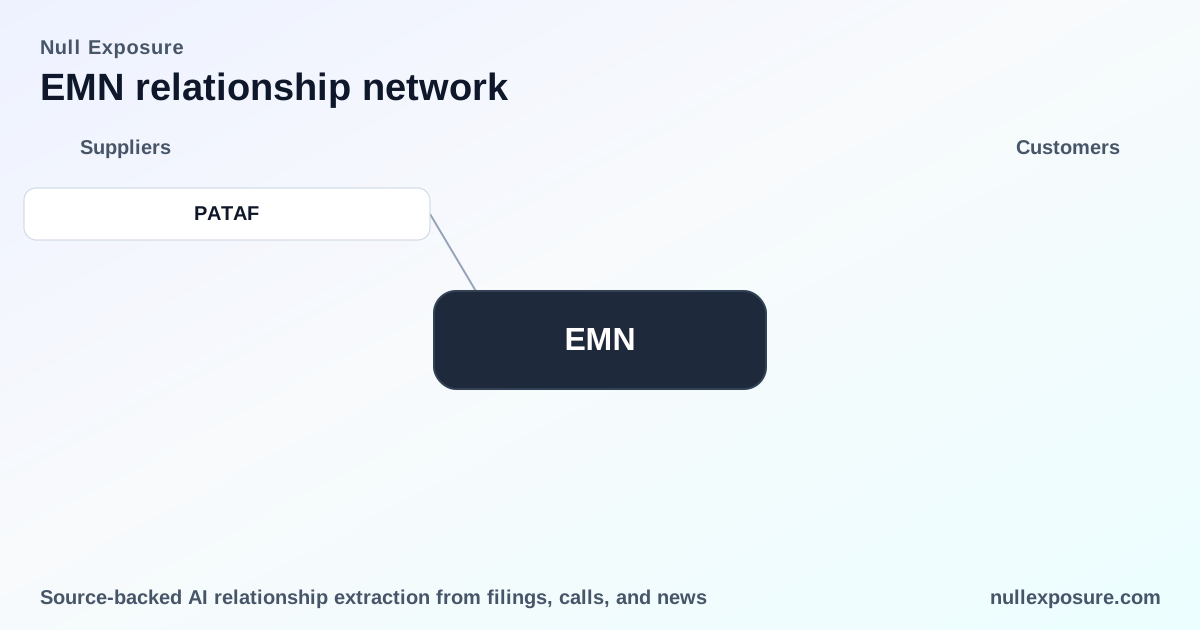
Eastman Chemical (EMN) — supplier relationships and what they mean for investors
Eastman Chemical monetizes a portfolio of specialty chemicals, advanced materials and molecular-recycling services by selling formulated products to industrial and consumer brands and by converting feedstock waste into resaleable materials. The company captures margin through differentiated technology (including molecular recycling), scale manufacturing and long-running purchase obligations with suppliers and energy providers that underwrite its production footprint. For investors, Eastman is both a science-led product seller and a services partner to brand customers that leverages recycling technology as a commercial growth pathway.
Discover deeper supplier signals at https://nullexposure.com/.
A single recent supplier relationship: Eastman partnered with Patagonia on textile recycling
Eastman processed 8,000 pounds of pre‑ and post‑consumer clothing waste from Patagonia using its molecular-recycling technology, converting textile waste into feedstock for new materials. This was reported by Knitting Industry on March 9, 2026 and is documented in the company/media coverage for FY2026: https://www.knittingindustry.com/eastman-and-patagonia-tackle-textile-waste/.
Why this engagement matters to investors
This Patagonia engagement is a strategic commercial pilot that demonstrates Eastman’s ability to position recycling as a service to apparel brands. The 8,000‑pound volume is practical proof of capability rather than a large-volume manufacturing contract, but it strengthens Eastman’s go‑to‑market narrative for circular solutions and brand partnerships. According to the Knitting Industry write-up (Mar 9, 2026), Eastman’s molecular recycling capability processed the returned garments into feedstock usable for new material production.
All supplier/partner relationships found in the recent results
- Patagonia — Eastman processed 8,000 pounds of pre‑ and post‑consumer clothing waste through its molecular recycling technology as a brand partnership in FY2026; reported by Knitting Industry on March 9, 2026 (https://www.knittingindustry.com/eastman-and-patagonia-tackle-textile-waste/).
Operational constraints that shape supplier posture and risk
The available disclosures and excerpts reveal three company‑level signals that materially affect supplier dynamics and negotiating posture:
-
Contracting posture: short‑term procurement cycles. Eastman purchases a majority of its key raw materials and energy under contract mechanisms generally one to three years in initial duration, with renewal or cancellation options for both parties. This structure gives Eastman flexibility to react to commodity price cycles and technology shifts, but it also produces recurring renegotiation events that can introduce price volatility into margins. (Evidence from company disclosures describing contract durations; confidence: high.)
-
Operational model includes third‑party operating relationships. Eastman discloses an operating agreement where a third party operates manufacturing assets at a site, indicating that some production responsibilities are outsourced to contract operators. This service‑provider posture reduces fixed‑cost obligations for specific sites but increases counterparty and operational continuity risk tied to operators’ performance. (Evidence from company references to operating agreements; confidence: medium‑high.)
-
Material spend and long‑dated purchase obligations. Eastman reported purchase obligations of $1.6 billion at December 31, 2024 for materials, supplies and energy, spread over an extended period (approximately 25 years in aggregate disclosure). That level of committed spend signals high supplier concentration and scale dependency on feedstock and energy supply relationships; it’s a structural cost base feature that supports manufacturing continuity but creates leverage for large suppliers. (Evidence from purchase‑obligation disclosure; confidence: high.)
Together these constraints produce a company profile where procurement is active and recurrent (short contractual tenor), the company leverages outsourcing for operational flexibility, and material committed spend creates both bargaining leverage and concentration risk among large suppliers. Investors should view Eastman as strategically flexible but operationally exposed to supplier price cycles and third‑party operator execution.
Investment implications — what to watch as these relationships scale
- Revenue upside from brand partnerships. Demonstrations like Patagonia’s recycling program validate Eastman’s commercial pathway for circular‑economy services, supporting potential premium pricing and longer‑term service contracts as brands scale recyclate requirements.
- Margin sensitivity to feedstock and energy contracts. The one‑to‑three‑year contract cadence creates recurring margin exposure; favorable renewals can lift margins rapidly, while adverse cycles can compress profitability in the near term.
- Operational continuity risk tied to outsourced operators. Where third parties run manufacturing assets, investor diligence should include counterparty health and contract stability to assess production risk.
- Concentration of committed spend. The $1.6 billion purchase obligation is a reminder that Eastman’s cost base is structurally meaningful and that supplier disruptions or price jumps will propagate quickly into results.
Key risk factors and tactical signals for due diligence
- Track the transition of pilot recycling projects into recurring, contracted volumes with brand partners; conversion of pilots to multi‑year supply agreements materially de‑risks the revenue stream.
- Monitor commodity and energy contract renewal dates and pricing mechanisms to estimate near‑term margin pressure windows.
- Review counterparty terms and indemnities where third parties operate critical facilities; operator performance is a single point of failure in some footprints.
- Assess the pace at which Eastman can scale molecular recycling throughput without large capital intensity—commercial scalability will determine whether these brand partnerships move from margin dilutive pilots to margin enhancing services.
For a structured way to track supplier and partner signals that affect portfolio risk and operational continuity, visit https://nullexposure.com/ for more supplier‑level intelligence.
Bottom line and recommended next steps
Eastman’s business mixes specialty product sales with commercial services that use proprietary recycling technology, and recent partnerships—like the Patagonia engagement—illustrate a practical path to selling circular solutions to brands. However, short contract tenors for raw materials and significant purchase obligations create recurring margin exposure and supplier concentration risk that investors must monitor. Operational outsourcing further shifts risk onto contract operators, requiring contractual diligence.
Actionable next steps for analysts and operators:
- Confirm whether pilot recycling volumes convert into multi‑year commercial agreements.
- Map upcoming procurement renewals and their likely price trajectories.
- Audit major operator agreements for performance guarantees and fallback plans.
For continuous supplier‑level monitoring and contextualized alerts, go to https://nullexposure.com/.