enGene (ENGN): Supplier relationships that shape a near-term commercialization run
enGene is a clinical-stage genetic medicines company that develops mucosal-delivered therapeutics and monetizes through eventual product commercialization and out‑licensing of intellectual property; today its balance sheet management and supplier network underpin the path to a planned Biologics License Application (BLA) and first commercial launch. The company currently generates no product revenue, funds operations through a mix of equity and non‑dilutive debt, and depends on a small set of licensors, contract manufacturers and service providers to run late‑stage development and prepare for commercialization. Investors evaluating ENGN supplier risk should prioritize counterparty concentration and the financial flexibility delivered by its Hercules facility.
Explore additional supplier intelligence at https://nullexposure.com/.
How enGene monetizes and why suppliers matter
enGene’s business model converts clinical success into commercial royalty streams, direct product sales and licensing income. As a non‑viral genetic medicines developer with no internal manufacturing scale, the company monetizes intellectual property and future product launches while outsourcing production, analytics and regulatory support to third parties. That creates two parallel value levers: clinical/regulatory milestones that drive valuation uplifts, and supplier stability that determines time‑to‑market and cost structure.
Financial context sharpens the commercial lens: ENGN reported no revenue through the latest quarter (2026-01-31), a negative EBITDA and institutional ownership exceeding 97%, indicating both biotech investor conviction and sensitivity to operational execution. The company’s ability to execute a BLA in H2 2026 and to convert that into a commercial supply chain is the core variable for valuation. Learn more about supplier exposures and implications at https://nullexposure.com/.
A close look at ENGN’s named supplier and financing relationships
Hercules Capital — strategic lender providing up to $125M
enGene amended its loan and security agreement to expand a financing facility with Hercules Capital for up to US$125 million, providing substantial non‑dilutive capital intended to fund late‑stage development and BLA preparation. According to press coverage on March 9, 2026, the amended facility included amounts currently borrowed and additional uncommitted tranches for future drawdowns. (Source: CityBiz report and corroborating news coverage on March 9, 2026 — https://www.citybiz.co/article/796089/engene-announces-expanded-125-million-debt-facility-with-hercules-capital/ and related March 2026 press summaries.)
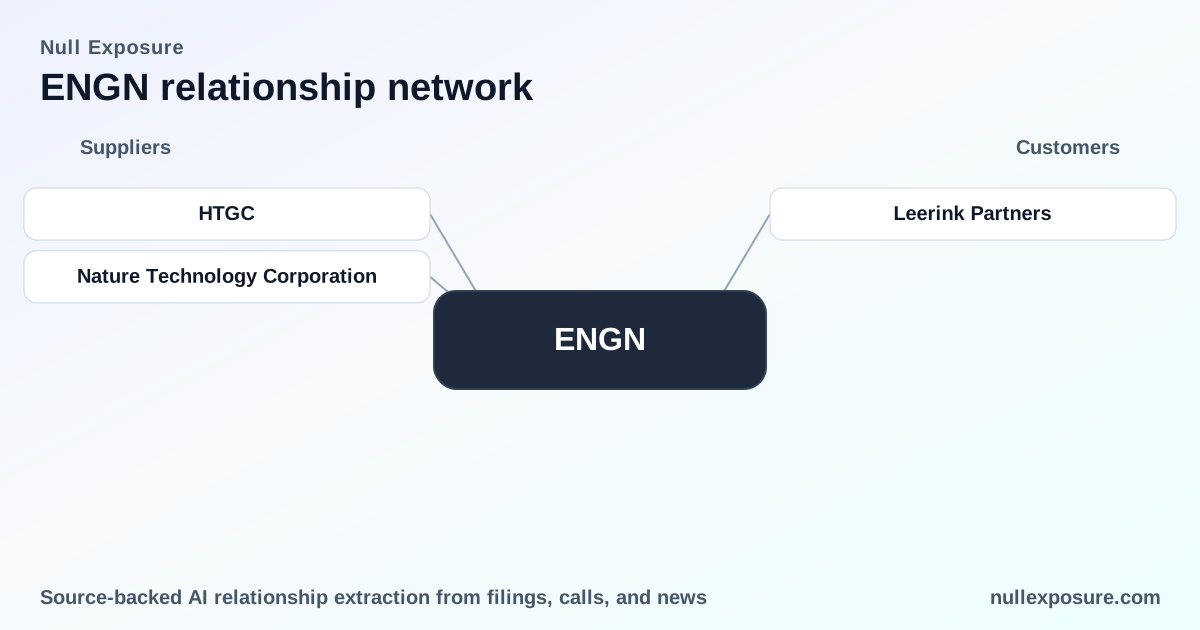
Nature Technology Corporation (NTC) — Nanoplasmid licensor
enGene maintains a non‑exclusive license from Nature Technology Corporation for the NanoplasmidTM vector backbone used in its lead program, with royalty and milestone obligations tied to commercialization rights; under the April 10, 2020 agreement enGene is the licensee with sublicensing rights in the defined field. This licensing arrangement is documented in the company’s SEC disclosures and summarized in its FY2025 filings. (Source: enGene SEC filing summarized in a March 2026 SEC 10‑K report — https://www.tradingview.com/news/tradingview:c0f8fa3bdb3e3:0-engene-holdings-inc-sec-10-k-report/.)
What the supplier picture implies for execution risk and valuation
The documented relationships point to a company that has secured two types of critical external partners: a large capital provider (Hercules) and an IP licensor (NTC). Both are material to near‑term execution — Hercules for liquidity and NTC for freedom to operate — but they live inside a broader supplier ecosystem that drives operational risk.
- Contracting posture and maturity: Company disclosures and referenced agreements indicate a mix of contract types — master service agreements, long‑term leases and licensing arrangements — implying a deliberate shift to standard commercial contracting as enGene moves from research to late‑stage development. The presence of a Master Service Agreement and a long‑term laboratory lease reflects maturing commercial posture rather than ad‑hoc arrangements.
- Concentration and criticality: enGene relies on a small number of CMOs and CROs for manufacturing, testing and clinical services; the company states this reliance is material and susceptible to operational disruptions. That concentration increases the operational criticality of each supplier and amplifies any manufacturing or testing delay’s effect on the BLA timeline.
- Geographic footprint: The company sources critical components from the European Union while maintaining North American research and office footprints, exposing supply chains to cross‑border logistics and regulatory coordination between EMEA and NA jurisdictions.
- Relationship roles: Disclosures classify partners across roles — licensees/licensors, manufacturers, and service providers — with active engagements. Where the company explicitly names a licensor (Nature Technology Corporation), the license terms include royalty and milestone economics that will compress future margins but secure necessary IP rights.
These signals together define an operating model that is outsourced, concentrated, and capital‑dependent, where liquidity events and supplier continuity are the principal drivers of near‑term valuation.
Why the Hercules facility changes the risk equation
The expanded Hercules facility provides meaningful non‑dilutive capital that reduces near‑term financing risk and buys time for regulatory milestones. Multiple March 2026 press reports document the $125M amendment and note existing borrowings with additional available tranches. That capital buffer reframes supplier risk: with secured runway, enGene can honor long‑term CMO commitments, progress stability testing, and complete regulatory filings without immediate equity raises. (Source: March 9, 2026 press releases and financial news — https://www.citybiz.co/article/796089/engene-announces-expanded-125-million-debt-facility-with-hercules-capital/.)
Investment implications and actionable checklist
- Upside: Successful BLA filing and approval in H2 2026 would validate the outsourced model and unlock commercial revenues; the Hercules facility reduces the probability of near‑term financing disruption.
- Key risks: Reliance on a narrow set of CMOs/CROs and contractual royalty obligations to licensors like NTC represent execution and margin risks that directly influence time‑to‑market and long‑term profitability. Operational delays at a single critical supplier are the principal value downside.
- What to watch next: milestone filings tied to the LEGEND program, drawdown cadence on the Hercules facility, any amendments to long‑term CMO contracts, and updates to licensing terms or royalty rates.
For investor diligence and supplier mapping that goes deeper than headlines, visit https://nullexposure.com/ for tailored exposure analysis.
Bottom line — what matters most to partners and acquirers
enGene is a capital‑intensive, IP‑driven biotech that intentionally outsources manufacturing and testing while securing non‑dilutive debt and exclusive IP rights to move toward commercial scale. The company’s supplier relationships are not ancillary — they are essential levers of execution and valuation. Monitor Hercules’ drawdowns and the continuity of CMO relationships as the clearest indicators of whether the company will convert regulatory progress into commercial value. For continued tracking of ENGN supplier exposures and the competitive implications, see https://nullexposure.com/.