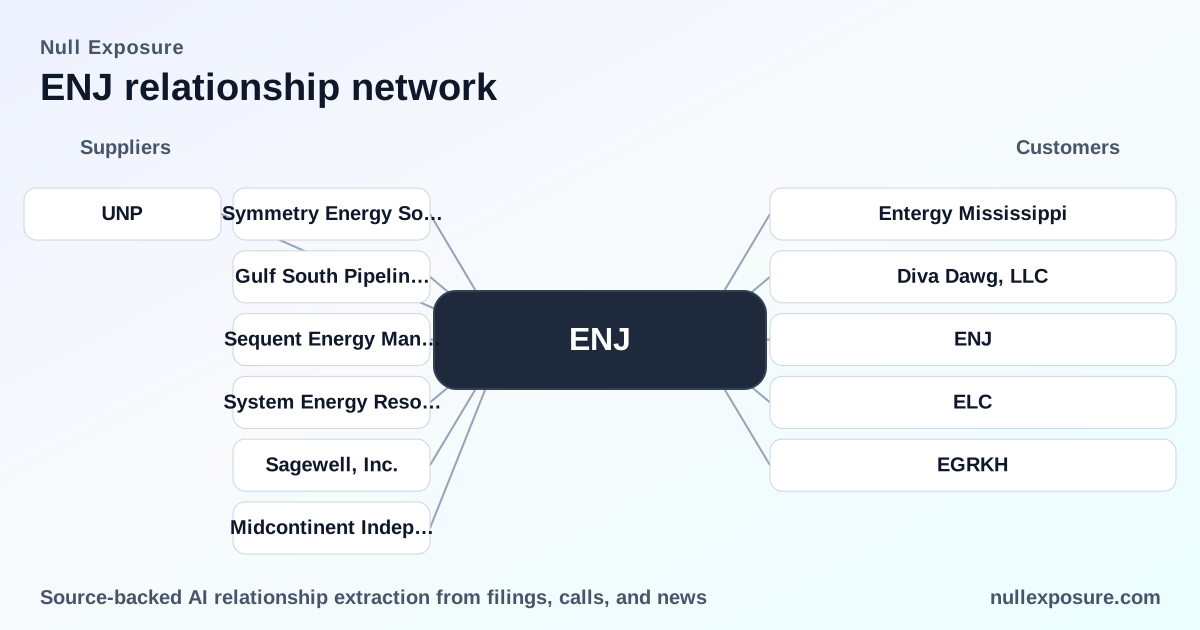
Entergy New Orleans (ENJ) — supplier relationships that shape margin and regulatory risk
Entergy New Orleans operates as a rate‑regulated electric and gas utility that monetizes through regulated customer rates and pass‑through fuel and purchased‑power costs; supplier contracts and settlements therefore translate directly into customer bills and the company’s near‑term cash flow profile. The supplier footprint is a mix of firm fuel supply contracts, long‑term power purchase structures, transportation arrangements, and program partners for customer programs — all of which feed into regulatory proceedings and refund/expense outcomes that investors must price into the equity and preferred security. For a closer view of counterparty exposures and how they influence Entergy’s cost base, visit https://nullexposure.com/.
The supplier map that matters to investors
Below I cover every supplier relationship surfaced in the record and explain the commercial impact in plain English.
-
Symmetry Energy Solutions — Entergy Louisiana began purchasing natural gas for resale from Symmetry under a firm contract in April 2024, and Entergy New Orleans holds a no‑notice gas purchase contract with Symmetry that guarantees delivery at specified points and flexibility across a contract range. This contract shapes fuel availability and near‑term volatility in fuel cost pass‑through. Source: ENJ 2024 10‑K filing (FY2024).
-
Gulf South Pipeline Co. — Symmetry‑supplied gas is transported to Entergy New Orleans under a transportation service agreement with Gulf South Pipeline, making Gulf South a critical logistics counterparty for delivered gas. Source: ENJ 2024 10‑K filing (FY2024).
-
Sequent Energy Management L.P. — Entergy’s prior contract with Sequent was not renewed and terminated in March 2024, indicating a recent supplier transition in gas sourcing. That transition is operationally relevant because changes in counterparties can alter commercial terms and delivery logistics. Source: ENJ 2024 10‑K filing (FY2024).
-
System Energy Resources, Inc. (SERI) — Entergy New Orleans reached an agreement in principle with SERI that includes a global refund of $116 million and reduced future costs charged for power from the Grand Gulf facility, a material settlement that reduces future purchased‑power expense charged to customers. Source: Entergy press release describing settlement (March 2026). Earlier reporting documented SERI overbilling issues that led to customer refunds in prior periods. Source: WAFB reporting (December 2022).
-
Sagewell, Inc. — Entergy New Orleans partnered with Sagewell to launch an EV incentive program that pays customers for off‑peak charging, a demand‑side program designed to shift load and reduce peak costs while improving customer engagement. Source: Entergy press release on EV incentive program (published on Entergy.com).
-
Midcontinent Independent System Operator (MISO) — Entergy worked with MISO in response to directives to shed load, an operational relationship that can create short‑term reliability stress and financial exposure when system operators issue emergency directives affecting service and dispatch. Source: WDSU reporting on load‑shedding discussions (March 2026).
-
Union Pacific (UNP) — A Union Pacific transportation agreement is expected to provide rail transportation for coal deliveries (notably referenced for Entergy Arkansas) and illustrates the broader corporate logistics arrangements that affect fuel supply across Entergy operating companies. Source: ENJ 2024 10‑K filing (FY2024).
What the relationship map reveals about the operating model
The supplier footprint and the constraints surfaced by the filings point to an operating model with several defining characteristics:
-
Contracting posture: a hybrid of long‑term and flexible procurement. The company operates long‑term PPAs and build‑own‑transfer arrangements for generation while also executing firm gas contracts and no‑notice purchase agreements for gas supply, which provides both price certainty and operational flexibility (company‑level signal from filing excerpts describing PPAs and long‑term arrangements).
-
Counterparty profile: large, established counterparties. Evidence shows Entergy transacts with large energy traders, pipeline companies, and national rail carriers — a counterparty mix consistent with enterprise‑scale counterparties rather than small suppliers, which reduces counterparty credit risk but concentrates exposure to a small number of suppliers.
-
Geographic focus: North America / regional operations. Audit and filing locations are New Orleans and regional references; the supply and transport relationships are regional U.S. energy infrastructure nodes rather than global commodity chains.
-
Role dynamics: buyer and service‑receiver. Entergy New Orleans functions primarily as a buyer of fuel and purchased power and as a recipient of transportation and professional services; corporate filings also show central Entergy service providers handling administrative and engineering services across the group.
-
Spend and materiality profile: multi‑tiered. Company‑level evidence shows spend ranging from audit fees in the $1m–$10m band to acquisition and project payments in excess of $100m, indicating both routine vendor spend and sponsor‑level capital commitments that can move balance‑sheet and regulatory outcomes.
Key investment implications: drivers and risks
-
Settlement and refund outcomes are balance‑sheet movers. The $116 million SERI settlement reduces future Grand Gulf cost flows and removes a legacy overbilling risk — this is a direct positive to ratepayer expense and reduces downside regulatory surprises. (Entergy press release, March 2026; WAFB, Dec 2022)
-
Fuel sourcing transitions affect near‑term margin volatility. The move away from Sequent to Symmetry, combined with pipeline transport dependence on Gulf South, concentrates operational risk in the delivery chain; any transport interruption or commercial dispute would pass through to customers or the company’s regulatory filings. (ENJ 2024 10‑K)
-
Program partnerships shift load profile rather than core margin. Sagewell’s EV program is a cost‑management and demand‑shaping tool that lowers peak exposure over time but does not materially change commodity cost structure. (Entergy press release)
-
Grid operator interactions can trigger operational and financial stress. Coordination with MISO during emergency load‑shed events highlights exposure to system‑level directives that can impose reliability costs or reputational risk. (WDSU reporting, March 2026)
-
Counterparty concentration reduces dispersion of supplier risk but raises single‑counterparty impact. Large counterparties simplify credit management yet increase the impact of any supplier dispute or contract change on the utility’s cost base.
If you need a tailored supplier‑risk heat map or a counterparty exposure model for ENJ, start here: https://nullexposure.com/.
Actionable next steps for investors and operators
- Prioritize monitoring of regulatory filings and press releases for any further settlement details with SERI and for the commercial terms of the Symmetry and Gulf South arrangements, because these directly affect fuel pass‑through and allowed cost recovery.
- Stress‑test the implications of a transportation outage on Gulf South and rail disruptions affecting coal logistics; quantify potential rate filings and timing for recovery.
- Track demand‑management programs like the Sagewell EV incentive for incremental load‑shape benefits that can reduce peak capacity requirements over multiple rate cycles.
For deeper due diligence on supplier contracts and to model counterparty risk across Entergy’s operating companies, consult the tools and reports at https://nullexposure.com/.
Bottom line: Entergy New Orleans operates inside a tightly regulated framework where supplier contracts and settlements are immediate determinants of customer bills and short‑term financial outcomes. The recent SERI refund and the transition to Symmetry for gas supply materially reduce legacy cost risk while concentrating operational exposure in a smaller set of logistics providers — a tradeoff investors should quantify in cash‑flow and regulatory scenarios. For more supplier intelligence and scenario work, visit https://nullexposure.com/.