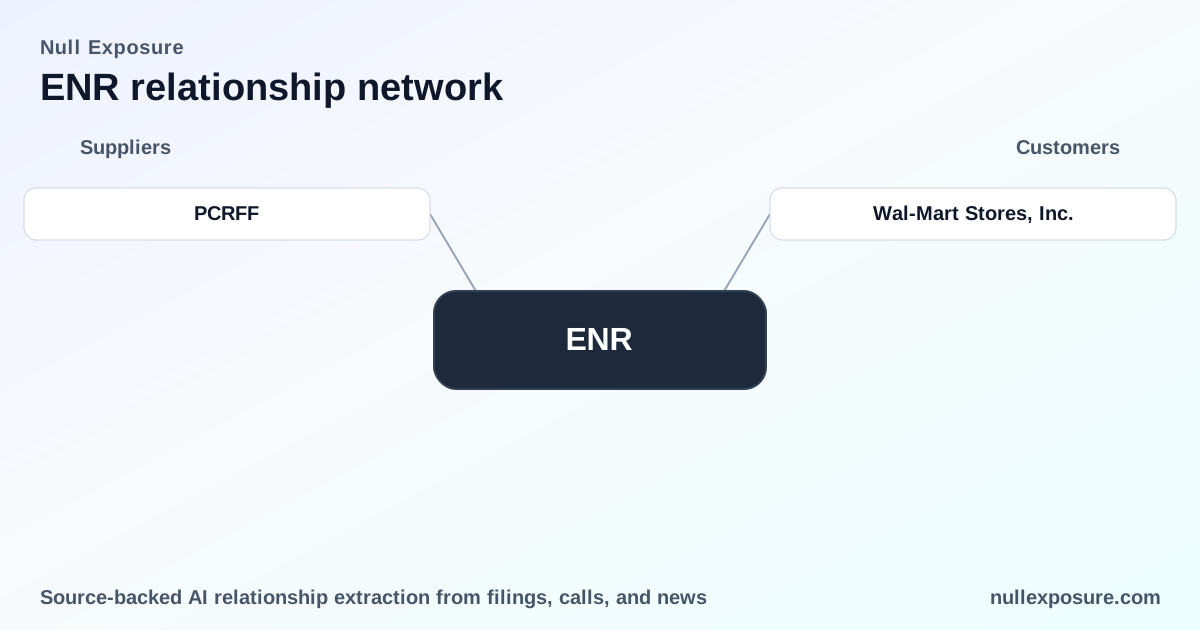
Energizer Holdings (ENR): Supplier relationships, constraints, and what investors should price in
Energizer manufactures and sells household and specialty batteries and lighting products worldwide and monetizes through branded product sales, channel distribution and licensing; margins and cash conversion drive value given its consumer-packaged-goods model. Supplier relationships are operational levers that directly affect gross margin and working capital — investors should evaluate how transitional inventory, short contracted terms and active supplier financing programs influence near-term profitability and balance-sheet flexibility. For a concise risk snapshot and supplier monitoring, visit https://nullexposure.com/.
What the Panasonic links actually reveal about ENR's supply chain
Energizer disclosed transactional activity with Panasonic in FY2026 that is both revenue-relevant and margin-relevant. In Q1 the company sold about $65 million of Panasonic‑branded product tied to a transition; that volume carried weaker profitability and produced an incremental margin drag of roughly 200 basis points. This is a concrete example of how supplier-brand transitions and legacy inventory can compress near-term margins and distort quarterly comparisons.
- According to an ENR Q1 FY2026 earnings call transcript published on InsiderMonkey (Mar 9, 2026), Energizer sold about $65 million of Panasonic‑branded product in Q1.
- A press release reported by The Globe and Mail (Mar 9, 2026) noted that the Panasonic sales were concentrated in Europe, generated weaker profitability and resulted in approximately a 200‑basis‑point incremental margin drag in the period.
Every supplier relationship called out in the public results
Below I list each relationship flagged in the results and what it means to investors.
Panasonic — InsiderMonkey (earnings call, FY2026): Energizer reported selling about $65 million of Panasonic‑branded product during Q1 FY2026, a material transactional flow tied to a brand transition that affected reported revenue mix. According to the transcript, that sale represented a meaningful inventory pass‑through in the quarter. (Source: InsiderMonkey earnings call transcript, 2026‑03‑09.)
Panasonic — The Globe and Mail (press release capture, FY2026): The company’s public release captured by The Globe and Mail confirmed that the Panasonic‑branded shipments were concentrated in Europe and carried weaker profitability, creating an incremental ~200 bps margin drag in the quarter. This is a direct earnings‑quality signal for investors to monitor. (Source: The Globe and Mail press release capture, 2026‑03‑09.)
Takeaway: Both items refer to the same counterparty and the same FY2026 event; together they show a material revenue flow with identifiable margin impact that investors should treat as an explicit short-term earnings headwind.
Constraints that define ENR's supplier posture and operational levers
Energizer’s supplier behavior is not an abstract concept — the company filing and disclosures give clear signals that shape procurement risk and working capital dynamics:
- Short-term contracting posture: Energizer reports service and supply contracts that generally extend approximately one to three months, primarily individual purchase orders at market prices. This grants operational flexibility but reduces long-term price protection and increases exposure to spot cost swings.
- Material committed spend: The company discloses material future purchase commitments totaling $2.1 over the next five years, which is a legally binding obligation that creates a measured but definable commitment profile for procurement.
- Buyer role and forward commitments: Management states it purchases materials and enters forward commitments to assure supply and protect margins, indicating proactive inventory and hedging activity when necessary. That behavior signals active margin protection tactics rather than passive procurement.
- Supplier financing and relationship maturity: Energizer operates a voluntary Supplier Financing Program with financial institutions that allows suppliers early access to receivables; outstanding supplier obligations confirmed under the program were $45.1 and $52.5 as of Sept. 30, 2025 and 2024 respectively (included in accounts payable). This shows a platformed approach to supplier liquidity and a level of sophistication in payables management.
- Spend scale bands: Disclosures map supplier obligations into spend bands consistent with both the $10m–$100m and $1m–$10m ranges, indicating that supplier exposure is concentrated at mid‑to‑material ticket sizes rather than distributed tiny line items.
These constraints collectively create a profile: flexible, transaction‑driven procurement with pockets of legally binding commitments and an established supplier finance program that smooths supplier cash flows at the cost of contingent balance‑sheet exposure.
(If you want a focused intelligence brief that flags counterparty margin impacts and supplier program exposures, see https://nullexposure.com/.)
Operational and investment implications
Translate the above into investor actions and what management must deliver:
- Margin volatility is the primary risk. The Panasonic example is a live case where brand transitions and inventory flows produced a 200‑bp swing — investors must normalize reported margins for transitional items when modeling forward earnings.
- Working capital is a lever and a risk. The supplier financing program reduces supplier credit stress but concentrates payable flows and creates variability in accounts‑payable timing; monitor the program’s outstanding balances on each quarter close. Energizer’s EV/EBITDA of 8.22 and profit margin near 7.1% imply limited valuation cushion for operational missteps, so working capital swings have disproportionate P&L and cash‑flow effects.
- Contracting flexibility has tradeoffs. Short, 1–3 month contracts allow quick reactions to input cost moves but offer no long‑run lock on prices; management’s forward purchases can offset that, but those commitments must be tracked against the $2.1 five‑year obligation figure.
For operators, priorities should be tighter margin attribution (separating transitional branded sales), disciplined forward cover for key inputs, and transparent reporting of supplier financing balances. For investors, model conservative margins and maintain a working‑capital sensitivity in valuation work.
Bottom line and next steps for the desk
Energizer’s Panasonic transactions in FY2026 provide a direct example of how supplier relationships translate into revenue mix and margin outcomes. The company operates with largely short‑term purchase contracts, a supplier financing program of material scale, and legally binding commitments that create defined procurement exposure. These characteristics make ENR an operational story where near‑term margin analysis and working‑capital monitoring drive valuation changes more than cyclical demand alone.
For a practical, ongoing feed of supplier‑level signals and constraint tracking relevant to ENR and its peer set, explore the research hub at https://nullexposure.com/. If you want tailored alerts on margin‑impacting supplier events and payable program balances, request a briefing through https://nullexposure.com/ and we will provide an investor‑ready summary with event triggers.