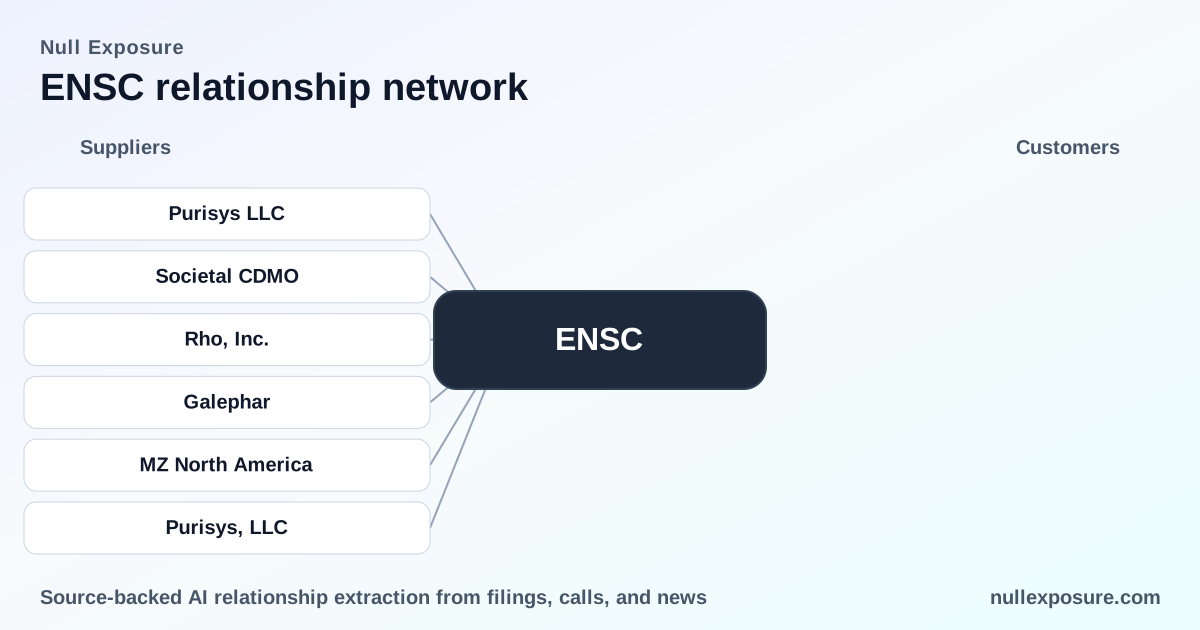
Ensysce Biosciences (ENSC) — supplier map and what it means for investors
Ensysce Biosciences is a clinical‑stage biotechnology company that develops prescription therapies (notably PF614 and nafamostat) and monetizes by advancing candidates toward regulatory approval and commercialization, then extracting value through product sales, licensing or partner-led commercialization. The company operates with a deliberately outsourced model: third‑party contract manufacturers and contract research organizations deliver clinical supply and trial execution while Ensysce focuses on clinical development, regulatory strategy, and intellectual property. For investors evaluating supplier risk and partner readiness, the configuration of these relationships drives operational continuity and regulatory gating for any path to revenue.
For a broader supplier-risk view, visit https://nullexposure.com/ and see our platform analysis.
Why the supplier roster is the company’s operational backbone
Ensysce runs a lean internal manufacturing footprint and depends on external CMOs and CROs for nearly all drug substance, drug product and clinical trial services. The company’s filings and investor communications reveal several company-level signals that define the operating model and its vulnerabilities:
- Outsourced manufacturing posture: Ensysce “expects to be completely dependent on third parties to manufacture” its candidates, which establishes manufacturing partners as single points of failure for regulatory timelines (10‑K, FY2024).
- Concentration and materiality: Management discloses that a small number of R&D vendors account for a very large portion of accounts payable (three and two vendors made up >10% individually and 74% and 38% in aggregate for 2024 and 2023), signaling vendor concentration risk that can amplify supply or pricing shocks (10‑K, FY2024).
- Contracting posture and maturity: The company carries some short‑term contractual exposure (example: an office lease running through Oct 31, 2025), and its pharmaceutical supplier commitments sit in the low‑double digit millions — a constrained spend profile consistent with a clinical‑stage profile (10‑K: ~$12.0M in open purchase orders/commitments, FY2024).
- Role diversity but operational centrality: Partners function as manufacturers, distributors and service providers (CROs) for key activities, and relationships are currently active for clinical supplies and trial execution (10‑K and 2026 shareholder communications).
- Budget and runway sensitivity: Reported revenue and negative EBITDA confirm Ensysce is not yet self‑sustaining from operations, so supplier costs are mission‑critical to the timeline to regulatory value realization (financials, TTM and FY2024).
These signals translate into three investment takeaways: (1) supplier performance directly gates regulatory timelines and future revenue; (2) vendor concentration raises both pricing and continuity risk; and (3) committed spend is material relative to corporate scale, making contract terms and contingency planning key valuation considerations.
For investors tracking supplier health and contract concentration across small biotech firms, see more at https://nullexposure.com/.
Relationship roll call — who does what, and why it matters
Purisys LLC / Purisys, LLC
Ensysce has an agreement with Purisys for production of PF614 drug substance, and the company reports that it has initiated drug substance manufacturing activities with Purisys, a subsidiary of Noramco. This positions Purisys as a primary supplier of active ingredient for the lead program. According to Ensysce’s Form 10‑K for FY2024 and the company’s 2026 annual shareholder letter distributed via The Globe and Mail/FinancialContent (FY2026).
Societal CDMO (formerly Recro Gainesville LLC / Recro)
Ensysce signed a Manufacturing Agreement with Recro Gainesville LLC, now operating as Societal CDMO, for production of PF614 capsules and related materials and services for clinical studies; this partner handles the drug product formulation and capsule supply chain. Source: Ensysce 2024 Form 10‑K (FY2024).
Rho, Inc.
Rho is engaged as a contract research organization to ensure rigorous trial execution, particularly for central nervous system (CNS) and pain studies. Rho provides clinical trial management and execution capacity for Ensysce’s programs. Source: Ensysce’s 2026 annual shareholder letter published via The Globe and Mail and FinancialContent (FY2026).
Galephar
Galephar is cited as Ensysce’s drug product manufacturing partner supporting NDA registration readiness, which places Galephar in a downstream role preparing product for regulatory submission and potential commercial launch. Source: Ensysce’s 2026 shareholder communications distributed via The Globe and Mail and FinancialContent (FY2026).
MZ North America
MZ North America is listed as Ensysce’s investor relations contact, indicating an externally engaged PR/IR services relationship for shareholder communications and media distribution. Source: Ensysce investor communications and press distributions on The Globe and Mail/FinancialContent and MedicineHatNews (FY2026).
What these relationships mean for value creation and risk
- Regulatory timeline risk is concentrated around a small group of CMOs and CROs. Manufacturing delays, compliance issues, or DEA/state registration gaps for CMOs would directly delay NDA readiness and commercialization. This is a central operational risk given Ensysce’s dependence on third parties (10‑K, FY2024).
- Financial exposure is measurable and material to a small company. The firm disclosed approximately $12.0M in open purchase orders and contractual obligations related to R&D and multi‑year studies, a material commitment relative to company scale (10‑K, FY2024).
- Vendor concentration elevates negotiation leverage and continuity risk. With a handful of suppliers representing a very large share of payables, Ensysce confronts price and substitution risk if a contracted partner becomes non‑compliant or capacity constrained (10‑K, FY2024).
- Active partnerships indicate operational momentum toward NDA readiness. The initiation of drug substance activities and engagement of a CRO for CNS/pain studies are operationally constructive signals for progress toward regulatory milestones (shareholder letter, FY2026).
Bottom line and next steps for investors
Ensysce’s supplier ecosystem demonstrates a classic clinical‑stage, outsourced operating model: high dependency on a few manufacturing and clinical partners, meaningful contractual commitments relative to company size, and concentrated vendor risk that directly maps to regulatory timelines. Investors should prioritize monitoring CMO compliance status, contract terms for capacity and pricing, and balance‑sheet flexibility to meet vendor commitments.
For a detailed supplier‑risk scorecard and ongoing monitoring of these partner relationships, evaluate our coverage at https://nullexposure.com/.
If you want timely alerts when supplier configurations change or concentration thresholds are breached, visit https://nullexposure.com/ to request a demo or subscribe to updates.