Enanta Pharmaceuticals (ENTA): supplier relationships, concentration risks, and what investors should know
Enanta Pharmaceuticals is a small‑molecule biotechnology company that discovers and develops antiviral and liver disease therapies. The firm does not operate large internal manufacturing capacity; it monetizes R&D through clinical development, partner-enabled manufacturing, and eventual product sales or royalties when compounds reach commercialization, relying heavily on third‑party contract manufacturers and research service providers to advance programs. For investors and operators assessing supplier exposure, the balance between development upside and concentrated third‑party dependence is the central economic theme.
Explore supplier intelligence and counterparty risk at https://nullexposure.com/.
A compact supply‑chain thesis for investors
Enanta’s operating model is outsourced by design: discovery and early development remain in‑house while manufacturing and trial execution are contracted to external partners. That model reduces fixed capital intensity but transfers operational concentration and regulatory execution risk to suppliers. For equity holders this creates a two‑edged dynamic — lower capital burn on facilities but higher single‑counterparty risk when a small number of manufacturers control drug supply. This profile situates Enanta as a high‑upside, high‑operational‑dependency biotech investment.
What the filings say about supplier roles and exposure
Enanta’s public filings disclose several company‑level operating constraints that define its supplier posture:
- Critical dependence on third‑party manufacturers. Enanta states it is “completely dependent” on third‑party manufacturers for supply used in preclinical and clinical research, implying that manufacturing disruptions directly threaten development timelines and regulatory submissions.
- Active, outsourced service model. The company relies on CROs, CMOs, testing labs, hospitals and academic centers to run studies and produce materials, indicating an operational model built around active external partnerships rather than internal scale‑up.
- Geographic exposure to APAC manufacturing. A portion of research and some manufacturing of key intermediates occurs in China via third parties, creating a geographic concentration and related geopolitical/regulatory risk vectors.
- Fixed commitments at the corporate facility level. Enanta discloses a ten‑year lease with minimum payments for its Watertown facility, signaling a mixed capital posture: some fixed occupancy cost alongside outsourced production.
- Spend and accrual signals. Accrued R&D and pharmaceutical manufacturing liabilities reported as roughly $1.8M and $2.7M respectively (as of Sept 30, 2025) indicate mid‑single‑digit millions of active supplier spend being accrued in short‑term liabilities — relevant for short‑term counterparty exposure assessment.
These items combine into a clear operating risk picture: low capital intensity on production assets but high counterparty concentration and APAC supply exposure, with active supplier relationships that are material to program progress.
The one explicit supplier relationship disclosed: AbbVie
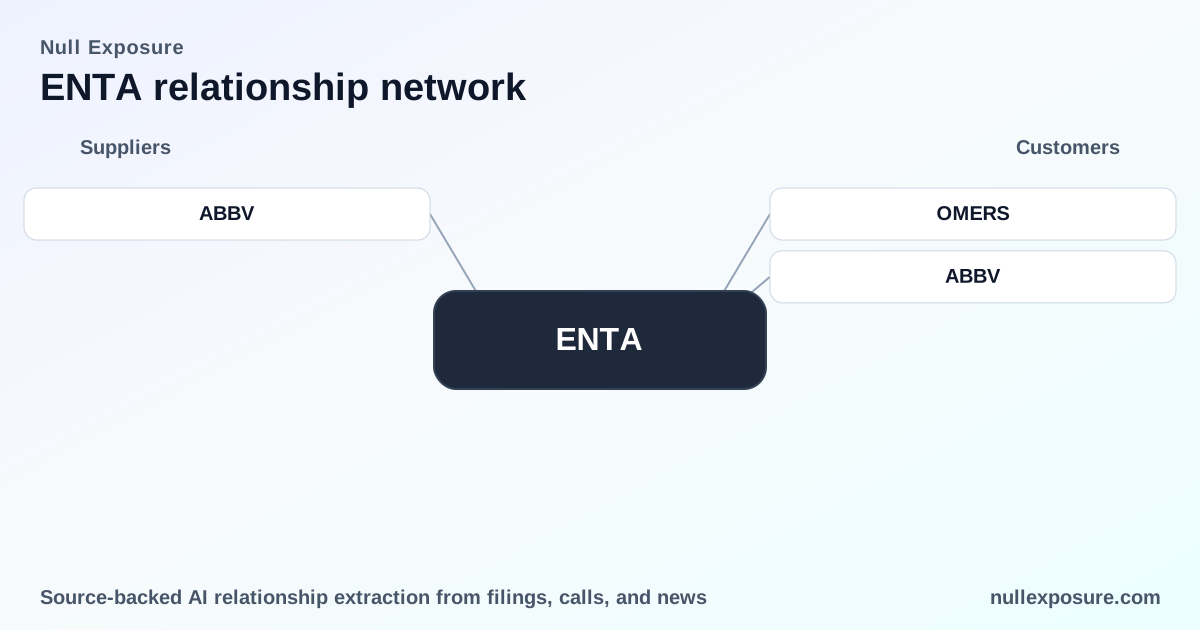
AbbVie handles manufacturing for Enanta’s compound glecaprevir. According to Enanta’s FY2025 Form 10‑K, “Manufacturing for glecaprevir is conducted by AbbVie.” This is the single named supplier relationship in the supplier scope results and establishes AbbVie as a downstream manufacturing partner for a program‑level asset. (Source: Enanta Form 10‑K, fiscal year 2025.)
Why AbbVie as a manufacturer matters to investors
AbbVie is a large, experienced CMO/partner with significant biopharma manufacturing capability; that reduces some execution risk versus an unproven CMO. However, any dependence on a single large contract manufacturer for a specific compound creates program‑level concentration: supply delays, quality holds, or strategic reprioritization by the manufacturer would directly affect Enanta’s clinical timelines and potential revenue realization. The filing’s explicit manufacturer attribution for glecaprevir should be treated as a critical counterparty link in diligence.
Interpreting the contractual and financial constraints
Several company‑level constraints in Enanta’s disclosures refine the investor view:
- Contracting posture — long‑term commitments coexist with outsourcing. The firm carries a ten‑year lease for its Watertown facility, indicating persistent fixed operating costs even while production is externalized.
- Concentration and criticality. The filing language classifies third‑party manufacturing as critical to operations, a sign that supplier failures are not peripheral but central risks to value creation.
- Maturity and spend scale. Reported accruals for R&D and manufacturing in the low millions suggest ongoing, material supplier spend but not at the scale of large pharma; this is consistent with a development‑stage company using established CMOs for batches and clinical supply.
- Geographic complexity. Use of Chinese third parties for intermediates introduces regulatory, quality oversight, and logistics complexity that investors must price into forecast risk.
Together these signals indicate that Enanta’s supplier risk profile is concentrated, operationally critical, and geographically distributed, requiring active counterparty monitoring and contingency planning.
Practical diligence checklist for investors and operators
For investment diligence or supplier risk management, focus on these actions:
- Obtain or request clarity on the scope and tenure of manufacturing agreements with named partners like AbbVie (supply volumes, exclusivity, termination rights, quality responsibilities).
- Verify redundancy and contingency plans for critical APIs and intermediates, particularly those sourced from APAC vendors.
- Review audit history and regulatory inspection outcomes for third‑party manufacturers and intermediates suppliers.
- Monitor short‑term supplier liabilities and accruals (R&D and manufacturing) as a signal of active spend concentration and potential cash flow timing risks.
For a structured supplier risk review tailored to biotech counterparties, visit https://nullexposure.com/.
Final takeaways for portfolio decision‑makers
- Enanta’s model is deliberately outsourced — this conserves capital but concentrates operational risk in external manufacturers and CROs.
- AbbVie is the only named manufacturer for glecaprevir in the FY2025 filing, creating a single explicit counterparty that investors must monitor for timeline and quality risk.
- Company disclosures flag critical supplier dependence, APAC intermediate sourcing, and modest but meaningful accrued manufacturing spend, all of which elevate supplier diligence from procedural to strategic.
For investors and operators evaluating counterparties, the right next steps are targeted contract review, regulatory and audit checks, and verification of alternative supply sources. Learn more about counterparty intelligence and run targeted supplier investigations at https://nullexposure.com/.
Bold, focused supplier diligence will materially change the risk profile you assign to Enanta’s development pipeline; treat named manufacturers like AbbVie as governance nodes, not mere vendors.