Entera Bio (ENTX): Supplier relationships that shape a clinical-stage commercial path
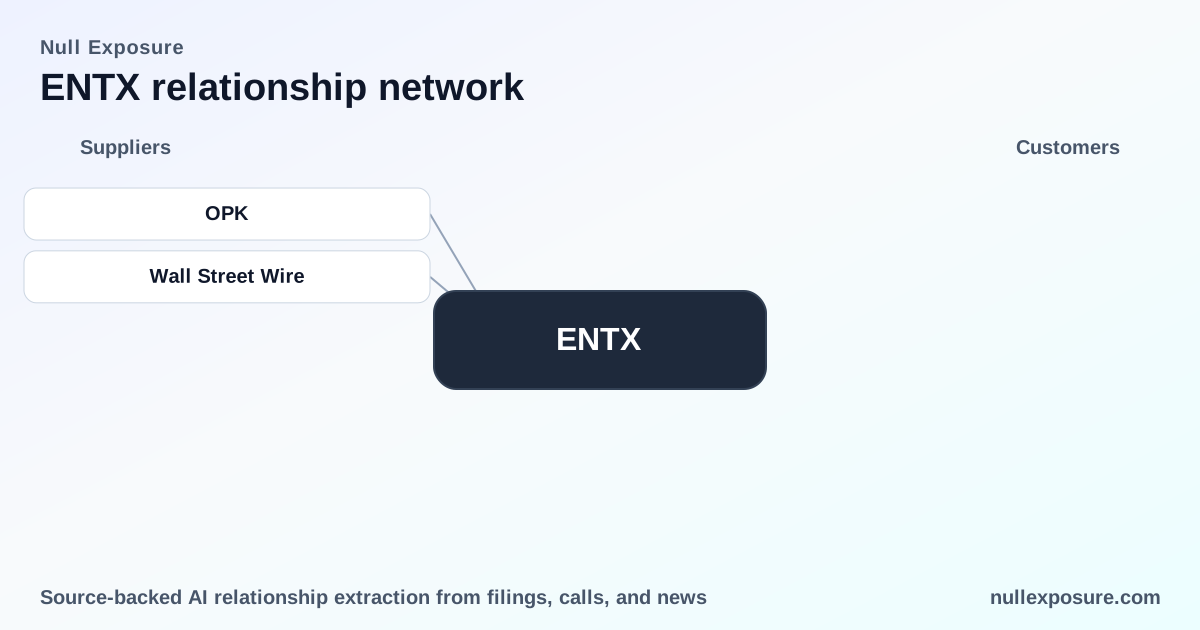
Entera Bio commercializes orally delivered peptides by licensing or partnering biologic payloads and converting them into tablet form using its proprietary N‑Tab technology; the company monetizes through partner collaborations, milestone/royalty economics and eventual product sales while outsourcing manufacturing and clinical services to third parties. For investors and operators evaluating supplier risk, the important signals are: a partnership with OPKO on an oral GLP‑2 program, recurring paid awareness coverage from a street‑level media vendor, and a supplier model built on CMOs and CROs in EMEA. Explore ENTX supplier intelligence at https://nullexposure.com/.
What the supplier picture looks like in plain terms
Entera operates a capital‑intensive, outsourced development model: it licenses peptide candidates from partners, uses N‑Tab formulation to create oral tablets, and relies on contract manufacturing organizations (CMOs), clinical research organizations (CROs), and professional services for trials and commercialization support. That posture concentrates operational criticality on a small set of manufacturers and service providers and increases vendor management urgency—long lead times, regulatory compliance risk, and geographic footprint (EMEA CMOs) are central to commercial viability.
Quick link: supplier map and analytics
For a consolidated view of counterparty exposure, corporate filings and news-backed relationships, see https://nullexposure.com/.
Relationship roll call — every listed result and what it means
-
Entera’s collaboration with OPKO Health on an oral GLP‑2 program produced positive pharmacokinetic data using OPKO’s long‑acting GLP‑2 agonist combined with Entera’s N‑Tab formulation, confirming the technical feasibility of the partnered program. Source: BioSpace release (March 9, 2026) — https://www.biospace.com/entera-bio-announces-robust-pharmacokinetic-data-for-first-in-class-oral-glp-2-peptide-tablet-treatment-for-patients-with-short-bowel-syndrome.
-
A Yahoo Finance item reiterates the OPKO collaboration for an oral GLP‑2 tablet targeted at short bowel syndrome and related malabsorption disorders, underlining Entera’s role as formulation and developer of an injection‑free alternative to injectable peptides. Source: Yahoo Finance report (reported March 2026) — https://finance.yahoo.com/news/entera-bio-unveil-clinical-non-120000677.html.
-
A GlobeNewswire corporate release (January 21, 2026) frames OPKO as a strategic partner across Entera’s GLP‑2 program and places that program within a broader pipeline that includes oral oxyntomodulin for obesity and an oral PTH candidate, signaling multi-program reliance on partner‑provided peptides. Source: GlobeNewswire corporate update (Jan 21, 2026) — https://www.globenewswire.com/news-release/2026/01/21/3222791/0/en/Entera-Bio-Announces-Upcoming-Q1-2026-Corporate-Priorities-and-Pipeline-Outlook.html.
-
Wall Street Wire disclosed a commercial relationship with Entera for paid coverage and awareness services, noting that the outlet receives cash compensation on an ongoing subscription basis—this is a vendor relationship for investor/media outreach rather than a scientific or manufacturing partner. Source: TradingView / Wall Street Wire notice (March 9, 2026) — https://www.tradingview.com/news/financewire:201cae903094b:0-entera-bio-heads-toward-phase-3-with-eb613-in-a-200-million-woman-osteoporosis-market-nasdaq-entx/.
-
A second Wall Street Wire item repeats that paid coverage arrangement tied to Entera’s osteo/phase‑3 messaging, reinforcing a repeating paid media supplier engagement that supports corporate communications and investor awareness. Source: TradingView / Wall Street Wire notice (March 9, 2026) — https://www.tradingview.com/news/financewire:4caaced37094b:0-entera-bio-moves-toward-phase-3-with-oral-therapy-that-could-transform-osteoporosis-treatment-nasdaq-entx/.
How supplier constraints translate into operating risk and opportunity
Entera’s constraint signals—drawn from company disclosures—characterize the supplier model and its implications:
-
Long‑term contracting posture: Entera is negotiating long‑term supply agreements with multiple manufacturers. This indicates a move from development‑stage spot purchases to committed commercial supply chains, improving supply security but increasing long‑term counterparty exposure.
-
EMEA manufacturing footprint: The company has an explicit contract with a U.K.‑based CMO for formulation, production, packaging, storage and distribution, and references an auditor with ties to the region. Geographic concentration in EMEA centralizes regulatory inspection risk (FDA/EMA) and logistics paths for global trials and future launches.
-
Manufacturer and service provider dependency: Multiple excerpts emphasize reliance on CMOs, CROs, independent clinical investigators and third‑party professional services (including finders and auditors). This is a classic asset‑light biotech model: it lowers fixed costs but raises supplier operational criticality—quality, capacity and cGMP compliance are single points of failure.
-
Spend scale and procurement maturity: Disclosed fee items (total fees ~$201,950) and finder arrangements suggest mid‑single‑hundred‑thousand dollar supplier engagements are material at the current stage, consistent with early clinical spend bands. Procurement is likely transactional today but will need formalized governance as programs scale.
Commercial implications for investors and operators
-
Counterparty concentration is the key operational risk. OPKO is a material scientific partner whose peptide payloads underpin several programs; any change in that relationship or in OPKO’s clinical prospects will directly affect Entera’s pipeline valuation. The BioSpace and GlobeNewswire announcements confirm multiple program-level integrations with OPKO.
-
Regulatory and manufacturing execution determine commercialization timing. The U.K. CMO relationship and references to FDA/EMA‑inspected GMP sites mean technical success must be matched by flawless supplier audits and capacity scheduling to meet phase‑3 and commercial needs.
-
Communications and market perception are managed externally. Paid coverage through Wall Street Wire is an explicit line item in Entera’s external affairs—investors should discount promotional uplift when sizing organic news flow and instead weigh clinical readouts and regulatory milestones.
Recommendations for supplier diligence and investor monitoring
-
Require a counterparty map that lists all CMOs, their GMP inspection status, capacity commitments, and long‑term contract terms; cross‑check with regulatory inspection histories. See https://nullexposure.com/ for tools that aggregate these signals.
-
Monitor OPKO program milestones and cash flows—scientific licensing terms and milestone schedules will materially affect Entera’s risk/reward profile; prioritize readouts that demonstrate durability of the oral format beyond PK (efficacy and safety signals).
-
Audit expenditure and vendor concentration as trials scale; look for a shift from transactional engagements to structured supply agreements (fixed volumes, price escalators, service levels) that justify valuation uplift.
Explore supplier risk scoring and the full ENTX relationship set at https://nullexposure.com/ for a consolidated, research‑ready view.
Bottom line for investors
Entera Bio’s supplier landscape is focused and actionable: OPKO provides the peptide payloads that enable Entera’s N‑Tab commercial strategy while a small set of CMOs and service providers deliver clinical and manufacturing execution; paid media vendors support investor outreach. That structure creates concentrated operational leverage—positive trial and PK data will drive asymmetric upside, while manufacturing or partner disruptions will be the principal downside. For investors and operators, the immediate priority is vendor due diligence on the OPKO relationship and the UK‑based CMO capacity and compliance. Final note: maintain active monitoring of material contracts and inspection outcomes as Entera transitions programs from early clinical to phase‑3. For a consolidated supplier dossier and continued monitoring, visit https://nullexposure.com/.