Evolus Inc (EOLS): Supplier relationships that define product risk and upside
Evolus is a specialty aesthetics company that monetizes by licensing, marketing and selling injectable and dermal-fillers under third‑party manufacturing arrangements—principally Jeuveau® (a botulinum toxin product) and the Evolysse™ hyaluronic acid gel line. Revenue comes from product sales and, under legacy settlements, royalty arrangements; costs and operational continuity depend on a small set of external manufacturers and licensing partners. For investors and operators, the supplier map is the business: manufacturing exclusivity, long-term license terms and regional production footprints are the core drivers of both operational risk and scalable gross margins. Learn more about supplier exposure and tracking at https://nullexposure.com/.
Why Evolus’ supplier footprint matters to capital allocators
Evolus outsources the critical manufacturing of its commercial products to a handful of partners, which creates a concentrated counterparty profile. The company’s regulatory and commercial performance is tightly correlated with those partners’ ability to supply product, maintain approvals and support launches. From the filings and market commentary the operating model exhibits three structural characteristics:
- Long‑term licensing and supply posture. Evolus’ agreements include multi‑year initial terms and automatic renewal mechanics, giving Evolus contractually durable access to product but also creating lock‑in that increases counterparty importance. According to Evolus’ 2024 Form 10‑K, its license and supply agreements include 15‑year terms for certain products and automatic renewal provisions.
- High supplier concentration and criticality. Jeuveau production is handled by a single named manufacturer, and Evolysse production is tied to a European supplier; the 10‑K identifies Daewoong as the exclusive manufacturing source for Jeuveau. Concentration heightens operational risk — any disruption at a sole supplier translates directly into lost revenue.
- Geographic dispersion with global commercialization implications. Manufacturing is regional: Daewoong’s facilities are in South Korea (APAC) and Symatese operates in France (EMEA), while licensing and royalty footprints extend across North America, Europe, and other ROW territories under separate license arrangements (Evolus’ filings reference global license periods and royalty commitments).
Beyond manufacturing, the company has legacy licensing and settlement commitments that create fixed cash flows to third parties (royalties and settlement cash payments), which investors must layer into free‑cash‑flow modeling. Evolus’ 2025 financials show revenue growth but negative EPS and operating margin pressure, underscoring the leverage between top line and supplier continuity.
Explore how supplier dependency affects valuation and downside scenarios at https://nullexposure.com/.
How contract terms shape optionality and downside
Contracts are not short tactical purchase orders: the filings describe license and supply agreements with long initial terms, multi‑year automatic renewals, and licensing mechanics that grant Evolus commercialization rights in defined territories. That structure delivers predictability for product availability and protects launch investments, but it also creates a counterparty lock‑in: if a sole manufacturer fails to perform, Evolus’s remediation options are contractually limited and could take quarters or years to execute. The company’s disclosures also reflect mid‑single digit royalty obligations to prior licensors for certain territories during defined license periods, a recurring margin pressure that investors should incorporate into unit economics.
Operational maturity is mixed: long contracts indicate stable commercial partnerships, but concentrated supplier exposure and ongoing regulatory interactions (especially for a product family subject to U.S. approval and post‑market controls) leave Evolus exposed to production, regulatory and reputational shocks. The filings show accrued royalties and modest historical settlement payments, consistent with mid‑range supplier spend and legally binding licensing commitments.
Supplier relationships in the filings and press
Below are the relationships referenced in Evolus’ supplier search results. Each entry is a concise, plain‑English summary with a source citation.
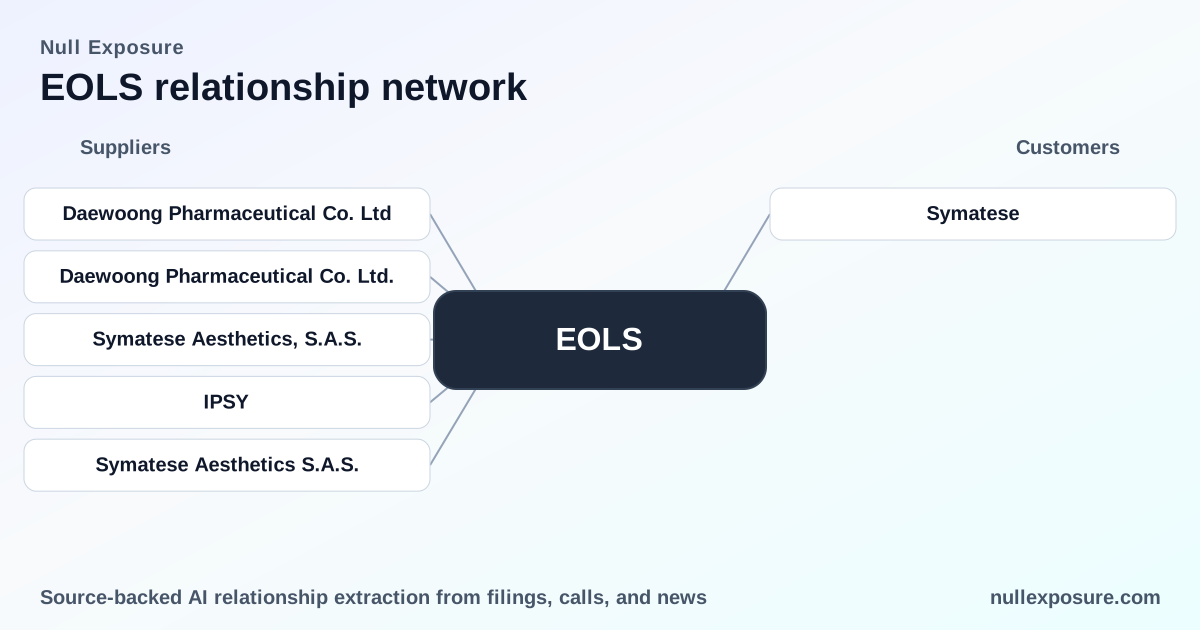
Daewoong Pharmaceutical Co. Ltd — manufacturing Jeuveau (filing reference)
Daewoong manufactures and supplies Jeuveau to Evolus; the 10‑K identifies Daewoong as Evolus’ manufacturing partner for the product. Source: Evolus’ 2024 Form 10‑K (FY2024).
Daewoong Pharmaceutical Co. Ltd. — exclusive/sole supplier language (filing reference)
The company states it relies on Daewoong as its exclusive and sole supplier to manufacture Jeuveau, underscoring concentration risk around that single counterparty. Source: Evolus’ 2024 Form 10‑K (FY2024).
Symatese Aesthetics, S.A.S. — manufacturer of Evolysse (filing reference)
Symatese manufactures and supplies the Evolysse™ hyaluronic acid gel products for Evolus, with Symatese’s French production facility identified as the source. Source: Evolus’ 2024 Form 10‑K (FY2024).
IPSY — promotional partnership referenced in earnings commentary (news)
Evolus ran a marketing promotion pairing Jeuveau with IPSY beauty gift bags, enabling accounts to offer a “gift with purchase” promotion tied to Jeuveau sales, a tactical promotion to drive demand at the point of care. Source: earnings call transcript reposted on InsiderMonkey (Q4 2025 / FY2026 commentary, March 2026).
Symatese Aesthetics S.A.S. — regulatory reliance cited in a press release (news)
Evolus’ public commentary emphasizes its reliance on Symatese to achieve and maintain U.S. regulatory approval for Evolysse™ HA gel products, highlighting that Symatese’s regulatory and manufacturing performance is material to Evolus’ product rollout. Source: Yahoo Finance press release summarizing preliminary FY2025 results (March 2026).
Practical implications for investors and operators
- Operational risk is concentrated. With Daewoong described as the exclusive Jeuveau manufacturer and Symatese responsible for Evolysse, supply disruptions would have direct and immediate revenue impact; model downside scenarios should assume protracted recovery timelines.
- Contracts provide duration but limit flexibility. Long initial terms and automatic renewals give Evolus coverage but also make rapid supplier changes costly and slow; this affects strategic options in a stress scenario.
- Royalties and settlement history matter to margins. Evolus has mid‑single digit royalty commitments and has historically accrued small settlement payments; these are recurring cash outflows investors must net from gross product margins.
- Commercial levers exist. Tactical promotions (for example the IPSY collaboration) demonstrate marketing pathways to accelerate demand without changing supply economics, but their incremental benefit is bounded by production capacity and regulatory labeling.
For a deeper read on how supplier exposure feeds valuation and scenario analysis, visit our research hub at https://nullexposure.com/.
Bottom line: supplier concentration is the principal operational lever
Evolus’ ability to scale revenue and protect margin is materially dependent on a narrow set of manufacturing and licensing partners. The filings and market commentary point to durable contractual arrangements that reduce short‑term supply uncertainty but amplify single‑counterparty risk should either manufacturer or regulatory approval falter. Investors should underwrite both the upside of durable commercialization rights and the downside of supplier disruption when valuing EOLS equity.
If you manage supplier risk or evaluate counterparties for investment, continue the analysis and track updates at https://nullexposure.com/.