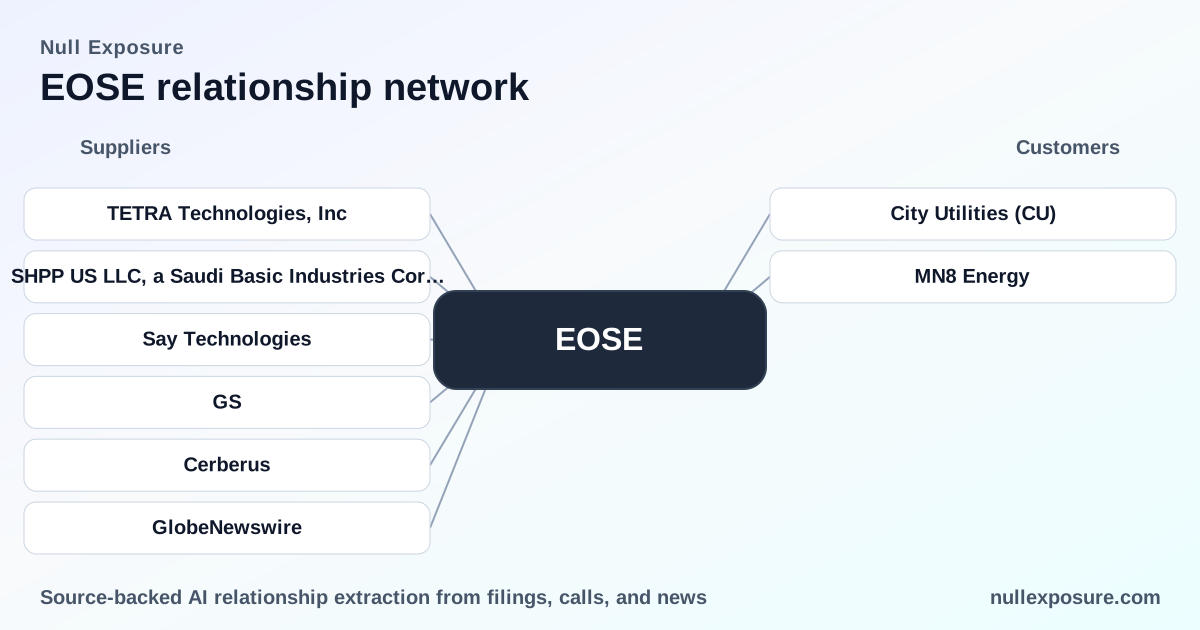
Eos Energy Enterprises (EOSE): Supplier Ecosystem and Strategic Implications for Investors
Eos Energy Enterprises designs, manufactures and implements long-duration battery storage systems and monetizes primarily through product sales of battery modules and cubes, long-term supply arrangements for critical components, and project deployment revenues tied to utility and commercial customers. Its supplier posture—formal framework and multiyear pricing agreements for key materials—underpins manufacturing scale but also concentrates exposure to a handful of critical vendors and financial counterparties. For deeper supplier-targeted intelligence, visit https://nullexposure.com/.
Why suppliers matter for Eos’ investment case
Eos is a manufacturing-led energy storage business where supply relationships directly govern cost of goods sold, production rhythm and product reliability. Long-term pricing and preferred supplier designations reduce input-price volatility and support predictable gross margins, while global sourcing and dependence on specialty chemicals and thermoplastics create operational and geopolitical exposures that can compress delivery schedules and raise working capital needs.
A concise operating-model takeaway: Eos operates with formal supplier frameworks and multi-year contracts for core inputs, sources materials both domestically and internationally, and treats certain inputs as critical to the Z3™ module’s viability. Those features accelerate scale when functioning, but they amplify downside if a key supplier relationship fractures.
Explore how these relationships map to risk and opportunity at https://nullexposure.com/.
How the company contracts and sources — practical constraints investors should note
The company disclosures present a consistent contracting posture: framework arrangements and long-term commitments are used to secure materials and process services. These are company-level signals rather than counterparty-level guarantees.
- Contracting posture: Eos uses formal framework agreements and multiyear pricing deals to secure inputs, indicating supplier relationships are negotiated at scale and intended to be stable over multiple years.
- Concentration and criticality: The business is highly dependent on a limited set of essential materials and subassemblies, which makes single-supplier problems materially consequential to production and revenues.
- Geographic footprint: Eos sources both domestic and international raw materials, exposing the supply chain to cross-border logistics, tariffs and lead-time variability.
- Relationship maturity: Evidence of active, preferred-supplier arrangements and ongoing negotiations for long-term supply indicates a mix of mature strategic partners and relationships in renewal phases.
These constraints mean investors should emphasize counterparty operational health, alternative sourcing options, and inventory strategies when modeling downside scenarios.
Relationship-by-relationship review
TETRA Technologies, Inc
Eos designated TETRA as the preferred strategic supplier of electrolyte products for its Eos Z3™ long-duration energy storage cube under a supply agreement executed in January 2024. This formal supply relationship establishes TETRA’s role in a critical material category for the Z3 product. Source: Eos 2024 Form 10‑K.
SHPP US LLC (a SABIC affiliate)
In February 2024 Eos entered a multiyear pricing agreement with SHPP US LLC to supply conductive composite thermoplastic for the Eos Z3 battery module, locking in a key materials input across multiple years. Source: Eos 2024 Form 10‑K.
Say Technologies
Eos partnered with Say Technologies to enable retail and institutional shareholders to submit and vote on questions ahead of earnings calls, reflecting a governance and investor-engagement relationship rather than a manufacturing supply link. The collaboration was disclosed in investor communications in early 2026. Source: Sahm Capital investor notice (2026).
Goldman Sachs & Co. LLC
Goldman Sachs acted as sole placement agent on Eos’s capital raises, including the registered direct offering and convertible notes offering announced in FY2025, showing the firm’s role in executing balance-sheet financing rather than supplying manufacturing inputs. Source: QuiverQuant summary of the offering (reported March 2026).
Cerberus
Cerberus is referenced in disclosure of a credit agreement where Eos identifies risks of default, potential dilution and contractual lockups, indicating Cerberus’s role as a financial counterparty whose terms can materially affect shareholder dilution and liquidity. Source: Sahm Capital reporting on public-warrant exercise and related financing effects (Nov 2025 disclosure, discussed in news coverage).
GlobeNewswire
GlobeNewswire served as the distributor of corporate press releases that covered the aforementioned financing and corporate developments; a news aggregator noted an AI‑summary disclaimer attached to that distribution. This is a communications channel, not a supplier of materials or services central to manufacturing. Source: QuiverQuant and GlobeNewswire press release notes (March 2026).
What investors should watch next: practical signals and actions
Eos’s supplier architecture gives the company the predictability needed for volume manufacturing but concentrates dependency in critical inputs and a small set of counterparties. Monitor these vectors:
- Contract tenure and renewal cadence—multi-year pricing deals and framework agreements reduce near-term price exposure but create rollover risk at renegotiation.
- Counterparty health and capacity—manufacturing scale depends on suppliers like TETRA and SABIC affiliates; investors should track public filings and news from those firms.
- Inventory and lead times—global sourcing increases lead-time variance; quarterly trends in inventory and payables will show whether supply is tight.
- Financing counterparties—bank and investor terms (Goldman Sachs placement, Cerberus credit covenants) shape liquidity and dilution potential.
For tailored supplier exposure analysis and monitoring, see more at https://nullexposure.com/.
Investment implications and final assessment
Positive: Eos’s use of formal frameworks and multiyear pricing agreements with strategic suppliers supports predictable unit economics as production scales and reduces short-term input-price volatility. The designation of preferred suppliers for critical chemistries is a structural strength for product consistency.
Risk: Heavy dependence on a small set of critical suppliers for electrolytes and specialty thermoplastics, combined with global sourcing, creates single-point-of-failure risks that could delay deployments and increase working capital. Financial counterparties and recent capital raises further affect shareholder dilution and covenant exposure.
Investors and operators evaluating Eos should couple supplier diligence—counterparty capacity, contract terms, alternative sourcing—with financial covenant analysis to form a holistic view. For ongoing monitoring tools and supplier relationship intelligence, visit https://nullexposure.com/.
Key takeaway: Eos has structured supplier relationships to enable scale, but those same structures concentrate operational risk — active monitoring of supplier performance and financing terms is essential for a robust investment thesis.