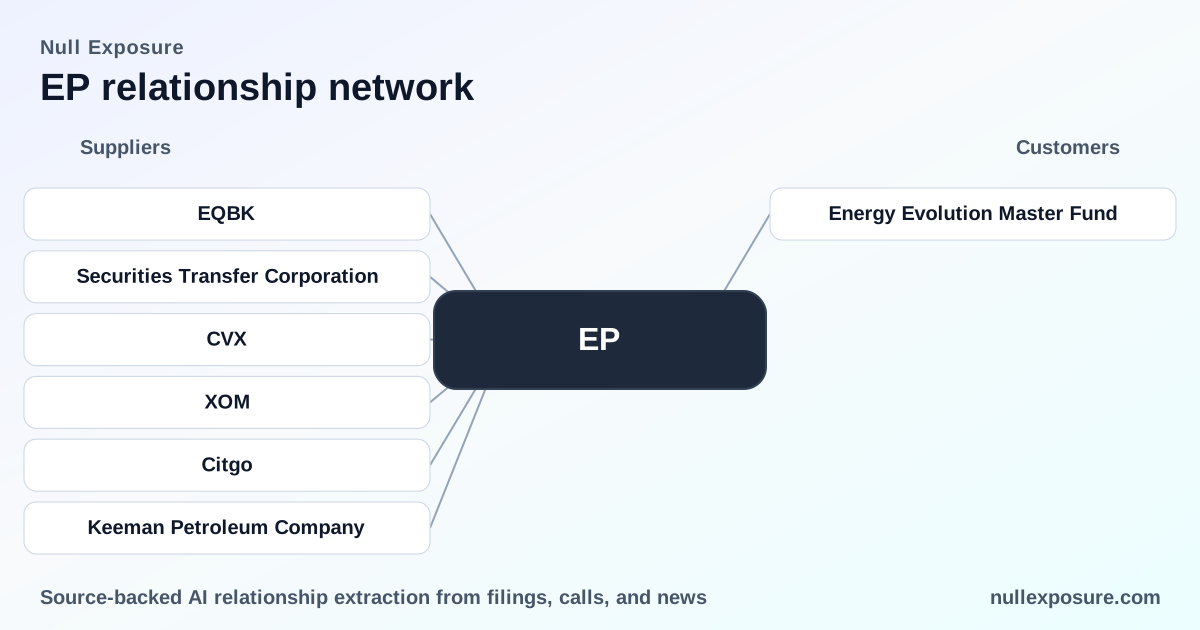
Empire Petroleum (EP) — supplier map and what it means for investors
Empire Petroleum Corporation is an independent U.S. oil & gas E&P that monetizes through asset acquisition, operated field production and downstream distribution contracts, supplemented by periodic financing actions (revolver amendments and equity rights offerings). The firm expands value by buying regional assets, operating production through a mix of internal teams and third-party service providers, and capturing margin from wholesale distribution agreements. For investors evaluating supplier and counterparty exposure, the mix of credit facilities, subscription agents, legacy distribution partners, and prior asset sellers defines both operational resilience and financing runway. Learn more at NullExposure.
Quick read: how Empire runs and gets paid
Empire’s economics are straightforward: cash flow from oil and gas production plus revenue from wholesale distribution contracts. Financing and working capital are provided through revolving credit facilities and equity capital raises. Operationally, Empire outsources non-core functions and relies on third-party service providers for field execution — a posture that reduces fixed cost but increases counterparty management risk.
Key operational and business-model signals:
- Contracting posture: outsourced for non-core functions and field services, implying a supplier-heavy operating model supported by third-party service providers (company disclosure).
- Concentration and criticality: financing relationships (revolver lender, subscription agent) are critical to near-term liquidity; distribution partners are strategically important to regional market access.
- Maturity: distribution contracts and acquired asset histories suggest a mix of legacy and recently acquired relationships rather than purely early-stage partnerships.
- Sourcing note: these company-level signals come from Empire’s disclosures about field management and outsourcing practices.
The relationship map — who Empire is actively dealing with
Below are every relationship captured in the search results, described in plain English with source context.
Equity Bank (Equity Bancshares, Inc.)
Empire extended the maturity of its revolving credit facility through a third amendment with Equity Bank, indicating the bank is Empire’s primary revolver lender and a key counterparty for working capital. According to a company announcement posted on Yahoo Finance, this amendment was disclosed in March 2026 (press release dated Mar 9, 2026).
Securities Transfer Corporation (Mexc news)
Securities Transfer Corporation is acting as the subscription agent for Empire’s rights offering, responsible for handling subscription certificates and payments from investors exercising rights. That role is described in a March 2026 notice posted on MEXC’s news feed (Mar 2026).
Chevron
Empire increased its regional wholesale distribution footprint and lists Chevron among existing distribution partners, reflecting downstream access and marketing relationships in south Georgia. An industry report referencing Empire’s acquisition of Keeman accounts notes the company’s partnerships with Chevron (article referencing FY2018 activity).
Securities Transfer Corporation (AIJourn)
In a separate notice, Securities Transfer Corporation is again cited as the subscription and information agent for the rights offering, confirming its administrative role for investor communications and prospectus distribution. This role was repeated in a March 2026 announcement circulated by AIJourn (Mar 2026).
ExxonMobil
Empire cited a historical acquisition where a key financial partner helped with the 2021 purchase of the Eunice Monument Field from ExxonMobil, indicating prior asset purchase activity from a major oil company that underpins part of Empire’s production base. This connection was referenced in a company-profile piece on OkEnergyToday (Dec 2023).
Citgo
Citgo is listed alongside Chevron as an existing commercial partner in Empire’s regional distribution network, reinforcing a diversified set of downstream outlets for wholesale sales in south Georgia. The relationship was mentioned in the same Keeman-acquisition coverage (FY2018 reference).
Keeman Petroleum Company
Empire announced that it acquired wholesale distribution rights from Keeman Petroleum, a transaction intended to expand Empire’s retail/wholesale footprint in its operating region. This specific transaction was reported in an industry article covering the Keeman acquisition (FY2018 coverage).
Why these relationships matter for valuation and operations
Empire’s supplier and counterparty mix creates a layered risk/return profile:
- Financing concentration is material: Equity Bank’s revolver extension is central to near-term liquidity and working capital; revolver amendments directly affect operational runway and capital allocation (Yahoo Finance, Mar 2026). This elevates the importance of lender diligence.
- Administrative relationships support capital raises: Securities Transfer Corporation serving as subscription and information agent is non-operational but critical to executing equity-based recapitalization, affecting investor access and timing (MEXC and AIJourn notices, Mar 2026).
- Downstream partners provide market access and margin capture: Contracts with Chevron, Citgo and the acquired Keeman accounts broaden Empire’s wholesale distribution, which stabilizes sales channels but also ties margin to partner terms and regional demand dynamics (industry coverage of FY2018 transactions).
- Asset-acquisition pedigree matters: The Eunice Monument Field acquisition from ExxonMobil suggests Empire pursues bolt-on deals from majors to scale production, a strategy that drives growth but also requires reliable financing and competent post-acquisition integration (OkEnergyToday, Dec 2023).
For practical diligence, finance relationships are higher criticality than administrative or distribution partners, because lender and subscription-agent actions directly affect NAV and liquidity.
Explore how these relationship signals translate into counterparty risk profiles at NullExposure.
Practical implications for investors and operators
- Prioritize covenant and amendment language in the revolver with Equity Bank; credit terms will determine capital flexibility.
- Validate the subscription agent’s operational readiness (Securities Transfer Corporation) because timing and accuracy of the rights offering materially affect equity proceeds.
- Review distribution contract terms with Chevron/Citgo and the acquired Keeman accounts to understand pricing floors, exclusivity and termination clauses that impact gross margins.
- Treat third-party field service arrangements as operational leverage — outsourcing reduces fixed cost but raises supplier counterparty risk, so monitor service continuity and vendor concentration.
Actionable checklist for next steps:
- Obtain the full revolver amendment and model cash burn under current covenants.
- Request the rights offering prospectus and subscription agent process map.
- Secure copies of the distribution contracts or a redacted summary of key commercial terms.
- Audit service-provider contracts for operational continuity clauses and escalation procedures.
Bottom line: concentrated financing, diversified commercial outlets
Empire operates as a small-cap E&P that relies on third-party financing and a mix of legacy and acquired distribution partnerships to generate revenue. The most immediate risk to enterprise value is financing execution (Equity Bank revolver & rights offering administration), while distribution partners and acquired wholesale accounts underpin revenue diversification. For supplier diligence and investor monitoring, focus on lender covenants, subscription-agent execution, and the commercial terms with Chevron/Citgo/Keeman.
To evaluate counterparty exposures and track amendment activity, visit NullExposure for detailed relationship monitoring and alerts.