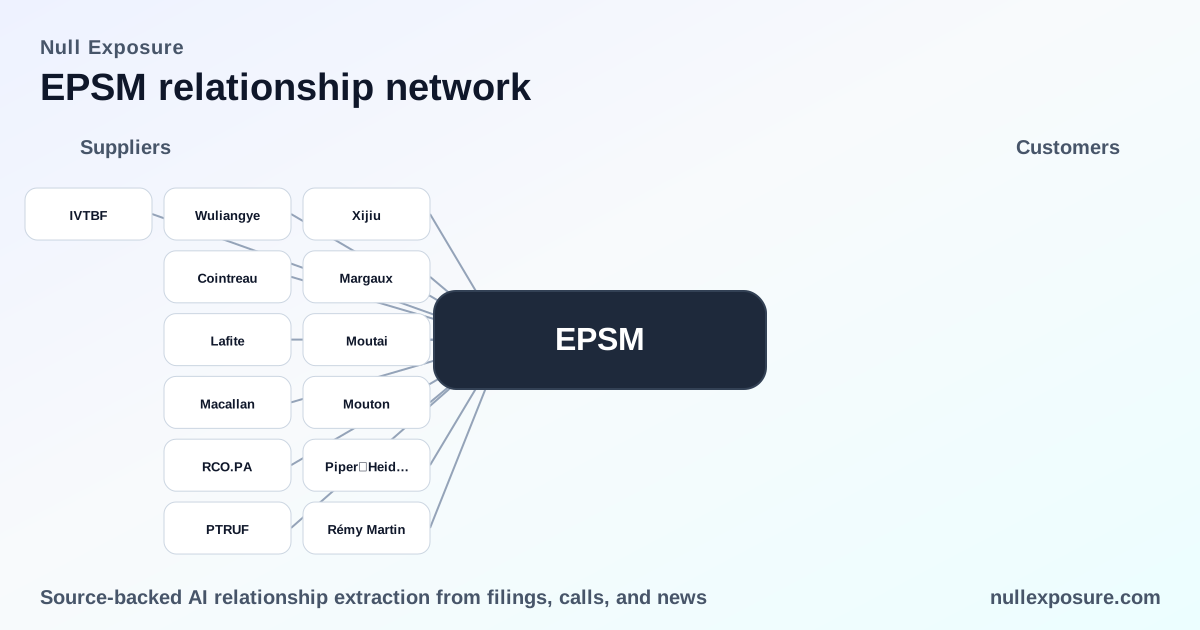
Epsium Enterprise (EPSM): The premium-brand supply chain behind Macau’s liquor wholesale play
Epsium Enterprise Limited operates as an importer and wholesale distributor of premium alcoholic beverages across China, France, Chile, Australia, the United States and Scotland, monetizing through inventory-backed wholesale margins, advance payments to secure scarce allocations, and channel sales in Macau’s high-margin travel-retail and hospitality segments. The company’s commercial model is inventory-intensive and brand-driven: it converts advance payments and working capital into the right-to-sell premium labels, then extracts margin through local retail and wholesale channels. For a focused supplier-risk view and relationship map, see NullExposure’s supplier profiles: https://nullexposure.com/.
Why supplier relationships are the core of EPSM’s investment case
- EPSM’s commercial value derives from its access to premium and in-demand brands rather than proprietary product. Supplier access is the business. Inventory holdings and advance payments are explicit levers the firm uses to secure allocations of luxury spirits and wines.
- Financial signals show a small company under pressure: FY2025 revenue of roughly US$8.45 million, negative operating margins and a market capitalization near US$23.2 million. Weak profitability amplifies the importance of stable supplier contracts—loss of access to a key brand would materially impair sales and working-capital dynamics.
- The company reports meaningful inventories and advance payments tied to premium labels, which function as both working capital and strategic allocations to support Macau channels. Inventory financing and the quality of supplier terms are therefore primary operational risks.
Explore EPSM supplier coverage and risk mapping at NullExposure: https://nullexposure.com/
Supplier relationships — brand-by-brand summaries (all reported relationships included) Below are plain-English, investor-focused summaries for every supplier relationship identified in the reviewed coverage.
-
Xijiu — Epsium distributes Xijiu among a roster of premium spirits and wines that it channels into Macau sales and wholesale. (TS2 Tech, market report referencing trading on Nov 21, 2025: https://ts2.tech/en/epsium-enterprise-epsm-soars-as-nasdaq-standout-inside-todays-wild-trading-on-21-november-2025/)
-
Margaux — The company lists Château Margaux as part of its French fine-wine assortment, indicating access to top-tier Bordeaux allocations that cater to luxury retail customers. (TS2 Tech, Nov 21, 2025: https://ts2.tech/en/epsium-enterprise-epsm-soars-as-nasdaq-standout-inside-todays-wild-trading-on-21-november-2025/)
-
Moutai — Moutai is identified among the premium liquor brands EPSM maintains inventory for, reinforcing exposure to high-value Chinese baijiu demand in Macau. (TS2 Tech, Nov 21, 2025: https://ts2.tech/en/epsium-enterprise-epsm-soars-as-nasdaq-standout-inside-todays-wild-trading-on-21-november-2025/; see also EPSM company release reported on Yahoo Finance Asia, Mar 2026: https://sg.finance.yahoo.com/news/epsium-enterprise-limited-reports-unaudited-195200912.html)
-
Mouton — EPSM lists Château Mouton among its French fine-wine lines, signaling participation in the ultra-premium wine distribution market. (TS2 Tech, Nov 21, 2025: https://ts2.tech/en/epsium-enterprise-epsm-soars-as-nasdaq-standout-inside-todays-wild-trading-on-21-november-2025/)
-
Piper‑Heidsieck Champagne — The company distributes Piper‑Heidsieck Champagne, an allocation that supports hospitality and travel-retail positioning. (TS2 Tech, Nov 21, 2025: https://ts2.tech/en/epsium-enterprise-epsm-soars-as-nasdaq-standout-inside-todays-wild-trading-on-21-november-2025/)
-
Rémy Martin — Rémy Martin is explicitly cited among premium spirits inventory; EPSM’s reported stocks and advance payments are used to secure supply of brands such as Rémy Martin to support Macau channels. (SG.Finance.Yahoo press report, Mar 2026: https://sg.finance.yahoo.com/news/epsium-enterprise-limited-reports-unaudited-195200912.html; TS2 Tech also references the listing, Nov 2025: https://ts2.tech/en/epsium-enterprise-epsm-soars-as-nasdaq-standout-inside-todays-wild-trading-on-21-november-2025/)
-
Wuliangye — Wuliangye is among the premium Chinese spirits EPSM inventories to supply local wholesale and duty-free channels. (SG.Finance.Yahoo press report, Mar 2026: https://sg.finance.yahoo.com/news/epsium-enterprise-limited-reports-unaudited-195200912.html; TS2 Tech Nov 2025: https://ts2.tech/en/epsium-enterprise-epsm-soars-as-nasdaq-standout-inside-todays-wild-trading-on-21-november-2025/)
-
Cointreau — Cointreau is listed in the company’s distribution mix, representing branded liqueurs used in hospitality channels. (TS2 Tech, Nov 21, 2025: https://ts2.tech/en/epsium-enterprise-epsm-soars-as-nasdaq-standout-inside-todays-wild-trading-on-21-november-2025/)
-
Lafite — Château Lafite is named among French fine-wine relationships, underscoring EPSM’s positioning in ultra-premium wine allocations. (TS2 Tech, Nov 21, 2025: https://ts2.tech/en/epsium-enterprise-epsm-soars-as-nasdaq-standout-inside-todays-wild-trading-on-21-november-2025/)
-
Macallan — Macallan whisky is cited as part of EPSM’s inventory, aligning the company with luxury Scotch distribution and associated margin opportunity. (SG.Finance.Yahoo press report, Mar 2026: https://sg.finance.yahoo.com/news/epsium-enterprise-limited-reports-unaudited-195200912.html; TS2 Tech Nov 2025: https://ts2.tech/en/epsium-enterprise-epsm-soars-as-nasdaq-standout-inside-todays-wild-trading-on-21-november-2025/)
-
Petrus — Petrus appears among the French fine wines EPSM lists, reinforcing exposure to the highest tier of collectible Bordeaux. (TS2 Tech, Nov 21, 2025: https://ts2.tech/en/epsium-enterprise-epsm-soars-as-nasdaq-standout-inside-todays-wild-trading-on-21-november-2025/)
-
Latour — Château Latour is included in EPSM’s reported list of French fine wines, further indicating a focus on elite Bordeaux allocations. (TS2 Tech, Nov 21, 2025: https://ts2.tech/en/epsium-enterprise-epsm-soars-as-nasdaq-standout-inside-todays-wild-trading-on-21-november-2025/)
Operational and financial constraints that shape supplier risk
- The available materials include no supplier-specific contractual constraint excerpts; this absence is itself a company-level signal—there are no reported formal constraints in the reviewed records that would otherwise disclose exclusivity, minimum-purchase obligations, or supply guarantees. Treat supplier access as an operational dependency that EPSM must defend commercially.
- Inventory and advance-payment intensity is explicit: EPSM reported US$4.08 million of inventories and US$5.18 million of advance payments for goods in FY2025, which are the mechanism for securing allocations of premium brands and therefore tie up capital (SG.Finance.Yahoo, Mar 2026: https://sg.finance.yahoo.com/news/epsium-enterprise-limited-reports-unaudited-195200912.html).
- Company-level financials show contracting pressure: FY2025 revenue decline year-over-year (-57.2% quarterly growth YOY in the profile), negative operating margin and modest gross profit—supplier terms that allow inventory prepayment or tight payment windows will materially influence cash flow and solvency.
Practical implications for investors and operators
- Concentration and criticality: The business is dependent on continued access to a small set of ultra-premium suppliers; a loss of allocation from a single major brand could disproportionately reduce revenue and inventory value. Monitor supplier stability and contract renewals.
- Working-capital risk: Large advance payments are central to the model, so counterparty credit and payment-tenor negotiations with suppliers directly affect liquidity.
- Channel concentration: Macau and high-end retail are the primary revenue channels; changes in tourism, regulatory policy, or duty-free rules will immediately affect demand for stocked premium brands.
If you evaluate EPSM as a supplier risk or investment case, confirm supplier contract tenure, typical allocation sizes, and payment terms directly—NullExposure provides primary-document tracking and supplier mapping to streamline that diligence: https://nullexposure.com/
What to watch next — operational triggers and near-term catalysts
- Confirm whether advance-payment levels change quarter-to-quarter; a rising ratio of advances to inventories increases refinancing risk.
- Look for press or filings that disclose exclusivity, allocation guarantees, or minimum-purchase obligations with key brands—those terms determine whether supplier loss would be temporary or terminal for sales.
- Monitor gross-margin recovery as an indicator that EPSM is converting premium-brand access into sustainable operating profit.
Concluding recommendation Epsium’s value to investors and operators is defined by the quality and stability of its premium-brand supplier relationships coupled with its ability to finance inventory allocations. The firm’s small size, negative operating margins and materially tied-up working capital elevate supplier and liquidity risk; active monitoring of supplier contracts and inventory financing terms is essential. For further supplier-level diligence and document sourcing on EPSM and comparable wholesalers, visit NullExposure: https://nullexposure.com/.