Equitable Holdings (EQH): Capitalized through reinsurance, monetized through wealth and protection distribution
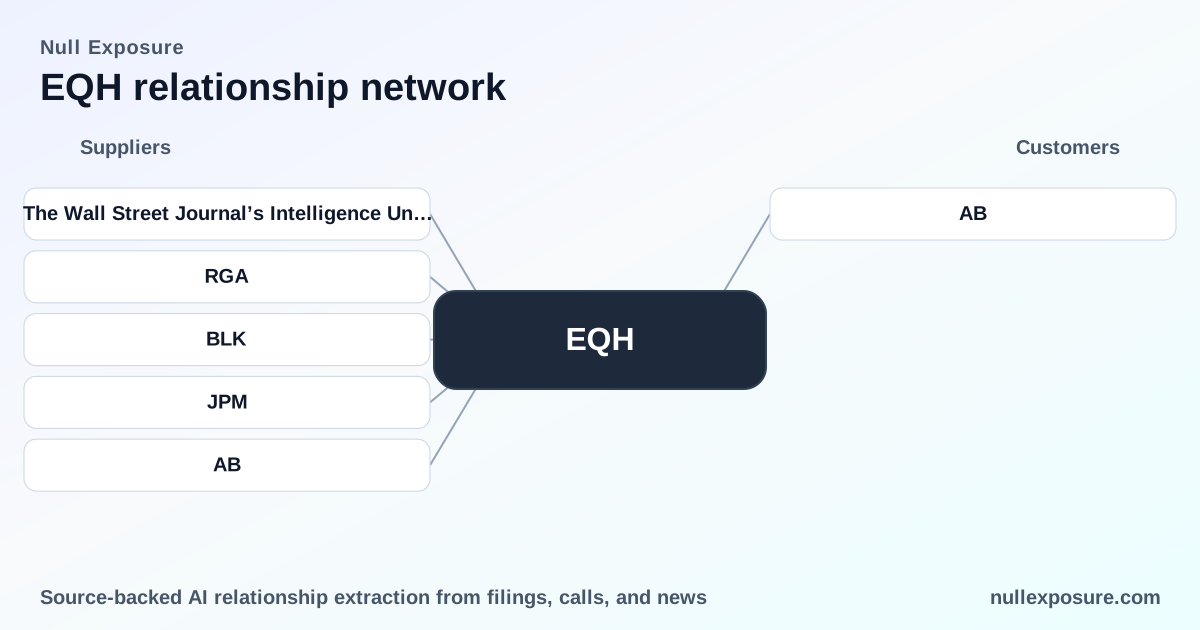
Equitable Holdings operates as a diversified financial services platform that monetizes through three linked channels: fee-based wealth management and asset management distribution, underwriting and retention of protection and annuity products, and capital optimization actions (notably reinsurance transactions and share repurchases). The company converts insurance risk into capital and shareholder returns by ceding mortality risk and partnering with large asset managers to expand fee revenue, while continuing to sell protection and annuity products through third‑party distributors.
If you’re evaluating supplier and partner exposure for underwriting, counterparty risk, or strategic sourcing, start with the capital and distribution shifts driven by recent reinsurance and asset-manager partnerships. Learn more at https://nullexposure.com/.
What changed in FY2026: the RGA transaction and its impact
Equitable executed a transformational life reinsurance transaction in FY2026 that freed approximately $2.0 billion of capital and reduced net mortality exposure by roughly 75%. That capital was redeployed in part to fund buybacks, materially altering the company’s capital allocation profile and reducing direct mortality tail risk on in-force blocks. Multiple press reports and company commentary in early 2026 highlight this as the dominant structural move shaping near-term earnings volatility and balance-sheet flexibility (Finviz / InsuranceNewsNet / The Globe and Mail, FY2026).
Key supplier and partner relationships (what investors need to know)
The Wall Street Journal’s Intelligence Unit
Equitable commissioned a WSJ Intelligence Unit study titled “Approaching Retirement: Getting Gen X from Good to Great” to analyze retail investor behavior; the study was based on a survey of 500 retail investors and was used to support client-facing insights and product positioning. (The Wall Street Journal’s Intelligence Unit study commissioned by Equitable, March 2026).
RGA (Reinsurance Group of America)
Equitable ceded roughly 75% of its in-force individual life block to RGA through a major reinsurance transaction that unlocked about $2.0 billion of capital and materially reduced mortality exposure. Several press reports link the RGA deal directly to the company’s capital‑management program and subsequent share repurchases in FY2026. (Finviz reporting on RGA transaction; InsuranceNewsNet; The Globe and Mail, FY2026).
Reinsurance Group of America, Incorporated
Analysts and rating agencies referenced the RGA transaction as a driver of short-term earnings volatility while recognizing the capital benefits; AM Best and other coverage cited the trade in credit and ratings commentary. The transaction is central to short‑term GAAP earnings variability and the company’s stated strategic priorities. (AM Best / industry commentary, FY2026).
BlackRock
Equitable leverages partnerships with major asset managers such as BlackRock to launch differentiated, fee-based products (including RILA-like structures and protection-focused annuities), positioning the firm for premium pricing and expanded distribution reach. The partnership is presented in market commentary as a product-innovation channel that supports growth in fee revenue. (SimplyWall.St analysis referencing BlackRock partnership, FY2026).
JPMorgan
Equitable maintains collaboration with JPMorgan on product and distribution initiatives that support access to institutional capabilities and distribution networks; market coverage cites JPMorgan as a strategic partner enabling product differentiation and market access. (SimplyWall.St / market commentary, FY2026).
AB (AllianceBernstein)
Equitable’s growing majority stake in AllianceBernstein and partnership arrangements are called out as both a source of product innovation and a driver of short‑term GAAP earnings effects; AB also figures in real-estate and operational footprints that span North America and APAC. (SimplyWall.St analysis; company press material, FY2026).
Operating constraints and what they imply about the business model
-
Contracting posture is mixed: evidence shows both long‑dated financing (a $1.0 billion 10‑year term loan in 2021) and short‑term credit facilities and agreements (a 364‑day delayed‑draw term loan and short‑duration ASR repurchase commitments). This combination signals an appetite to blend stable capital with tactical, shorter-duration funding when reallocating capital. (Company financing disclosures, 2021–2025).
-
Distribution agreements are flexible: distribution and selling agreements with intermediaries are generally terminable on short notice (commonly ~60 days), indicating low contractual stickiness in distribution and higher commercial churn risk for product flows. (Company distribution disclosures).
-
Geographic footprint is broad with institutional footprints in NA and APAC: lease and office commitments tied to AllianceBernstein include significant North American and Pune (India) footprints, reflecting operational commitments in both NA and APAC that support asset-management scale. (Lease disclosures tied to AB locations, 2024–2025).
-
Multi‑role supplier posture: the company acts as buyer (retaining and ceding insurance risk), distributor (selling products through third‑party intermediaries), and service consumer/provider in various arrangements; Equitable also contracts third‑party service providers for core security and operations controls. These roles create diverse counterparty exposures across reinsurance, distribution, and technology/service suppliers. (Company risk and reinsurance disclosures).
-
Relationship stage is active: recent novations of legacy blocks and active reinsurance transactions indicate ongoing active lifecycle management of in-force blocks and product portfolios (policy novations effective January 2025).
Investment implications — risk, return, and what to watch
-
Capital efficiency improved but earnings volatility increased. The RGA reinsurance freed capital that funds buybacks and balance-sheet repair while transferring mortality risk off the balance sheet; that improves solvency metrics but increases near-term GAAP earnings volatility because of one-time items and equity accounting for AB.
-
Fee-growth optionality through asset-manager partnerships. Partnerships with BlackRock, JPMorgan, and AB position Equitable to capture higher-margin fee revenue, improving the company’s revenue mix away from interest- and spread-sensitive insurance products. Winning product distribution with these partners is a critical value driver.
-
Distribution is durable but contractually flexible. Reliance on third‑party intermediaries that can be terminated on short notice means product volume is commercially controlled, not contractually guaranteed—this elevates execution risk if market channels tighten.
-
Operational and geographic commitments imply fixed-cost leverage. Leases and operational footprints in NA and APAC tied to AB increase operating leverage and underline the need for continued fee revenue growth to absorb fixed costs.
If you want a consolidated view of EQH’s supplier network, counterparty roles, and constraint signals to integrate into underwriting or due-diligence workflows, start here: https://nullexposure.com/.
Bottom line and next steps for investors
Equitable’s FY2026 repositioning is a clear late-cycle capital optimization: transfer insurance mortality risk, redeploy capital to buybacks, and accelerate fee-based partnerships to diversify revenue. That strategy enhances return-on-capital potential but creates observable execution risk in distribution and short-term earnings volatility. Monitor the realization of fee revenue from partnerships with BlackRock, JPMorgan, and AB, and track counterparty performance on the RGA reinsurance structure.
For a focused supplier-risk brief or to map EQH counterparty exposures into your investment models, visit https://nullexposure.com/ for vendor-aligned intelligence and downloadable summaries.