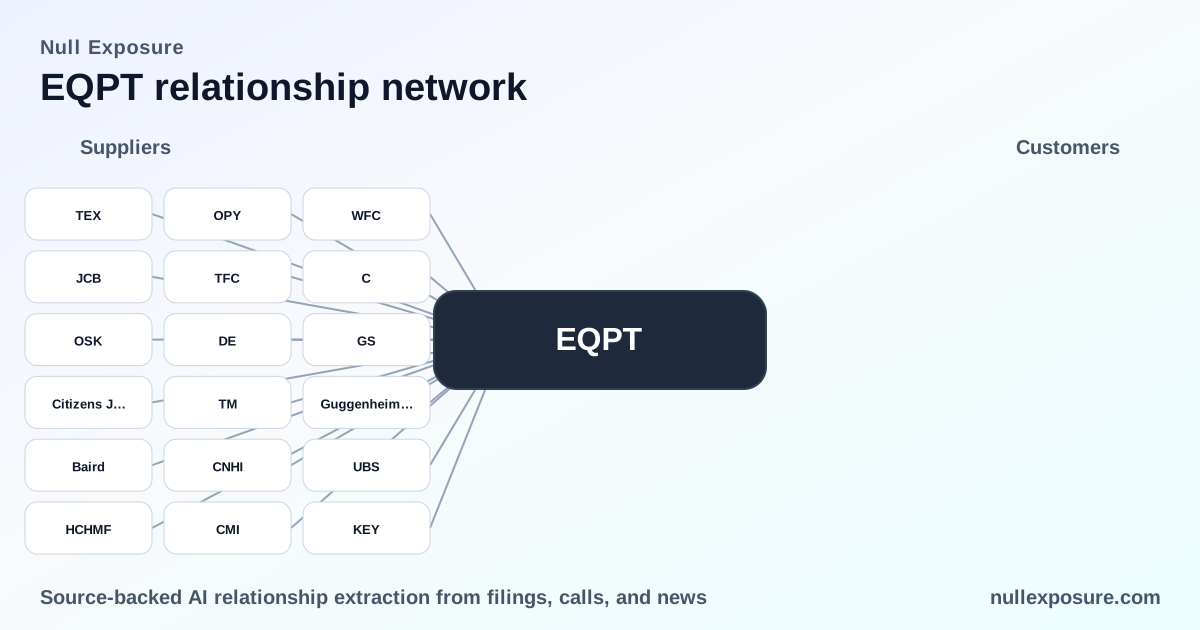
EquipmentShare (EQPT): supplier map and what it means for investors
EquipmentShare operates an integrated construction-equipment platform that earns rental and sales revenue from heavy machinery while monetizing telemetry, fleet-management software and value-added services. The company combines an asset-heavy rental fleet with a technology layer to drive utilization and upsell; capital markets activity in early 2026 shows the company consolidating public-market financing and distribution to scale that model (Revenue TTM: $4.36B; EBITDA: $576.7M). For investors evaluating supplier and counterparty risk, the near-term story is about fleet sourcing, OEM dependence and a heavyweight IPO syndicate that will shape capital access and investor composition.
Explore a systematic view of EquipmentShare’s counterparties at https://nullexposure.com/ — a good first step for due diligence.
The immediate signal: a powerhouse underwriting syndicate
EquipmentShare priced its initial public offering in January 2026 and named a deep syndicate of lead and joint bookrunners. Goldman Sachs, Wells Fargo Securities, UBS Investment Bank, Citigroup and Guggenheim Securities are listed as lead book-running managers in the company press releases announcing the IPO launch and pricing in January 2026, signaling broad distribution capability and institutional placement capacity. A secondary reporting thread of the deal lists a larger group of joint bookrunners — KeyBanc, Truist, Baird, Oppenheimer, Citizens JMP — which confirms a wide sell-side footprint to reach both regional and sector-focused investors (GlobeNewswire, Jan 2026; TradingView and reporting summaries, March 2026).
Counterparty map — banks and capital partners
- Goldman Sachs & Co. LLC: EquipmentShare named Goldman Sachs as a lead book-running manager for the IPO, indicating a primary role in pricing and institutional placement. (GlobeNewswire press release, Jan 2026)
- Wells Fargo Securities: Wells Fargo is also a lead book-runner on the offering and appears in multiple press reports as part of the core syndicate. (GlobeNewswire press release, Jan 2026; TradingView summary, FY2025)
- UBS Investment Bank: UBS is listed among the lead underwriters for the IPO, providing distribution into its institutional client base. (GlobeNewswire press release, Jan 2026; TradingView summary, FY2025)
- Citigroup: Citigroup is included as a lead book-running manager on the deal, which expands global distribution reach for the offering. (GlobeNewswire press release, Jan 2026)
- Guggenheim Securities: Guggenheim is named as a lead book-runner alongside the larger banks, reflecting a role in syndicate execution and pricing. (GlobeNewswire press release, Jan 2026)
- KeyBanc Capital Markets: KeyBanc is listed among the additional joint bookrunners, giving regional middle-market coverage for the placement. (Evrimagaci report summarizing IPO syndicate, March 2026)
- Truist Securities: Truist appears as an additional joint bookrunner, broadening access to southeast and regional institutional channels. (Evrimagaci report, March 2026)
- Baird: Baird is included in the joint bookrunner list, typically supporting distribution to wealth-management and regional institutional desks. (Evrimagaci report, March 2026)
- Oppenheimer & Co.: Oppenheimer is cited among the additional joint bookrunners, indicating participation from independent investment banks in the deal syndicate. (Evrimagaci report, March 2026)
- Citizens JMP: Citizens JMP is named as a joint bookrunner, filling out the syndicate’s regional and institutional reach. (Evrimagaci report, March 2026)
Counterparty map — OEMs and fleet suppliers
- John Deere: EquipmentShare sources fleet from major OEMs including John Deere, which supplies construction and agricultural equipment critical to rental inventory. (TradingView write-up of the FY2025 IPO filing)
- JLG: JLG is listed among the OEM suppliers, providing aerial work platforms that feed the company’s rental offering. (TradingView write-up, FY2025)
- CASE: CASE equipment is cited as a fleet source for EquipmentShare’s rental inventory. (TradingView write-up, FY2025)
- Genie: Genie-manufactured aerials and lifts are included in the company’s sourcing list for its fleet. (TradingView write-up, FY2025)
- JCB: JCB is named as an OEM partner supplying excavators and loaders for the fleet. (TradingView write-up, FY2025)
- Cummins: Cummins is listed among suppliers (prime mover engines and power solutions) used across EquipmentShare’s fleet. (TradingView write-up, FY2025)
- Toyota: Toyota is included in the list of OEMs that EquipmentShare sources from for certain equipment lines. (TradingView write-up, FY2025)
- Hitachi: Hitachi is cited as one of the major original-equipment manufacturers that contribute to EquipmentShare’s fleet composition. (TradingView write-up, FY2025)
(Each OEM relationship is documented in the company’s IPO filing coverage and secondary reporting; see TradingView’s synopsis of the filing, FY2025.)
What these relationships reveal about EQPT’s operating model
- Capital markets readiness and distribution breadth. The combination of global bulge-bracket leads (Goldman Sachs, Citigroup, UBS) and a long tail of regional bookrunners (KeyBanc, Baird, Oppenheimer, etc.) signals a deliberate strategy to secure both scale and diversified investor demand for the IPO. That syndicate structure accelerates access to public capital while smoothing aftermarket placement risk. (GlobeNewswire; Evrimagaci; TradingView)
- Supply diversification for fleet resilience. EquipmentShare sources from a broad roster of OEMs — John Deere, CASE, JCB, Cummins, Toyota, Hitachi, JLG and Genie — which reduces single-vendor concentration risk and enhances fleet replacement flexibility. OEM variety also supports differentiated equipment classes across rental and sales channels. (TradingView, FY2025)
- Asset-critical supplier relationships. OEM suppliers are operationally critical: fleet availability and parts channels directly affect utilization and revenue per unit; therefore, OEM terms, lead times and service support are material operational risks that investors must monitor. (Company filing summaries, FY2025)
- Maturity and negotiating posture. The firm’s ability to assemble a heavyweight syndicate for an IPO demonstrates institutional confidence in capital strategy and a bargaining position that should translate into favorable financing and secondary-market support; however, the company remains a relatively recent public issuer and will be subject to market scrutiny on margins and utilization trends. (GlobeNewswire, Jan 2026)
Key risk and opportunity takeaways for investors
- Opportunity: Scalable rental platform plus software. EquipmentShare’s asset base combined with telemetry and fleet-management services creates multiple monetization levers — rental yield, sales margins and recurring software revenue — positioning the company to compress cycle times and raise lifetime customer value.
- Risk: OEM and parts dependency are operationally critical. Despite a broad OEM roster, any disruption across engine, chassis or telematics suppliers would materially affect utilization and maintenance cost. Active monitoring of supplier contracts and lead times is required.
- Risk: Execution under public-market scrutiny. The IPO syndicate mitigates capital access risk, but public ownership increases transparency and performance expectations; investors should track utilization, rental-day trends and SG&A leverage relative to peers.
Midway diligence step: review EquipmentShare’s IPO filing and syndicate structure at https://nullexposure.com/ to see how underwriter commitments and allocation priorities affect ownership and future capital raises.
Practical next steps for research and operations teams
- For investors: assess OEM contract length, parts SLAs and any exclusivity that could affect replacement cycles; review syndicate allocation and lock-up terms disclosed in the IPO materials.
- For operators and procurement teams: prioritize vendor scorecards for engine, telematics and major components to protect utilization and maintenance rhythms.
- For analysts: model sensitivity to replacement lead times and spare-parts inflation; incorporate underwriter distribution into float and ownership assumptions.
Final recommendation: treat the IPO syndicate and OEM roster as complementary levers — the former secures capital and distribution; the latter secures fleet performance and revenue stability. For an organized starting point to validate counterparty exposure and next-stage monitoring, visit https://nullexposure.com/.
For a deeper counterparty report and tailored exposure analysis, return to https://nullexposure.com/ and request the full supplier map and related disclosure timeline.