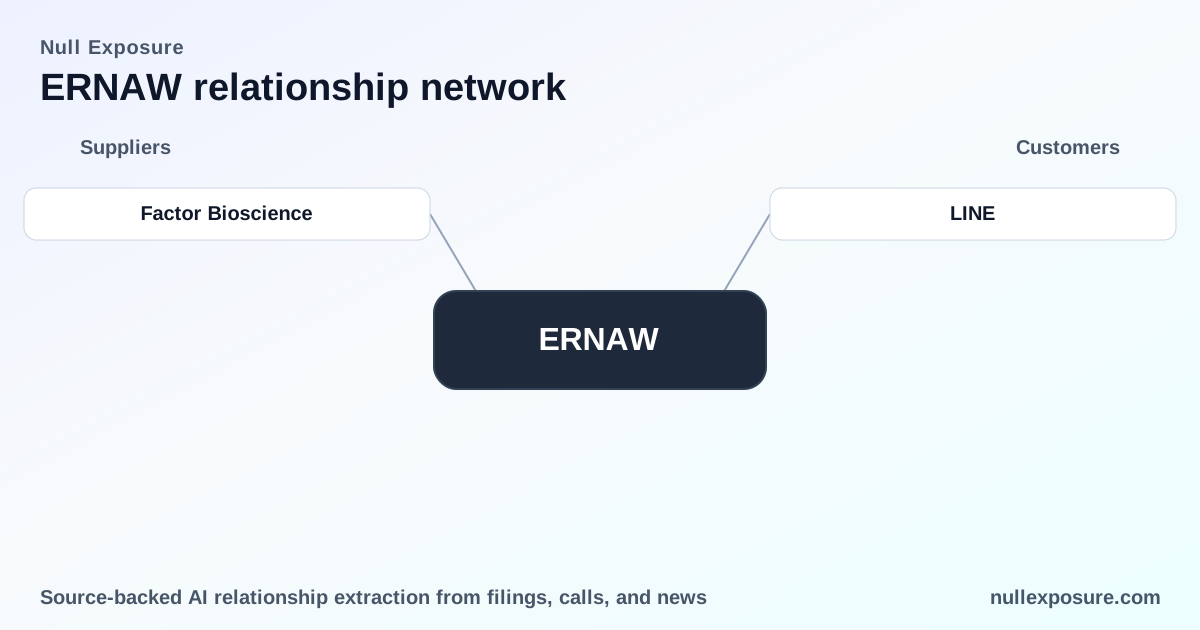
ERNAW supplier relationships: what investors and operators need to know about Ernexa’s deal with Factor Bioscience
Ernexa Therapeutics is a preclinical developer of induced mesenchymal stem cell (iMSC) therapies for oncology and autoimmune indications that monetizes through exclusive licensing, milestone/royalty arrangements, and partnership commercialization. The company’s supplier posture is driven by licensing contracts that transfer development and manufacturing responsibilities to third parties, a recurring monthly cash outflow tied to those licenses, and an active one-year renewable agreement with Factor Bioscience that sits at the center of near-term supplier risk and spend. For comparative supplier intelligence and contract-level readouts, visit NullExposure for deeper supplier profiles. https://nullexposure.com/
The core supplier relationship in plain terms
Ernexa’s primary supplier relationship disclosed in its filings is with Factor Bioscience. The company executed a Factor L&C Agreement effective September 9, 2024 that provides Ernexa with exclusive licenses in cancer, autoimmune disorders and rare disease fields and establishes a commercial and payment framework between the parties. Under the agreement Ernexa is obligated to material monthly payments, milestone and royalty economics, and retains rights to develop or co-develop licensed technology. According to Ernexa’s FY2024 Form 10‑K, the Factor L&C Agreement terminated prior license arrangements and set out the new commercial terms for the licensed technology.
How the Factor deal translates into cash and operational commitments
The Factor arrangement is on an active, renewable footing with a predictable near-term cash profile. Ernexa committed to approximately $0.2 million per month for the first twelve months, plus roughly $0.1 million per month allocated to patent costs over the first nine months, along with milestone, royalty and sublicensing fee clauses tied to commercialization and sublicenses. The FY2024 filing also notes a one-year initial term that renews automatically each year, and customary termination rights, including Ernexa’s unilateral right to terminate for any reason on 90 days’ notice. These terms create a medium-term spend commitment (estimated in the $1M–$10M band) that is material for a preclinical company and shapes cash planning and partner negotiations. (Source: Ernexa FY2024 Form 10‑K.)
Every supplier relationship disclosed
- Factor Bioscience — Ernexa entered the Factor L&C Agreement (effective September 9, 2024) which grants Ernexa exclusive licenses in oncology, autoimmune and rare disease fields and establishes development and payment obligations including monthly fees, patent cost contributions, and downstream royalty/milestone mechanics. This relationship replaced prior licensing arrangements and is documented in the company’s FY2024 Form 10‑K.
Source: Ernexa FY2024 Form 10‑K; company disclosure.
The 10‑K also notes a prior 20% license fee paid to Factor Bioscience during 2023 related to a Lineage Agreement, a nonrecurring expense that materially lowered cost of revenue in 2024 because it was not repeated. This historical payment is relevant to trend analysis of cost of goods and one‑off supplier charges. (Source: Ernexa FY2024 Form 10‑K.)
What the constraints mean for investors — contract posture, concentration and maturity
Several constraint signals from Ernexa’s filings clarify how suppliers influence the business:
- Contracting posture: The Factor L&C Agreement is structured as a short initial term with annual automatic renewals and a 90‑day unilateral termination right, giving Ernexa operational flexibility while preserving continuity with Factor. Where the contract names Factor explicitly, this is a supplier-level signal; general lease expirations and other obligations are company-level signals.
- Concentration and criticality: Ernexa states it will rely on contract manufacturing relationships and has licensed core technology from Factor, making these external partners critical to development and potential commercial execution. Reliance on a small set of licensors/manufacturers increases execution risk for a preclinical firm.
- Spend and cash profile: The disclosed payment schedule places the relationship in a $1M–$10M annualized spend band—material given Ernexa’s precommercial revenue profile—so supplier payments are a first‑order budgetary constraint.
- Maturity and stage: The relationship is active and structured to support near‑term development; the initial one‑year renewable term suggests both parties expect iterative collaboration rather than a long, locked‑in manufacturing contract. This enables course correction but also implies the need for ongoing renegotiation and cash discipline.
For company-level context (not tied to a named supplier), Ernexa also disclosed that lease terms run through December 2026 to June 2028 and that it uses external consultants for cybersecurity and risk assessments, signaling standard enterprise support dependencies and multi‑year facility obligations. (Source: Ernexa FY2024 Form 10‑K.)
Risks and negotiating leverage for counterparties and operators
Ernexa’s supplier profile creates a clear set of operational and negotiation dynamics:
- Power balance: The existence of exclusivity in licensed fields gives Ernexa leverage to extract rights for development and sublicensing; conversely, Factor’s role as a technology provider and prior licensee history creates mutual dependence. Counterparties should expect commercial economics to include both upfront monthly fees and back‑end royalties/milestones.
- Termination flexibility vs. continuity risk: The 90‑day termination right improves Ernexa’s flexibility but does not eliminate the execution risk of switching manufacturers or technology providers mid‑development.
- Budget sensitivity: With material ongoing monthly payments and a preclinical revenue base, cash availability will drive the pace of development and the company’s ability to honor contingency milestone payments.
If you are assessing partner risk or supplier exposure across a portfolio of preclinical-stage biotechs, a contract-level view significantly reduces blind spots. For actionable supplier profiles, consult NullExposure for contract summaries and exposure maps. https://nullexposure.com/
Practical takeaways for investors and operating partners
- Factor Bioscience is a strategic licensor and near-term cash counterparty for Ernexa; monthly fees and patent cost sharing create predictable obligations that squeeze runway for a capital‑constrained preclinical company. (Source: Ernexa FY2024 Form 10‑K.)
- The relationship is active and renewable but not long-term locked; this supports agility but requires close monitoring of renewal behavior and milestone funding. (Source: Ernexa FY2024 Form 10‑K.)
- Operational risk is concentrated around licensed technology and contract manufacturing reliance; investors should price in supplier execution risk and potential dilution of timelines if supplier negotiations or payments become strained.
For tailored supplier diligence and aggregated relationship intelligence, see NullExposure’s supplier reports and exposure dashboards. https://nullexposure.com/
Bottom line
Ernexa’s engagement with Factor Bioscience is the dominant supplier relationship disclosed and is structured to provide exclusive development rights with a material monthly cash commitment, royalties and milestone economics. For investors, the combination of exclusivity, recurring payments, and a precommercial revenue base creates both upside (through control of IP and sublicensing upside) and concentrated execution risk (manufacturing and funding). Track contract renewals, milestone scheduling and cash runway as primary drivers of value realization.