ERO Copper: What its supplier footprint tells investors about project execution and risk
Ero Copper operates and monetizes as an owner-operator of copper mining and development assets in Brazil, generating revenue from copper concentrate sales and value uplift from advancing deposits through feasibility and development stages. With a market capitalization roughly $2.8 billion and trailing revenue near $786 million, the company combines ongoing production economics with active project expansion (notably the Furnas Copper‑Gold Project) and strategic partner earn‑ins that accelerate resource capture and de‑risk capital intensity. For investors, supplier relationships are a direct read on execution cadence, capital intensity and counterparty exposure. Visit https://nullexposure.com/ to track these relationships and monitor evolving supplier risk.
Why supplier choices matter for near-term growth
Ero’s public disclosures show a deliberate reliance on third‑party drilling and independent assay providers, reflecting a contracting posture that favors specialist contractors over in‑house rigs and labs. That approach reduces fixed capital outlays and concentrates project management risk in a small set of operationally critical vendors. Drilling and assay services are not discretionary — delays or quality issues materially affect reserve definition, permitting and project timelines.
Operationally, the company reports strong margins and returns (operating margin ~43.6%, ROE ~34.9%) which, when combined with outsourced execution, indicate a capital-efficient operating model that still depends on reliable external suppliers. Investors should therefore treat vendor continuity and certification as leading indicators of execution risk.
Supplier relationships: who Ero is working with and why that matters
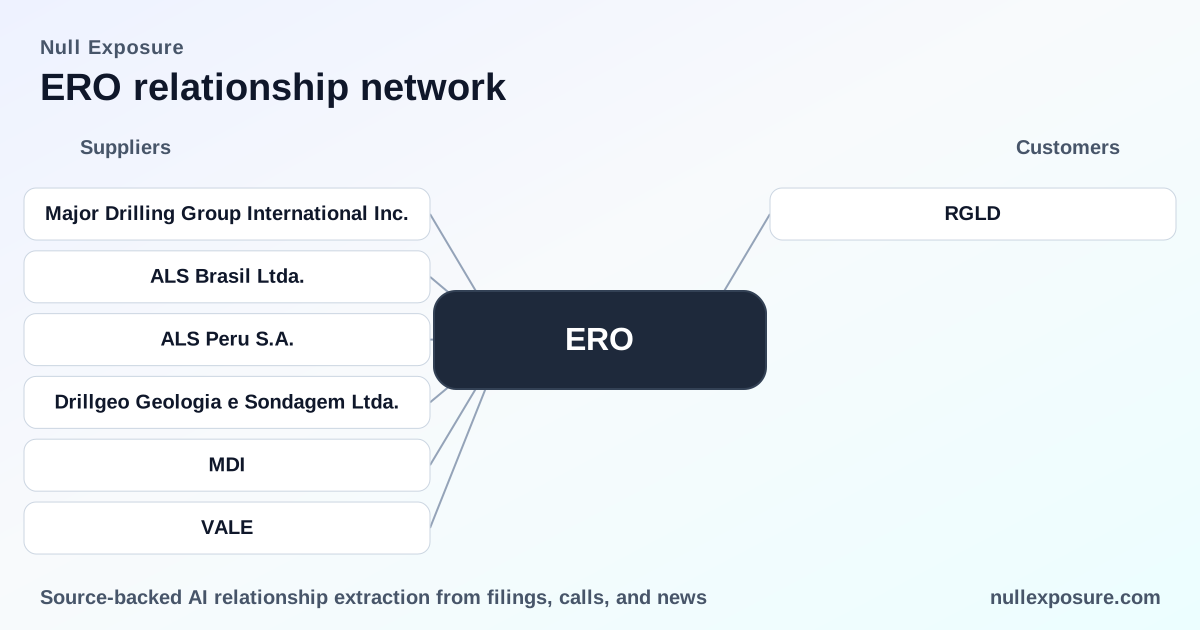
Major Drilling Group International Inc. (MDI) — Ero is currently contracting core drill rigs operated by Major Drilling to support work at the Furnas Project; Major Drilling is an established international drilling services firm (listed as MDI in the coverage). This arrangement reflects use of experienced, large‑format drilling contractors to accelerate resource definition. According to Ero’s press release and related coverage dated February 23, 2026, Major Drilling is an active contractor on the Furnas program (GlobeNewswire / company release, Feb 23, 2026).
Drillgeo Geologia e Sondagem Ltda. — Ero engages local Brazilian drilling specialist Drillgeo for core drilling at Furnas alongside Major Drilling, providing local capabilities and continuity since October 2024. The company disclosed that Drillgeo is an independent contractor on the project in the Furnas PEA announcement (Junior Mining Network repost and GlobeNewswire release, Feb 23, 2026).
ALS Brasil Ltda. — All sample preparation for Furnas drill programs is performed at ALS Brasil’s Parauapebas laboratory, which Ero identifies as independent of the company; outsourced sample prep centralizes chain‑of‑custody at a certified regional facility (GlobeNewswire press release, Feb 23, 2026).
ALS Peru S.A. — ALS Peru performs certified sample analysis for Ero, again noted as independent; using internationally recognized lab brands for analysis supports technical credibility and investor confidence in assay results (GlobeNewswire press release, Feb 23, 2026).
Vale Base Metals — Ero is advancing Furnas through a definitive earn‑in agreement with Vale Base Metals that grants Ero the right to acquire a 60% interest in the project; the arrangement meaningfully shifts project risk and economics through an offtake/partner structure (GlobeNewswire company update on Q4 production and strategic positioning, Feb 5, 2026).
How these supplier ties translate into financial and execution signals
- Outsourced drilling and lab services lower upfront capital expenditure and shift spend into operating lines, supporting Ero’s strong return metrics while enabling faster scale-up of exploration and development activity.
- Use of globally recognized assay laboratories (ALS brands) enhances technical validation of results and reduces the risk of assay disputes that can stall permitting or raise reserve uncertainty.
- A structured earn‑in with Vale Base Metals is strategically significant: it accelerates project advancement without Ero shouldering full capital burden and introduces a large, experienced partner that changes governance, capital allocation and potential exit scenarios.
- Vendor concentration is moderate — Ero uses multiple drilling contractors and labs, which reduces single‑point failure but keeps critical dependence on a handful of specialist service providers.
For a closer monitoring feed on these supplier dynamics and to see how they evolve against quarterly disclosures, visit https://nullexposure.com/.
Company‑level signals and constraints on supplier relationships
Ero’s public supplier notices do not include explicit contractual constraints in these relationship disclosures. At the company level, however, the pattern of disclosures yields clear operating model signals:
- Contracting posture: specialist outsourcing for drilling and assay activities, indicating an asset‑light production and exploration posture for non‑core services.
- Concentration: multiple but limited suppliers for drilling and lab work — sufficient to reduce single‑vendor dependency, yet still concentrated enough that a vendor disruption would be material to project schedules.
- Criticality: high — drilling and assay services are critical path activities for resource conversion, permitting and PEA/feasibility timetable adherence.
- Maturity: established counterparties (large international drillers and certified labs) indicate a mature vendor base rather than ad‑hoc local providers, reducing execution risk but not eliminating it.
These company‑level signals should be incorporated into models as operational risk modifiers rather than direct balance‑sheet liabilities because the disclosures show contractors as independent service providers rather than capital partners (except where a partner structure, such as the Vale earn‑in, explicitly changes capital exposure).
What investors should watch next
- Track continued disclosure on drilling schedules and assay turnaround times from the Furnas program; delays or assay irregularities would be material to project valuation and timeline.
- Monitor any amendments to the Vale earn‑in terms, which would change Ero’s capital needs and potential dilution profile.
- Watch vendor continuity and any supply‑chain stress (rig availability, lab backlogs) through the next two quarters as an early indicator of execution risk.
For ongoing monitoring and supplier risk analytics tied to Ero and comparable producers, visit https://nullexposure.com/ — the homepage consolidates supplier signals, press releases and counterparty exposure in investor‑ready format.
Conclusion: Ero’s supplier map combines international drilling capacity, certified analytical laboratories and a strategic partner earn‑in with Vale — a configuration that supports fast execution with restrained capital intensity but leaves the company materially exposed to a small set of specialist service providers whose performance is critical to realizing Furnas’s value. Investors should prioritize operational disclosures and partner governance updates in the coming quarters.