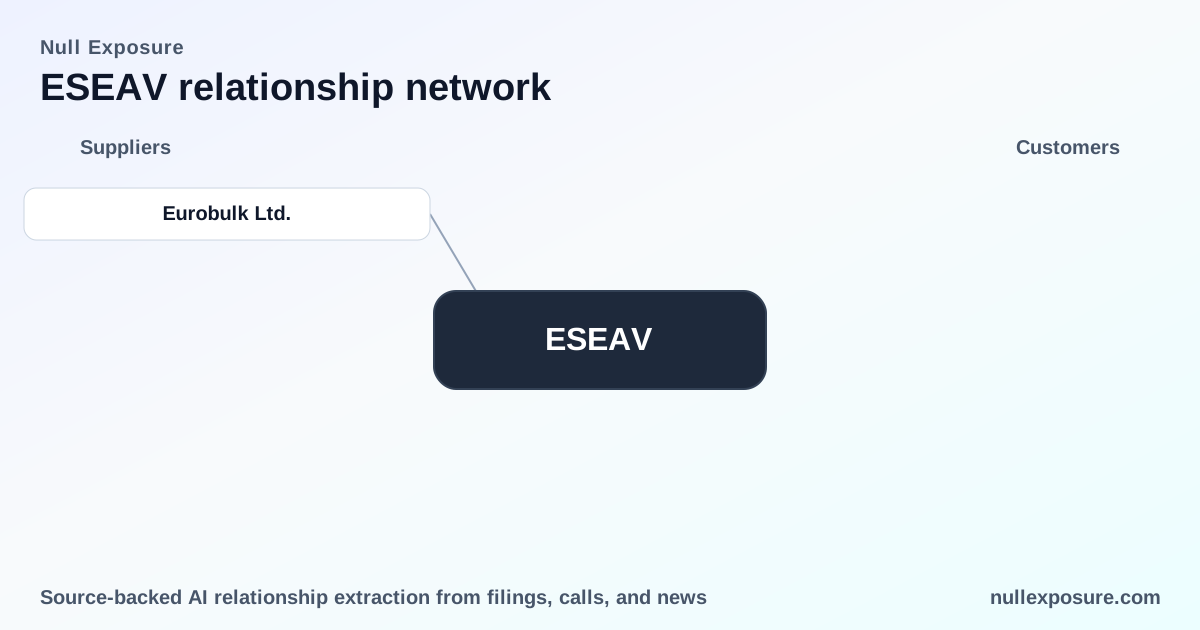
Euroseas Ltd. (ESEAV) — supplier map and what it means for investors
Euroseas is a Nasdaq-listed owner and operator of ocean-going vessels that monetizes via time-charters and voyage revenues from global drybulk and multipurpose shipping while concentrating day-to-day vessel operations under third-party management. For investors assessing counterparty and operational risk, the critical supplier relationship is the company’s ship management arrangement, which governs vessel availability, regulatory compliance, and operating economics — the levers that ultimately drive cash flow for owners in shipping cycles.
Explore deeper supplier intelligence at https://nullexposure.com/.
The investor thesis up front
Euroseas’ business model is asset-driven and operationally sensitive: asset revenues come from chartering vessels; operating reliability depends on external management processes. That structure produces two investment levers — earnings exposure to freight markets and operational exposure to the firm(s) that manage and maintain the fleet. To evaluate counterparty risk, focus on the named ship manager(s), their certifications, and contractual posture.
What investors need to know about Euroseas’ supplier posture
- Contracting posture: Euroseas delegates day-to-day commercial and technical management to an affiliated ship-management provider, a posture that concentrates operational authority externally while preserving asset ownership on the balance sheet. This arrangement reduces direct staffing and overhead for the owner but increases dependency on manager performance.
- Concentration risk: Where a single manager handles the fleet’s operations, disruptions or underperformance at that supplier translate directly into vessel downtime, claims risk, and cost overruns for Euroseas.
- Criticality: Ship management is mission-critical — crew competence, maintenance schedules, safety systems, and environmental compliance all flow through the manager and affect charter-hire earnings and regulatory exposure.
- Maturity signals: Presence of internationally recognized certifications for the manager signals standardized processes and environmental controls, improving predictability versus unmanaged or ad hoc arrangements.
These company-level signals should guide diligence on counterparty credit, service-level provisions in management agreements, and contingency planning.
Supplier relationships on file — who runs the ships
Eurobulk Ltd.
Euroseas discloses that its vessel operations are managed by Eurobulk Ltd., an affiliated ship management company that is ISO 9001:2008 and ISO 14001:2004 certified and is responsible for the day-to-day commercial and technical management of the vessels. This disclosure was included in a Euroseas press release about corporate actions in early March 2025. (Source: GlobeNewswire press release, March 6, 2025.)
Those are the only supplier relationships surfaced in the reviewed results.
Why this single relationship matters for valuation and risk
Having a named, affiliated manager concentrates operational risk but provides centralized control and potentially lower friction between owner and operator. Two practical investor implications:
- Earnings sensitivity: Any shortcomings in the manager’s execution — crewing, maintenance, compliance — will feed through to vessel availability and operating expense, compressing charter revenue during tight market windows.
- Contingency exposure: If the manager is affiliated rather than fully independent, governance and contractual clarity on escalation, KPIs, and indemnities become focal points in shareholder diligence.
The disclosure of ISO certifications for the manager is a positive indicator of process maturity and environmental management, which reduces some operational tail risks compared with unaccredited operators. (Source: GlobeNewswire press release, March 6, 2025.)
Explore practical supplier risk mapping and contract review services at https://nullexposure.com/ to translate these signals into a monitoring plan.
Operational signals and constraints — how to read them into a supplier strategy
While the public record here is limited, the combination of an affiliated ship manager plus ISO certifications implies:
- A contracting model that favors outsourced operational delivery over insourced crewing and technical operations.
- Moderate-to-high concentration with a single management counterparty responsible for execution.
- Elevated criticality: there is no operational redundancy if one manager handles the fleet without contractual backups.
- Operational maturity: ISO 9001 and ISO 14001 indicate formal quality and environmental management systems, improving auditability and regulatory resilience.
Treat these as company-level signals — they inform governance, audit, and covenant design rather than representing discrete line-item financial risk on their own.
Near-term monitoring priorities for investors
- Review management agreements and SLAs: confirm termination rights, performance KPIs, and replacement provisions to understand how quickly Euroseas could switch managers if required.
- Monitor regulatory and safety incident reports: incidents that implicate the manager will have immediate earnings consequences in shipping markets.
- Track governance around affiliated-party transactions and any spin-off events: the operational disclosure here was made in the context of a corporate action, and structural changes can change counterparty exposure. (Source: GlobeNewswire press release on March 6, 2025.)
If you need structured supplier due diligence or ongoing monitoring coverage, see available services at https://nullexposure.com/.
Bottom line — a concise investor takeaway
Euroseas monetizes vessel ownership against freight demand while relying on an affiliated ship manager to execute operations. That configuration concentrates operational risk but offers the benefits of standardized management processes and documented environmental controls. For investors, the priority is contractual clarity, contingency planning, and continuous monitoring of manager performance and safety metrics. The March 2025 disclosure naming Eurobulk Ltd. and its ISO certifications provides a clear starting point for that diligence. (Source: GlobeNewswire press release, March 6, 2025.)
For a tailored supplier risk assessment or to build an investor-grade monitoring checklist, visit https://nullexposure.com/.