Element Solutions (ESI): Supplier network implications after the Micromax acquisition
Element Solutions produces and sells specialty chemicals globally, monetizing through specialty formulation sales, aftermarket additives, and targeted industry solutions for electronics, consumer goods, and industrial coatings. The company expands revenue and margin by acquiring complementary product lines and scaling formulation and distribution across geographies; cash flow stems from product sales, incremental margin on integrated portfolios, and operational leverage as acquired businesses are consolidated.
Explore full supplier mapping and relationship insights at https://nullexposure.com/
What the Micromax acquisition changes — deal facts first
Element Solutions completed the acquisition of the Micromax business from Celanese in March 2026, adding a portfolio that strengthens its specialty chemicals offerings. This is an inorganic growth move that enlarges ESI’s product footprint and gives immediate revenue and customer access without the lead times of organic R&D.
- Celanese announced the divestiture of the Micromax business to Element Solutions on March 9, 2026. A report on Fibre2Fashion covered the completion date and purchase context. (Fibre2Fashion, Mar 9, 2026)
- The same transaction was reported by Chemical Engineering Online on March 9, 2026, confirming that Celanese completed the divestiture of Micromax to Element Solutions. (ChemEngOnline, Mar 9, 2026)
Every supplier relationship reported (explicit coverage)
-
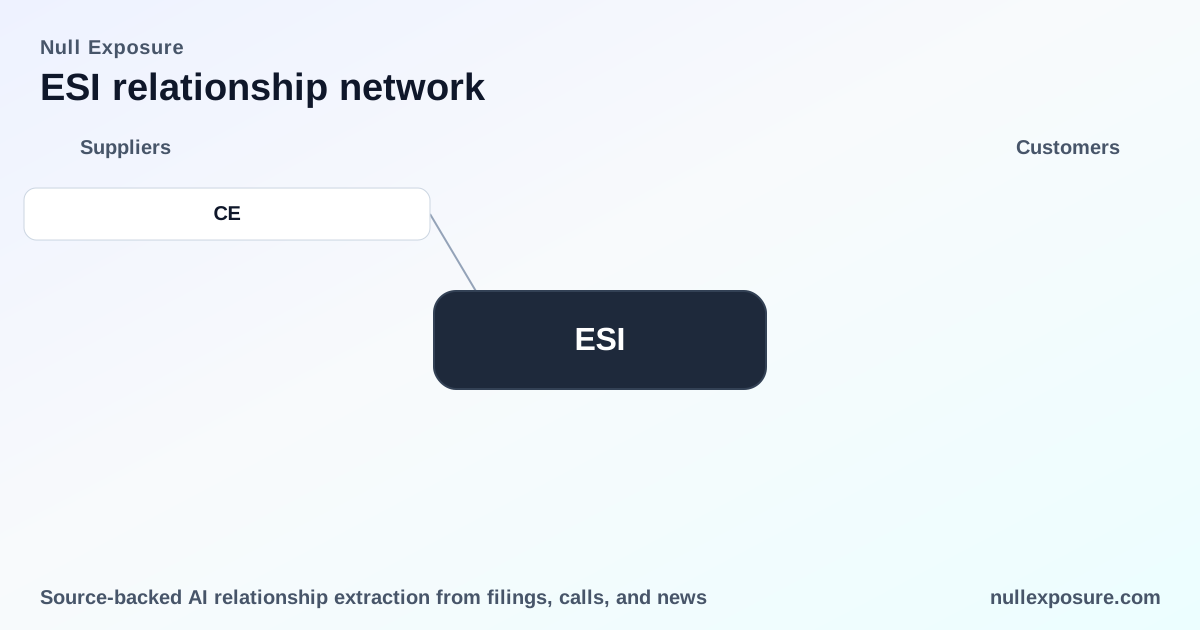
Celanese Corporation — the Micromax divestiture: Element Solutions acquired the Micromax business from Celanese, expanding ESI’s product set for specialty applications and integrating Micromax’s customer base into ESI’s commercial channels. This transaction was reported by Fibre2Fashion on March 9, 2026. (Fibre2Fashion, Mar 9, 2026)
-
Celanese Corp. — parallel confirmation of the same transfer: Chemical Engineering Online also reported that Celanese completed the divestiture of the Micromax® business to Element Solutions, corroborating the deal and its timing. (ChemEngOnline, Mar 9, 2026)
Both items in the results refer to the same transaction; together they establish the event and timing from independent industry press sources.
How Element Sources and what that means for supplier risk
Element Solutions discloses that it purchases major raw materials largely on a spot or as-needed basis, preferring local sources where possible but sourcing globally when required. The company also states it qualifies and continually monitors suppliers to control risk. From that information we draw three operational conclusions:
-
Contracting posture: spot-heavy procurement. The emphasis on as-needed purchases implies limited long-duration supply contracts and higher exposure to raw material price volatility, but also more flexibility to switch vendors and respond to input-cost changes.
-
Geographic sourcing: global reach reduces single-country concentration. Element’s sourcing is intentionally global and looks for multiple conformant suppliers worldwide, which lowers single-country geopolitical concentration but increases logistical and multi-jurisdictional compliance complexity.
-
Supplier role and criticality: manufacturers matter and are monitored. The company treats raw-material vendors as critical to production continuity and follows formal qualification and monitoring processes, indicating mature supplier-management practices consistent with manufacturing-critical relationships.
These are company-level operating signals across Element’s buying model rather than attributes of any single supplier.
Investment implications for buyers, operations, and counterparties
The Micromax acquisition shifts the supplier and product map in concrete ways:
-
Revenue and margin leverage. Adding Micromax products provides immediate incremental revenue and opportunities to consolidate procurement across a larger product portfolio, which can improve bargaining leverage with raw-material suppliers and drive margin expansion if integration reduces overlap.
-
Procurement flexibility remains a double-edged sword. The spot-oriented procurement posture gives ESI agility to seize favorable market pricing, but it preserves exposure to sudden commodity shocks—an important consideration for counterparties and contract structures.
-
Integration risk is real but manageable. The company’s stated supplier qualification and monitoring processes are positive signals for seamless operational integration, though execution risk in harmonizing quality standards and supplier lists will determine the near-term earnings impact.
For deeper supplier mapping and counterparty risk scoring, see our tools at https://nullexposure.com/
Key risk factors and concentration checks
-
Price volatility exposure. Spot purchasing drives exposure to feedstock swings—hedging policies and inventory buffers will determine how much earnings volatility ESI absorbs.
-
Execution on integration. M&A integration quality will determine whether the Micromax acquisition is accretive to margins or generates short-term operating friction.
-
Supplier continuity versus geographic complexity. Global sourcing reduces single-source risk but increases coordination and regulatory compliance costs; supplier qualification appears to be a deliberate control the company uses to mitigate this.
What investors and operators should watch next
- Monitor Element Solutions’ integration disclosures and near-term earnings commentary for cost synergies and margin trajectory tied to Micromax.
- Track procurement language in quarterly filings for any shift from spot to contracted purchases or new hedging programs that would change volatility exposure.
- Watch supplier qualification and audit outcomes as a proxy for integration progress and product quality stabilization.
For a practical supplier-risk scorecard and to compare Element Solutions against peers, visit https://nullexposure.com/
Bottom line
Element Solutions is pursuing growth through targeted acquisitions such as Micromax, expanding product breadth while maintaining a flexible, global sourcing model. That combination offers upside in scale and market access but preserves raw-material price exposure through spot purchasing. Investors and operators should prioritize evidence of successful integration, procurement discipline, and supplier continuity to validate the acquisition’s impact on margins and cash flow.