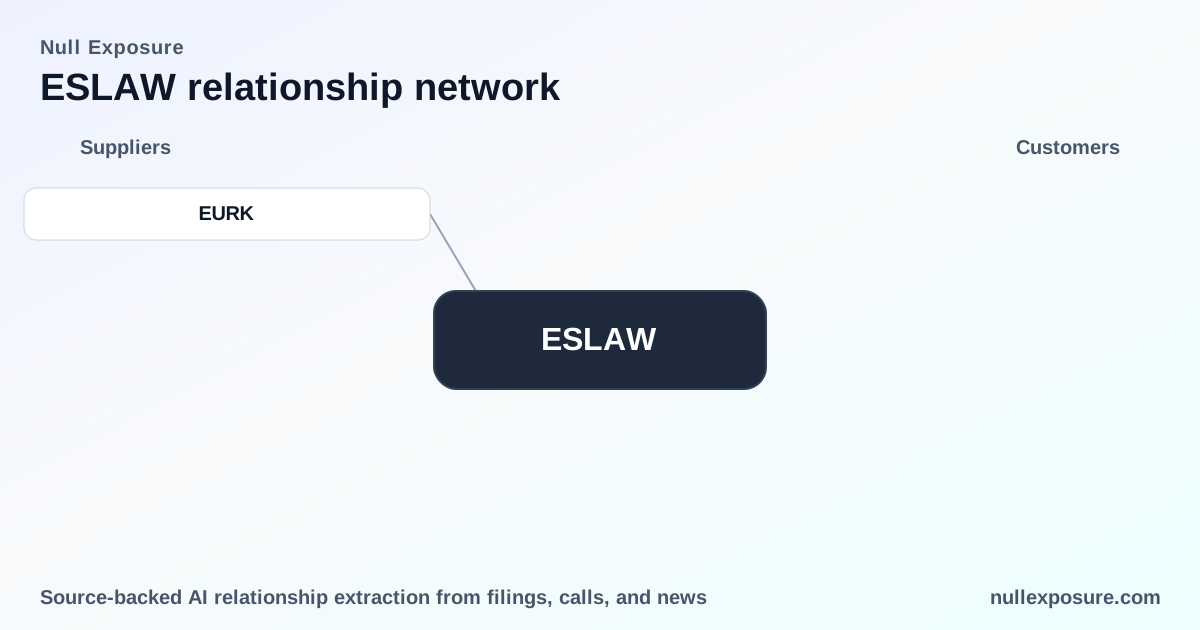
Estrella Immunopharma — supplier relationships and what they mean for investors
Estrella Immunopharma is a preclinical-stage biopharmaceutical company developing T‑cell therapies for hematologic cancers and solid tumors. The company’s commercial logic is built on licensing and development partnerships that grant it access to platform technologies and manufacturing services, with value creation dependent on successful clinical advancement and eventual product commercialization rather than current product revenues. For investors and operators, the firm's supplier posture is therefore a core driver of execution risk and runway consumption: Estrella outsources critical R&D, manufacturing and program management functions under a mix of service, licensing and SOW arrangements that transfer operational responsibility — and associated cash burn — to third parties.
For a concise supplier risk snapshot, visit the NullExposure homepage: https://nullexposure.com/
Why the Eureka relationship is the center of Estrella's operating model
Estrella’s relationship with Eureka is the single most consequential commercial linkage in the supplier set. That partnership combines exclusive licensing of Eureka’s ARTEMIS® T‑cell platform with manufacturing, clinical services and corporate support under service and statement‑of‑work agreements. The structure is notable because it bundles IP access with operational execution: Estrella licenses technology and then pays the same counterparty to run and manufacture the early clinical program.
Key operating-model characteristics implied by the documented agreements:
- High concentration and criticality: a single partner provides both the ARTEMIS license and core manufacturing/clinical services, making counterparty continuity essential for trial timelines. According to Estrella’s filings, Eureka “performs or supports many important corporate functions” under the Services Agreement (filed June 2024).
- Mixed contract tenor: contractual exposures include short-term service payments (structured monthly), milestone and license fees, and a larger SOW commitment tied to a Phase I/II program that spans multiple years.
- Material spend and cash flow implications: the company’s disclosed obligations place Eureka in a spend band that includes both single-digit millions already paid and a multi‑ten‑million SOW commitment for the trial.
- Integrated licensor/manufacturer role: Eureka is contractually responsible for manufacture and supply of clinical product and retains IP ownership rights tied to ARTEMIS elements licensed to Estrella.
These signals collectively mean Estrella’s execution is operationally dependent on Eureka’s capacity and contract performance; investors must price counterparty concentration into valuation and scenario analyses.
Snapshot of the contract economics and commitments
- The License Agreement (June 28, 2022) granted Estrella an exclusive license to use ARTEMIS® for CD19 and CD22 programs, with an upfront payment and downstream obligations under the license terms.
- A Services Agreement provided operational and IND support with a $10,000,000 service fee structured into 12 monthly installments, plus pass‑through reimbursement obligations.
- Statement of Work #001 (effective March 4, 2024) committed $33,000,000 to Eureka for services supporting the EB103 Phase I/II trial, with an estimated dosing schedule through 2025.
These are firm contractual commitments disclosed in Estrella’s filings and reflected in milestone payments and cash outflows through mid‑2024.
Relationship inventory: who Estrella pays and why
Eureka (EURK)
Eureka is both licensor of the ARTEMIS® platform and provider of manufacturing and clinical development services for Estrella’s lead program, EB103, with commercial terms that include a $1,000,000 upfront license consideration, milestone payments, a $10,000,000 services arrangement and a $33,000,000 SOW for the Phase I/II trial. According to Estrella’s public filings, Eureka is responsible for manufacture and supply of clinical quantities and provides operational services under the Services Agreement and SOW (company filings, June 2022–June 2024). A CNBC quote page referenced Eureka’s ARTEMIS technology in reporting on EB103 (CNBC, March 2026).
Facts that matter to investors and operators
Estrella’s disclosures provide a clear mapping of obligations already incurred and future contingent commitments:
- Payments already made: Estrella reported paying $1,000,000 as the license fee (paid October 2023) and $10,000,000 for IND application services plus pass‑through costs; as of June 30, 2024 Estrella had paid $3,500,000 to Eureka for milestone‑linked fees. These figures are drawn directly from company filings (June 2024 disclosures).
- Milestone and small payments: a $50,000 development milestone tied to FDA submission was earned and paid in October 2023, demonstrating the structured, staged nature of payments.
- Large SOW commitment: the $33,000,000 SOW for Phase I/II activities is the dominant single contractual spend and is mapped to a multi‑patient dosing timeline through 2025 (SOW effective March 4, 2024).
Collectively, these items indicate significant near‑term cash exposure tied to a single supplier relationship and a dependence on third‑party manufacturing capacity to advance the clinical program.
Operational and financial risks that investors must price
- Counterparty concentration risk: reliance on Eureka for both IP and manufacturing raises single‑point‑of‑failure implications for timelines and quality control; Estrella itself warns that replacement services would not be easily obtained on comparable terms.
- Execution and timeline risk: the SOW links significant payments to trial advancement; any delays in dosing or IND progress will have direct cash burn implications and create contingent liabilities.
- Commercial leverage and licensing structure: the license is exclusive for defined targets (CD19/CD22), which supports program value but also locks the company to Eureka’s platform and supply chain.
- Cash runway stress: the combination of upfront fees, ongoing monthly service payments, and a large multi‑million SOW means capital planning must account for supplier milestones and potential acceleration of payments.
What investors and operators should do next
- Conduct counterparty diligence focused on Eureka’s manufacturing capacity, regulatory track record, and contingency plans for supply continuity; contractual obligations make this not just operational but strategic.
- Stress‑test cash runway models against delayed enrollment or extended manufacturing lead times and quantify the impact of the $33M SOW on financing needs.
- Review contract termination rights, IP reversion mechanics and indemnity provisions in the License and Services Agreements to understand fallback options if the relationship deteriorates. For a structured supplier-risk view and ongoing monitoring, review the NullExposure portal: https://nullexposure.com/
Bottom line: concentrated supplier exposure drives execution risk
Estrella’s operating model converts an exclusive platform license into an operational dependency: Eureka is both the technology provider and the clinical manufacturer, and the economics include meaningful upfront and programmatic commitments. For investors this is a binary source of upside (if EB103 progresses) and downside (supply, execution or funding shortfalls). Operators should prioritize contingency planning, cash‑flow alignment and contractual protections to mitigate the outsized counterparty risk embedded in the current supplier architecture. Final note: Estrella’s filings and public reporting provide the basis for these conclusions — track upcoming trial milestones and any amendments to the SOW or Services Agreement for material changes to risk exposure.
Explore supplier risk frameworks and ongoing monitoring tools at NullExposure: https://nullexposure.com/