Elbit Systems (ESLT): Why a startup hybrid motor tie-up matters for defense supply economics
Elbit Systems monetizes by designing, integrating and selling airborne, land and naval defense systems and subsystems to governments and prime contractors, and by supplying ongoing services and upgrades. Revenue is driven by long-cycle procurement programs, systems integration margins and aftermarket services, with reported trailing twelve‑month revenue of $7.72 billion and EBITDA of $811.3 million. For investors evaluating supplier relationships, recent supplier selections illuminate how Elbit pursues incremental technology upgrades through targeted partnerships rather than large-scale internal development — a mode that has material implications for procurement cadence, margin capture and program risk. For a deeper look at supplier risk and exposure monitoring, visit https://nullexposure.com/.
Quick read: the deal that showed up in the newsfeed
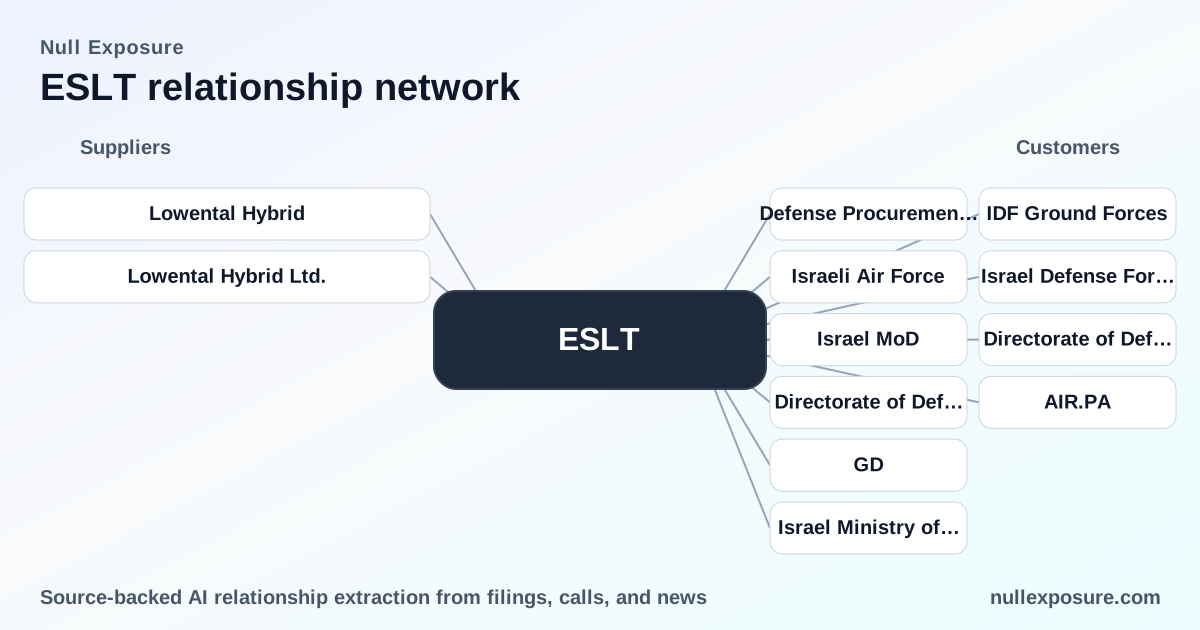
Elbit has selected propulsion technology from a small Israeli startup, Lowental Hybrid, to extend the endurance of tactical unmanned aerial vehicles (UAVs). This is a tactical, performance-driven supplier pick rather than a commoditized parts buy, signaling focus on endurance as a capability differentiator for Elbit's UAV lines. According to a report in Globes in March 2026, Elbit chose Lowental Hybrid to supply electrical-hybrid motors suitable for tactical drones. A separate release from sUAS News (January 2026) states Elbit selected Lowental’s Native Parallel Hybrid propulsion systems to extend mission endurance for tactical UAVs.
What the Lowental relationship tells investors
- Strategic pick for capability enhancement: By selecting Lowental Hybrid’s propulsion systems, Elbit is buying a discrete performance improvement (endurance) rather than replacing core platform suppliers. That points to a deliberate integration posture: Elbit will bolt on specialized technology to improve product competitiveness.
- Supplier profile: startup / specialist. Lowental Hybrid is a niche propulsion innovator, which implies higher supplier concentration risk if the technology becomes central to a program, but lower supply-chain exposure if the component remains modular and replaceable.
- Program-level criticality is moderate-to-high: Propulsion affects mission endurance and therefore operational value of UAVs — a meaningful capability lever that can influence program wins and aftermarket sales.
For ongoing investor monitoring, this kind of supplier selection is a signal to track integration timelines, certification milestones and any firm fixed‑price commitments that could affect margins.
All relationships surfaced in the review
Lowental Hybrid — Globes (March 2026)
Elbit Systems has chosen Lowental Hybrid to supply electrical-hybrid motors suitable for tactical drones, a selection reported in March 2026; the coverage emphasized endurance gains for Elbit’s UAV offerings. According to Globes, Elbit’s choice reflects a move to extend mission profiles through hybrid propulsion. (Source: Globes, March 2026 — https://en.globes.co.il/en/article-lowental-hybrid-engines-to-extend-missions-of-elbit-drones-1001534094)
Lowental Hybrid Ltd. — sUAS News (January 2026)
Lowental Hybrid announced that Elbit selected its Native Parallel Hybrid propulsion systems to dramatically extend mission endurance for tactical unmanned aerial vehicles, positioning the startup’s product as a performance upgrade for Elbit-manufactured platforms. The sUAS News release described the selection as a strategic technology adoption by a UAV manufacturer. (Source: sUAS News, January 2026 — https://www.suasnews.com/2026/01/elbit-systems-selects-lowental-hybrid-for-worlds-first-true-hybrid-uav-propulsion-system/)
How this fits Elbit’s operating model and supplier posture
No explicit supplier constraints were surfaced in the review, which is itself a company-level signal: Elbit’s supplier network is large and generally reported through selective press and filings rather than wholesale disclosure. From the available information and Elbit’s business profile we draw these operating model characteristics:
- Contracting posture — selective and strategic. Elbit deploys targeted supplier relationships to secure discrete capability upgrades (e.g., propulsion) while retaining systems‑integration in‑house. That posture reduces capital intensity but increases reliance on niche suppliers for performance differentials.
- Concentration — pragmatic balance. The company operates across airborne, land and naval segments, implying diversified program exposure; however, individual programs can concentrate risk when they rely on unique subsystems from small suppliers.
- Criticality — component-dependent but program-managed. Components like hybrid propulsion are highly material to platform performance, so supplier reliability and certification pathways are critical for program timelines and revenue recognition.
- Maturity — prime with startup engagement. Elbit is a mature defense prime (market cap ~$40.6B, trailing revenue ~$7.72B) that engages startups for innovation rather than building every module internally; expect more selective acquisitions or volume contracts if a supplier’s technology proves decisive.
Investment implications and risk checklist
Elbit’s decision to integrate Lowental Hybrid propulsion systems is a read-through for product differentiation and potential aftermarket value, but investors should weigh execution risk:
- Track certification and flight-test milestones — mission endurance claims only convert to order book impact after qualification.
- Monitor contract scope — whether purchases are pilot runs, firm orders, or co-development agreements will determine near-term revenue impact.
- Watch for concentration risk if other Elbit programs adopt the same supplier or if Lowental becomes a chokepoint.
For tactical monitoring of supplier selection and exposure on Elbit and other primes, see how we structure supplier intelligence at https://nullexposure.com/.
Bottom line: measured upside, execution-dependent
The Lowental selection is a targeted, high-leverage improvement for Elbit’s UAV offerings: endurance gains translate to operational advantage and potential commercial uplift. That upside is execution-dependent — qualification, integration and scaling will determine whether the selection alters program economics materially. Given Elbit’s scale and integration capabilities, the company is well positioned to commercialize a successful propulsion supplier relationship, but investors should demand clear milestone disclosures before upgrading revenue or margin assumptions.
For investors and operators wanting to convert press picks into quantified exposure, explore supplier relationship analytics and alerting at https://nullexposure.com/.