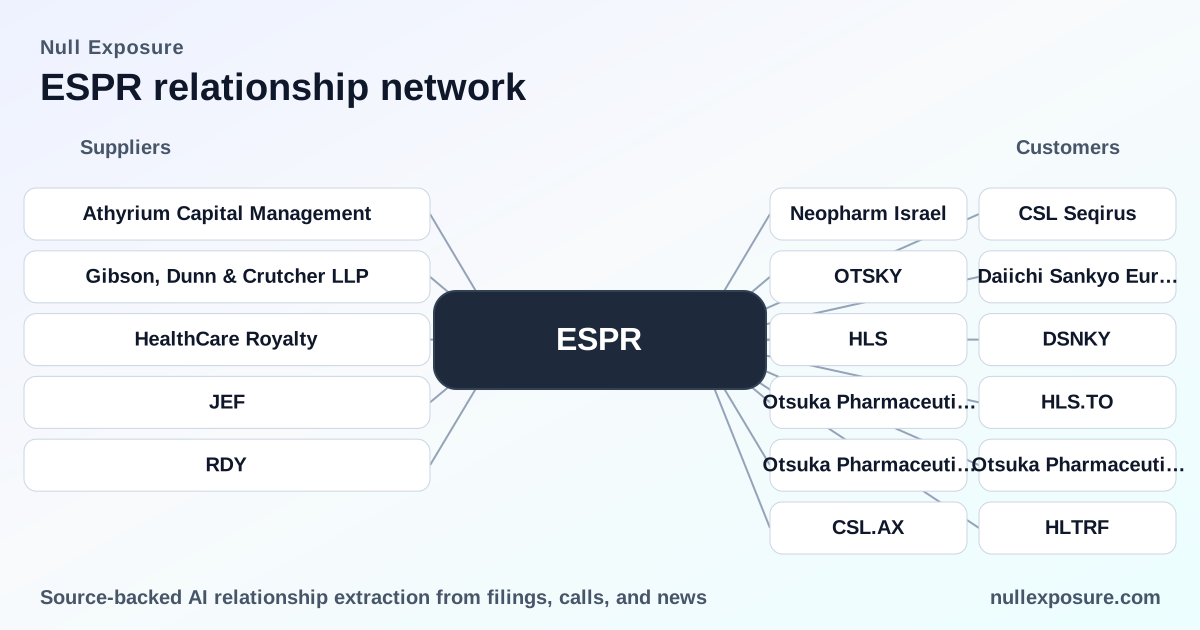
Esperion Therapeutics (ESPR): supplier relationships that shape execution and capital strategy
Esperion is a small-cap specialty pharmaceutical company that commercializes bempedoic acid therapies for LDL-C reduction and expands via targeted acquisitions; it monetizes through product sales, licensing/royalty arrangements, and tactical financing (credit facilities plus royalty monetization) to fund inorganic growth. The company operates a primarily outsourced manufacturing and clinical services model and supplements cash flow risk with royalty monetization and debt when executing transactions. For investors evaluating supplier risk and partner exposure, the combination of sole-source manufacturing dependency and active monetization of royalties is the critical lens for diligence.
Explore full supplier intelligence at https://nullexposure.com/.
How Esperion runs its supply chain and finances growth
Esperion does not own commercial manufacturing capacity and relies on external contract manufacturers and CROs for clinical and commercial supplies. This outsourced model concentrates operational risk because sole-source suppliers could interrupt commercialization or delay launches. On the capital side, Esperion supplements its balance sheet by monetizing royalty streams—particularly Japanese royalties—and by using credit facilities to finance acquisitions, which creates cross-functional dependencies between capital partners and long-term royalty economics.
Key operating signals: Esperion’s contracting posture is predominantly third-party reliant; relationship concentration is high (sole-source risk flagged as critical); the supplier model is mature in that the company knowingly foregoes building internal manufacturing; and supplier criticality is elevated because manufacturing interruption directly impacts commercial revenue.
Relationships that matter — who Esperion is working with right now
Athyrium Capital Management
Esperion plans to monetize Japanese royalties managed by funds at Athyrium as part of acquisition financing, indicating Athyrium is a counterparty in royalty monetization transactions tied to corporate M&A. According to an industry news report referenced on March 9, 2026, Esperion expects to use funds managed by Athyrium to support the acquisition financing. (Intellectia.ai / March 2026)
HealthCare Royalty
HealthCare Royalty is named as a manager of the Japanese royalty monetization that Esperion will use to finance its acquisition, making this firm a direct capital partner in Esperion’s royalty-backed financing strategy. The GlobeNewswire and subsequent news coverage on March 3–9, 2026 describe the use of HealthCare Royalty-managed funds for the transaction. (GlobeNewswire / March 3, 2026; Pulse2 / March 9, 2026)
Gibson, Dunn & Crutcher LLP
Gibson Dunn served as legal advisor to Esperion on the Corstasis acquisition, positioning the firm as the lead transactional counsel on the deal and responsible for legal structuring and regulatory diligence. This engagement is documented in the company press release announcing the acquisition on March 3, 2026. (GlobeNewswire / March 3, 2026)
Jefferies LLC
Jefferies acted as Esperion’s exclusive financial advisor for the Corstasis acquisition, executing deal-level financial work and valuation support that underpins the announced purchase. This role is disclosed in the same March 3, 2026 press release describing the acquisition. (GlobeNewswire / March 3, 2026)
Dr. Reddy’s Laboratories
Esperion finalized agreements with four generic manufacturers, including Dr. Reddy’s, not to market generic versions of NEXLETOL and NEXLIZET prior to April 2040, which effectively extends enforced supply exclusivity and reduces near-term generic risk. The detail was shared on Esperion’s 2025 Q3 earnings call transcripts. (2025 Q3 earnings call / disclosed March 2026)
What these relationships mean for investors
-
Capital partnerships (Athyrium, HealthCare Royalty): Expect structured, royalty-backed financing to be a recurring element of Esperion’s transaction playbook; monetizing royalties provides immediate liquidity but reduces future royalty income, affecting long-term free cash flow. The March 2026 press and news reports directly associate these firms with the company’s acquisition financing strategy. (GlobeNewswire; Intellectia.ai)
-
Advisory and execution (Jefferies, Gibson Dunn): Engaging top-tier advisors signals that Esperion is executing standard sell/buy-side diligence and legal protections typical for mid-market pharma deals; this reduces execution risk on M&A mechanics but does not address operational supplier concentration. (GlobeNewswire / March 3, 2026)
-
Supply-side protections (Dr. Reddy’s agreement): Non-compete / delayed-entry agreements with generics reduce the probability of immediate biosimilar or generic substitution for core products through 2040, supporting revenue defensibility for the marketed assets. This was confirmed on the 2025 Q3 earnings call. (2025 Q3 earnings call)
Operational constraints to factor into valuation and counterparty diligence
Esperion’s public filings and investor disclosures present explicit constraints that are company-level signals rather than relationship-specific concessions:
-
Materiality — critical: Esperion identifies reliance on sole-source third-party suppliers as a potential material risk that could harm commercialization of bempedoic acid products. This is a high-impact operational vulnerability that investors must price into downside scenarios.
-
Role concentration — manufacturer: The company confirms it has no manufacturing facilities and relies entirely on contract manufacturers for both clinical and commercial supplies, creating single-point-of-failure exposure across product lines.
-
Role concentration — service provider: Esperion depends on contract research organizations for clinical development work, which reduces direct control over trial execution and timing.
These constraints require buy-side diligence on supplier contracts (term length, capacity commitments, quality history), fallback sourcing plans, and the covenant structure of any royalty monetization that could encumber future cash flows.
Explore supplier risk profiles and counterparty dossiers at https://nullexposure.com/.
Investment implications and recommended next steps
-
Upside driver: The Corstasis acquisition financed with royalties and credit facilities can expand the cardiovascular franchise and lift near-term revenue if clinical and regulatory execution remains on track. The use of non-compete agreements with generics through 2040 supports longer product exclusivity.
-
Downside risks: Sole-source manufacturing and outsourced CRO dependence are critical operational risks; any supply interruption or failed clinical timing would compress revenue and stress covenant headroom on financed transactions.
-
Diligence priorities: Obtain copies of manufacturing and commercialization contracts, review royalty monetization terms with Athyrium/HealthCare Royalty (including repricing, recapture, and covenants), and validate legal/financial advisor deliverables behind the Corstasis deal.
For a concise supplier-risk briefing and tailored counterparty analysis, visit https://nullexposure.com/.
Final takeaway: Esperion’s business model leverages outsourced manufacturing and royalty monetization to preserve capital and accelerate acquisitions; that strategy trades off higher near-term financial flexibility for elevated supplier concentration and reduced long-term royalty capture, a trade investors must quantify before recalibrating exposure to ESPR.