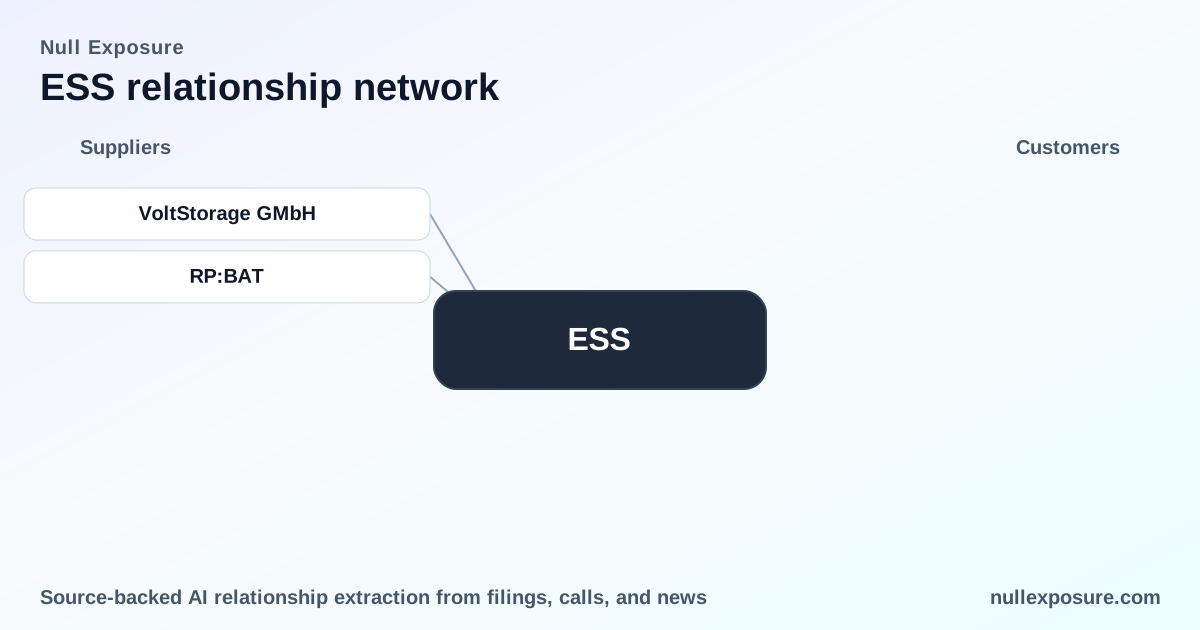
Essex Property Trust (ESS) — supplier relationships, contractual posture, and investor implications
Essex Property Trust operates as a West Coast-focused residential REIT that monetizes primarily through stabilized rental income, selective development, and shareholder distributions. The company generates recurring cash flow (Revenue TTM $1.935B, Profit Margin 34.6%) and returns capital to investors via a meaningful dividend (Dividend per share $10.28; yield ~4.11%), while trading at a premium valuation (Trailing P/E 23.9; Price-to-Book ~2.91). For investors and operators evaluating supplier and counterparty risk, the relevant signals combine long-duration real estate contracting with political and vendor-related reputational exposure. Learn more at https://nullexposure.com/.
Quick commercial thesis for buyers and ops teams
Essex runs a traditional, income-focused apartment REIT concentrated on high-barrier, West Coast markets. The business model depends on durable landlord cash flows, low tenant turnover, and long-term property control — which makes supplier continuity (property management, software, and facilities vendors) and contracting posture critical to operations and valuation. Given high regional concentration, regulatory and software vendor controversies translate directly into operational and reputational risk.
The supplier mentions investors should know — two items in the feed
Below are every relationship that surfaced in the supplier-scoped results. Each entry is a concise, plain-English take and a source citation.
-
VoltStorage GmbH — A SolarpowerWorld article (Feb 2026) reports that ESS Tech Inc. acquired intellectual property and assets from VoltStorage GmbH, a German iron‑salt battery developer; that transaction is recorded in the supplier feed tied to the ESS identifier. This item describes an energy-storage IP acquisition by ESS Tech Inc., not an Essex Property Trust operating decision. (SolarPowerWorld, Feb 2026: https://www.solarpowerworldonline.com/2026/02/ess-inc-acquires-additional-iron-flow-battery-ip/)
-
RealPage — A CityWatchLA report (March 2026) highlights that Essex Property Trust spent $60.1 million on political activity and faced scrutiny connected to RealPage's pricing software and alleged rent-inflating practices, placing vendor-related regulatory and reputational risk squarely on large landlords who purchased or used that software. This mention underscores direct public-policy and media exposure tied to third-party software vendors. (CityWatchLA, Mar 2026: https://www.citywatchla.com/los-angeles/32333-essex-property-trust-spent-60-1m-to-kill-rent-control-and-influence-politicians-in-california)
What the supplier list implies about contractual posture and counterparty risk
The supplier results are light but directionally informative when combined with contractual evidence from company disclosures. Company-level constraints signal a long-term contracting posture and asset maturity:
- Long-term ground leases are a recurring feature in filings, with expirations cited out to 2070 and 2083, and multiple instances of leases through the 2020s and 2060s. That pattern reflects multi-decade property control and operational lock-in, increasing the importance of stable supplier relationships for maintenance, capital improvements, and tenant services.
- Geography signals point to North American / West Coast concentration, reinforcing exposure to regional regulatory shifts and labor/contractor markets.
These company-level characteristics produce practical consequences:
- High maturity and long-term contracts make supplier continuity critical: disruption in property management systems, facilities vendors, or construction contractors can delay capital projects and dent rental growth.
- Concentration increases sensitivity to localized political and regulatory events, which amplifies reputational effects from vendor controversies.
If you want a consolidated supplier risk profile for portfolio due diligence, see https://nullexposure.com/ for how we structure these assessments.
Operational and investment implications — what to watch
Essex’s operating model and the supplier touches above create several actionable considerations for investors and ops teams:
- Vendor and software risk: RealPage-related scrutiny is a live reputational and regulatory risk for large landlords; procurement due diligence should document software vendor usage, contract terms, indemnities, and historical pricing inputs.
- Contract duration and capital planning: Long ground-lease tenors imply predictable site control but also embed long-term obligations; operators must align vendor SLAs and capital contractors to multi-decade maintenance plans.
- Regional concentration: West Coast market dynamics (supply constraints, regulation, litigation risk) can magnify supplier failures. Contingency planning for alternate vendor sourcing across jurisdictions is prudent.
- Valuation sensitivity: Trading at a premium valuation (Trailing P/E ~23.9, EV/EBITDA ~14.5) increases the downside for operational shocks; supplier disruption that hits NOI growth would pressure multiples.
Key monitoring checklist for management and investors:
- Confirm vendor dependencies for rent-management and pricing systems; audit contract change clauses.
- Inventory ground leases with expiry profiles and lessor covenants.
- Map regional supplier concentration to critical service categories (maintenance, security, IT).
Risk summary and near-term catalysts
- Political and regulatory scrutiny: The RealPage coverage links vendor behavior to landlord reputational risk and potential regulatory outcomes; this is a medium-term catalyst for litigation, fines, or policy changes.
- Operational continuity: Long-term lease structures demand disciplined supplier relationships and documented contingency plans.
- Market sensitivity: Given valuation and dividend yield (~4.11%), investors should watch rent growth, occupancy, and any supplier-driven cost inflation.
Final read for investors and operators
Essex Property Trust is a capital-intensive, cash-flow focused REIT with long-duration contractual commitments and concentrated geography. The supplier mentions in the public feed are limited but meaningful: a software‑vendor controversy with direct reputational implications (RealPage) and an externally reported energy‑storage IP deal tied to an identically abbreviated “ESS” (ESS Tech Inc. acquiring VoltStorage) that should be reconciled by diligence teams. For active investors and operations leaders, the priority is to audit vendor contracts, map critical service providers to asset-level risk, and monitor regional regulatory developments.
If you need a supplier risk audit or a summarized counterparty map for Essex and similar REITs, visit https://nullexposure.com/ to request a tailored assessment. For ongoing tracking of supplier exposures across your portfolio, explore how we present consolidated signals at https://nullexposure.com/.