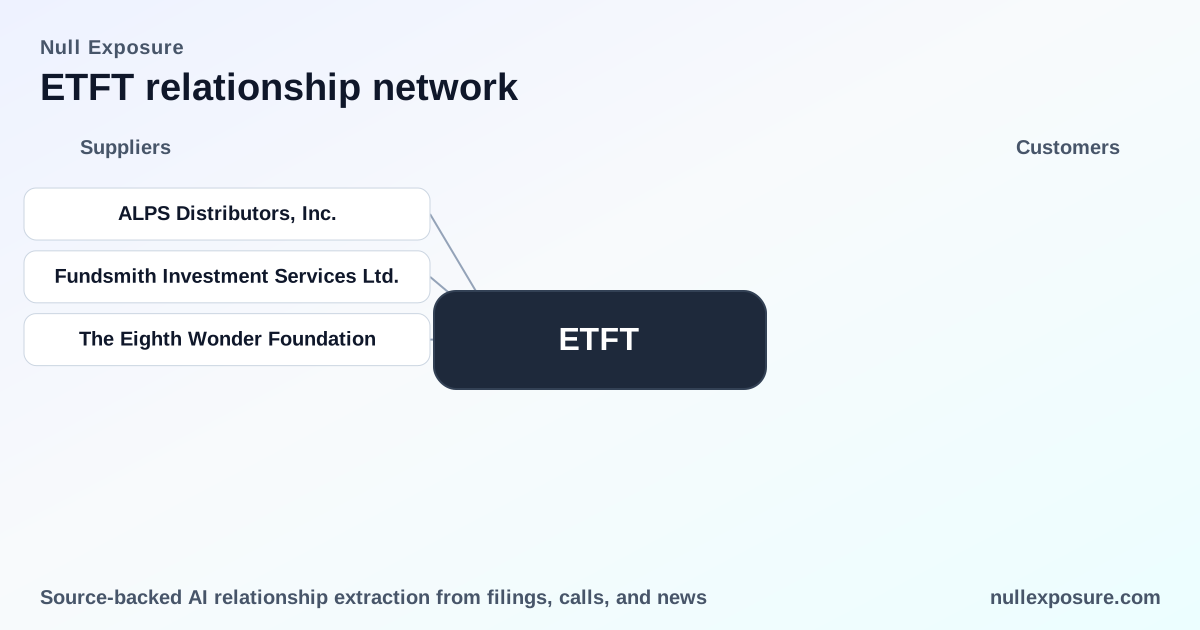
ETFT: A compact supply chain for an ETF issuer — advisor, distributor, and issuing foundation
ETFT operates as an exchange-traded product platform: shares are issued through an issuing vehicle, investment management is delegated to an external advisor, and distribution is handled by a third-party distributor, with the issuer monetizing through management and advisory fees charged on assets under supervision. This supplier map reflects a deliberately outsourced operating model common in modern ETF launches: governance (issuance), portfolio management (advice), and market access (distribution) sit with distinct counterparties rather than being vertically integrated. For a deeper look at supplier behavior and counterparty risk for asset managers, visit https://nullexposure.com/.
Operational snapshot
- Business model: Fee-driven, with revenue generated through management/advisory fees and potential shareholder servicing spreads.
- Operating posture: Outsourced core capabilities; the firm positions itself as an issuer that contracts specialist partners for distribution and portfolio management.
- Investor implication: Monitor counterparty agreements, fee schedules, and the concentration of service providers as leading indicators of operational and market risk.
A closer read of each named relationship
ALPS Distributors, Inc. ALPS acts as the distributor for ETFT, handling share placement and broker-dealer distribution channels. According to the TradingView listing for AMEX-ETFT (cited FY2025, first seen March 9, 2026), ALPS Distributors, Inc. is identified explicitly as the fund distributor. This role is critical to primary market liquidity and institutional placement activity.
Fundsmith Investment Services Ltd. Fundsmith Investment Services Ltd. is listed as the primary advisor to ETFT, meaning portfolio construction and day-to-day investment decisions are delegated to this external manager. The TradingView AMEX-ETFT entry (FY2025) lists Fundsmith as the primary advisor, confirming that investment performance and manager selection are outsourced to an established advisory firm.
The Eighth Wonder Foundation ETFT shares are issued by The Eighth Wonder Foundation, indicating an issuing vehicle or foundation structure holds legal title to fund shares and handles governance formalities. The TradingView record for AMEX-ETFT (FY2025) names The Eighth Wonder Foundation as issuer, highlighting a governance separation between the issuing vehicle and external service providers.
What the supplier roster collectively signals about ETFT’s operating model
- Deliberately outsourced architecture. ETFT leverages third parties for investment management and distribution while maintaining an issuing vehicle for governance and regulatory compliance. This structure minimizes fixed overhead and enables rapid market entry, but it also concentrates operational dependency on a small set of external providers.
- Concentration and counterparty exposure. With three primary named counterparties across the functional stack, ETFT exhibits single-point dependencies that are easy to monitor but raise outsized operational risk if a counterparty relationship degrades or terminates.
- Commercial monetization is straightforward. Fees likely flow from the issuer to the advisor (management/advisory fees) and to the distributor for placement and servicing; the issuer retains net fee income after contractual payments. This model aligns economic incentives around AUM growth and retention.
- Governance separation is intentional. Using a foundation as the issuer establishes legal and governance boundaries between shareholders and the firms executing daily operations, which can insulate shareholders from some conflicts but requires clear contractual governance standards.
Constraints and maturity signals for an investor evaluating ETFT No explicit constraints were provided in the source material as company-level disclosures for FY2025; treat this absence as a signal in itself. At the company-level, the available information implies:
- Contracting posture: Standard third-party outsourcing agreements—ETFT operates as an issuer contracting out asset management and distribution rather than operating as an integrated manager.
- Concentration: Low vendor diversity; a compact roster of suppliers increases execution efficiency but raises resilience concerns.
- Criticality: Supplier roles are highly critical: advisory and distribution are core to product performance and market access. Any disruption would have immediate revenue and liquidity implications.
- Maturity: The supplier set suggests an early-stage or lean operating footprint—sufficient for market access but reliant on partner stability and reputation.
These are company-level signals inferred from the supplier map and the lack of additional constraints in public excerpts for FY2025.
Risks investors should prioritize monitoring
- Counterparty concentration risk. With a small number of named suppliers, default or contract termination by any party would materially disrupt operations. Track continuity of advisor and distributor agreements and any public notices of change.
- Fee pressure and alignment. Because revenue depends on fees passed through and retained after third-party payments, investor returns and issuer profitability are sensitive to fee negotiations and competitive fee compression in the ETF market.
- Operational governance around the issuing foundation. A foundation issuer introduces governance complexity; monitor trustee composition, voting protocols, and any amendments to the foundation’s charter that affect shareholder protections.
- Regulatory and compliance oversight. Outsourced models reduce internal compliance friction but increase dependence on counterparties’ controls. Validate third-party compliance records and recent regulatory filings.
Actionable monitoring checklist for operators and investors
- Confirm the term and renewal mechanics of the advisor and distributor contracts and whether termination fees or notice periods create lock-in or exposure.
- Review fee schedules and management/advisory agreements filed in fund documents to establish the revenue waterfall.
- Keep a watch on public filings and market notices for any changes to the issuer (The Eighth Wonder Foundation) or a change in primary advisor/distributor.
- Evaluate the reputational and operational track record of counterparties through third-party governance reports and regulatory histories.
Where to go next For institutional due diligence, supplement this supplier-level scan with the fund prospectus, trustee charters, and fee schedules to quantify revenue share and counterparty contractual protections. For more research resources and supplier-risk tools, visit https://nullexposure.com/ to access proprietary supplier maps and monitoring workflows.
Conclusion and investment posture ETFT runs a compact, outsourced operating model that is efficient but concentrated. The roles of issuer, advisor, and distributor are clearly delineated—an approach that supports nimble product distribution and straightforward economics, but which amplifies counterparty and governance risk if any single provider changes course. Investors should prioritize contractual transparency, fee economics, and continuity planning when evaluating ETFT as a supplier relationship exposure. For tailored counterparty analysis and ongoing monitoring frameworks, start here: https://nullexposure.com/.