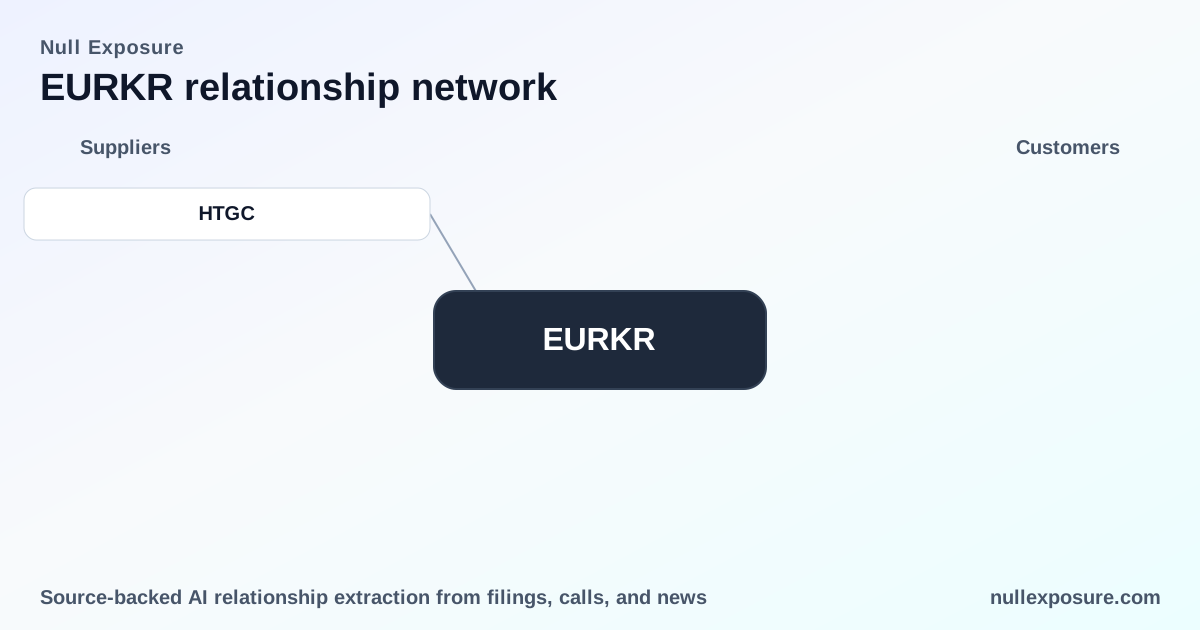
Eureka Acquisition Corp Right (EURKR): Sponsor-led SPAC with concentrated service relationships
Eureka Acquisition Corp Right is a blank-check vehicle organized to effect a business combination; it generates value for holders only through a successful merger or liquidation outcome and funds ongoing administration through sponsor support and fee arrangements. For investors evaluating supplier risk and counterparty exposure, the company’s operating model is simple: limited operating activity, concentrated supplier/sponsor relationships, and recurring administrative fees paid to related parties until a business combination closes or the SPAC liquidates. Learn more about supplier relationships and counterparty risk at https://nullexposure.com/.
How this SPAC runs and how it is monetized
Eureka Acquisition Corp Right is a typical SPAC: it raises capital through an IPO trust and then seeks an acquisition target or returns capital at liquidation. There is no operating revenue and no meaningful financial history—the company lists zero revenue and zero operating margins in public profile data—and the practical economics before a business combination are managed through sponsor-funded trust mechanics and recurring administrative payments. Company records show headquarters in the Cayman Islands with an operational address in Hong Kong, and no public operating website is listed.
- Monetization pathway: value realization depends on completing a business combination or returning trust capital on liquidation.
- Interim funding model: administrative costs are covered by a combination of sponsor deposits and recurring fees paid to sponsor affiliates.
If you want a deeper map of supplier exposures and related-party arrangements, visit https://nullexposure.com/ for the full supplier view.
The supplier/sponsor relationships you need to track
The dataset highlights one material listed relationship and several company-level contractual signals that drive supplier risk. Below I cover the named relationship and then summarize the structural constraints that govern how the company contracts and spends.
Hercules Capital Management — sponsor deposit and deadline extension
Hercules Capital Management is identified in a news report as the Sponsor that deposited $150,000 into the trust account on February 3, 2026, extending the SPAC’s deadline to March 3, 2026. This action is a classic sponsor backstop to keep the SPAC active while it secures a combination or otherwise resolves its timeline. (TradingView, news item dated March 9, 2026: https://www.tradingview.com/news/tradingview:b7ae21dcc0d45:0-eureka-acquisition-signs-extension-promissory-note-with-hercules-capital-management/)
Company-level constraints and what they imply for supplier risk
Company filings and disclosures provide consistent signals about contracting posture, spend levels, and the operational maturity of the vehicle. Treat these as company-level signals rather than tied to any particular external supplier unless the excerpt explicitly names that supplier.
-
Contracting posture — subscription-style administrative agreement. The company has committed to a recurring monthly administrative fee of $10,000 payable to an affiliate of the Sponsor for office space, utilities, and secretarial/administrative support. The obligation runs from the effective date of the registration statement and terminates on completion of the initial business combination or liquidation, establishing a predictable, subscription-like cash outflow while the SPAC is active (company filings, Administrative Services Agreement dated July 2, 2023).
-
Relationship role — service provider via related party. The monthly payments are governed by an administrative services agreement, placing the sponsor affiliate in the role of a service provider for essential corporate administration (company filing language describing the Administrative Services Agreement).
-
Stage and maturity — active but pre-operational. The company is in an active SPAC stage: it is not generating revenue and is depending on sponsor arrangements and trust mechanics for continuity until a combination is achieved (company disclosures tied to IPO and related agreements).
-
Spend quantum and balance-sheet impact — low-to-moderate recurring spend. Financial disclosures show the company incurred $120,000 for the year ended September 30, 2025, with $50,000 accrued on the balance sheet as of that date. The disclosed spend band sits comfortably in the $100k–$1M range, indicating administrative costs are material relative to zero operating revenue but modest in absolute terms (company filings for FY2025).
Taken together, these signals imply a low-complexity operational model with concentrated counterparty exposure: a single sponsor and affiliate provide essential services and episodic liquidity support. That concentration compresses supplier risk into a few relationships but keeps absolute cash needs limited.
What this means for investors and operators
-
Concentration risk is the central issue. The SPAC’s operations hinge on its sponsor relationship and the administrative services affiliate; disruptions in that relationship would create operational disruption but not direct product risk given the SPAC’s non-operational profile. Monitor sponsor willingness to provide liquidity and any governance changes in sponsor-affiliate contracts.
-
Cost predictability is high but immaterial to growth. The $10,000/month fee and FY2025 spend profile make administrative burn predictable; however, that burn simply reduces the residual trust value available for a transaction or distribution upon liquidation.
-
Liquidity and timeline events drive value. Sponsor actions—such as the $150,000 deposit to extend the trust deadline—are the primary levers that keep the SPAC alive. Sponsor capital injections are a control variable for timeline risk and a leading indicator of transaction probability.
Midway recommendation: if supplier diligence or third-party risk monitoring is part of your investment process, map sponsor and affiliate agreements and monitor public filings and timely news alerts via https://nullexposure.com/ to detect changes in sponsor posture early.
Practical due-diligence checklist for EURKR counterparties
- Obtain and review the Administrative Services Agreement (dated July 2, 2023) to confirm fee terms, termination mechanics, and related-party controls.
- Track accrued expenses and any sponsor deposits on a rolling basis; the FY2025 filing recorded $120,000 in expenses with $50,000 accrued.
- Monitor sponsor announcements and extensions—Hercules’ $150,000 deposit on February 3, 2026 is a relevant precedent for sponsor behavior.
Bottom line: concise investor takeaway
Eureka Acquisition Corp Right is a classical SPAC with concentrated sponsor-driven operational support and predictable administrative costs. The primary risks for counterparty managers and investors are concentration and timeline/liquidity exposure, not product or market execution. Active monitoring of sponsor deposits, administrative service agreements, and quarterly filings provides the clearest early signals on the SPAC’s viability and supplier risk profile.
For continued supplier mapping and to stay ahead of counterparty changes, visit https://nullexposure.com/ and review the supplier relationship views available there.
Key action items: verify the administrative services contract language, track sponsor injections and trust balances, and monitor accrued expense roll-forwards in quarterly filings. For consolidated supplier intelligence and alerts tailored to SPAC counterparty risk, see https://nullexposure.com/.