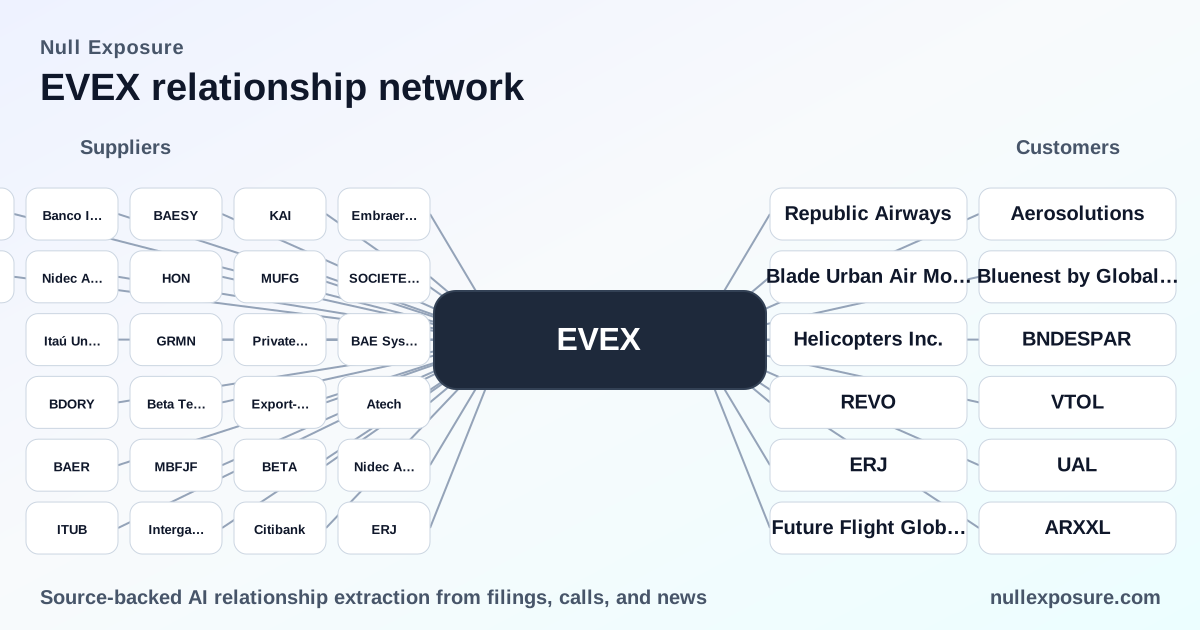
Eve Holding (EVEX): Supplier Map and What It Means for Investors
Eve Holding develops electric vertical takeoff and landing aircraft (eVTOLs) and monetizes through aircraft sales, long‑term services/support contracts and the sale of enabling software and maintenance services to operators, while outsourcing core production and many subsystems to aerospace partners. The company’s operating model is partnership‑centric: Eve buys components and engineering services, licenses intellectual property from Embraer, and relies on long‑dated MSAs to convert development into scalable production. Learn more about supplier risk and counterparty exposure at https://nullexposure.com/.
The high‑level investor thesis: partnership first, capital light to scale
Eve’s route to commercialization is built around a strategic industrial alliance with Embraer and a network of tier‑one and specialist suppliers. That model reduces Eve’s upfront capital intensity on manufacturing but creates vendor concentration and operational dependency that directly affect certification timelines, unit economics and working capital needs. Investors should evaluate supplier credit, contract tenor and single‑source elements as material drivers of downside and execution risk.
What the supplier list reveals about Eve’s operating posture
Eve has structured its supplier engagements to secure long timelines, deep engineering support and licensed access to aerospace know‑how rather than trying to internalize large manufacturing capacity internally. That contracting posture trades fixed‑cost exposure for counterparty concentration and execution dependency, which behaves differently across suppliers: strategic partners (Embraer, Atech) are contractually embedded; component specialists (BETA, Nidec, BAE, Honeywell, Garmin) are scoped suppliers for critical subsystems; and commercial banks and export finance counterparts provide leverage to fund the industrial ramp.
If you want a concise report on counterparty exposure and contract terms, see https://nullexposure.com/ for structured supplier analytics.
Detailed supplier relationships (one sentence each, source cited)
Embraer Aircraft Holding, Inc. / Embraer (ERJ)
Eve benefits from long‑term Master Services Agreements with Embraer that provide engineering services, flight test infrastructure, manufacturing resources and an aftermarket network on a cost‑based basis, making Embraer both a manufacturer partner and a licensor of IP used in development and certification (Source: Eve 2024 Form 10‑K, FY2024; multiple FY2025 press reports).
SOCIETE DUC (t/a DUC Hélices Propellers)
Eve has a supply agreement (effective May 22, 2023) that places DUC Hélices as a propeller supplier for the program, supporting component sourcing for prototypes and production (Source: Eve 2024 Form 10‑K, FY2024).
BAE Systems Controls Inc. / BAE Systems
BAE appears as a contracted supplier under a June 16, 2023 agreement and is also referenced for battery systems and other components in later reports, positioning BAE as a battery and controls supplier for development and certification pathways (Source: Eve 2024 Form 10‑K, FY2024; press commentary FY2025).
Atech
Eve signed a Master Services Agreement with Atech to secure manufacturing support and software development services with an initial 15‑year term, indicating a long‑dated outsourced services commitment (Source: Eve 2024 Form 10‑K, FY2024).
Nidec Aerospace LLC / Nidec
Nidec is contracted under a June 16, 2023 supply agreement and is referenced as a lifter‑motor supplier; Eve is also discussing dual‑sourcing between Nidec and Beta in public calls (Source: Eve 2024 Form 10‑K, FY2024; Q3 2025 earnings call commentary).
KAI
Korea Aerospace Industries (KAI) is named in supplier announcements (Apr 14, 2024) as a supplier for eVTOL pylons, adding an international aerodynamic structural partner to Eve’s supply chain (Source: Eve press release Apr 14, 2024).
BETA Technologies / Beta Technology Company
Eve selected BETA Technologies to supply electric pusher motors for prototypes and anticipated production, representing a material production opportunity and a potential multi‑year purchasing relationship (Source: Eve press release Dec 2, 2025; multiple FY2025 news reports).
Honeywell Aerospace
Honeywell is referenced as the supplier of external lighting and avionics‑support elements, integrating a major avionics supplier into the platform’s systems integration plan (Source: Sahm Capital coverage, FY2025).
Garmin
Garmin is listed as the avionics supplier for the program’s flight deck and avionics integration, tying a commercial avionics provider into Eve’s certification pathway (Source: Sahm Capital coverage, FY2025).
Intergalactic
Intergalactic is referenced as a supplier for thermal management systems on Eve aircraft, indicating specialized subsystem sourcing beyond mainstream aerospace vendors (Source: Sahm Capital coverage, FY2025).
Citibank
Citibank is a participant in a five‑year $150 million credit facility arranged in FY2026, providing committed liquidity to fund certification and initial production investments (Source: TradingView and QuantiSnow coverage, FY2026).
Mitsubishi UFJ Financial Group (MUFG)
MUFG is a lender in the same $150 million five‑year facility, anchoring multi‑bank credit support for the commercialization phase (Source: QuantiSnow and trading reports, FY2026).
Banco do Brasil
Banco do Brasil joined the five‑year $150 million credit facility and is a creditor supporting Eve’s near‑term financing needs (Source: QuantiSnow coverage and TradingView, FY2026).
Itaú Unibanco / Itau / Banco Itaú Chile
Itaú Unibanco and Banco Itaú Chile appear as administrative/participating lenders in the $150 million credit agreement, providing regional banking support for Eve’s capital plan (Source: TradingView coverage, FY2026).
Private Export Funding Corporation (PEFCO)
PEFCO is named as a counterparty in a credit arrangement alongside the Export‑Import Bank, representing an export finance channel for future aircraft sales or supplier finance structures (Source: TradingView coverage, FY2025).
Export‑Import Bank of the United States (EXIM)
EXIM is listed with PEFCO as a counterparty on a credit agreement, indicating Eve is leveraging export‑credit mechanisms to underwrite sales or international supply chain support (Source: TradingView coverage, FY2025).
Operational constraints and what they imply for investors
- Long‑term contracting posture: Eve has MSAs with Embraer and Atech with initial 15‑year terms, and automatic renewal mechanics in some MSAs; this signals a deliberate strategy to lock in engineering, manufacturing and software services over the commercial ramp rather than building captive capacity (Source: Eve 2024 Form 10‑K, FY2024).
- Buyer and licensor roles: Eve functions primarily as a buyer of components and services while receiving licensed IP access from Embraer under a Data Access Agreement, embedding Embraer into Eve’s certification and manufacturing path (Source: Eve 2024 Form 10‑K, FY2024).
- Manufacturer and segment concentration: Embraer (and its subsidiaries) are contracted to supply products and perform services related to the development, certification and manufacturing of the eVTOL, creating a high‑criticality supplier relationship in the manufacturing segment (Source: Eve 2024 Form 10‑K, FY2024).
- Active relationships: The Services Agreements with Embraer and others are in force, indicating these are not exploratory partnerships but operational commitments that will govern near‑term execution (Source: Eve 2024 Form 10‑K, FY2024).
These constraints collectively show a mature partnership model but with concentrated counterparty execution risk that investors must price into valuation and timeline expectations.
If you need a tailored counterparty risk brief or comparative supplier scoring, visit https://nullexposure.com/ for investor tools.
Concentration, certification and financing risk — what to watch
- Concentration risk: Embraer is the single most consequential supplier/partner; any Embraer schedule or IP issue directly affects Eve’s certification and throughput.
- Single‑source critical systems: Batteries, lifter and pusher motors, and avionics are sourced from a limited set of suppliers (BAE, Nidec, BETA, Garmin, Honeywell). Dual‑sourcing statements exist for motors, but supplier switches are costly during certification.
- Financing dependencies: The $150 million bank facility and export finance involvements materially reduce short‑term liquidity risk but increase covenant and creditor exposure through FY2026; lenders’ appetite will influence production ramp speed.
Conclusion and near‑term investor actions
Eve’s supplier architecture is coherent and industrially credible: long MSAs with Embraer and Atech give program stability, while specialist suppliers supply critical subsystems. That structure reduces capital intensity but concentrates operational exposure in a small set of counterparties. Investors should prioritize counterparty credit checks, milestone‑linked supplier deliverables and the robustness of dual‑sourcing where it matters most (motors, batteries, avionics). For a structured supplier exposure report and actionable risk scores, go to https://nullexposure.com/.
Key next steps: request contract term summaries for Embraer/Atech MSAs, review supplier delivery schedules against certification milestones, and assess lender covenant timelines as part of cashflow modelling.